THE ADVENTURE COLLECTIVE® · Independent discovery and booking for outdoor travel

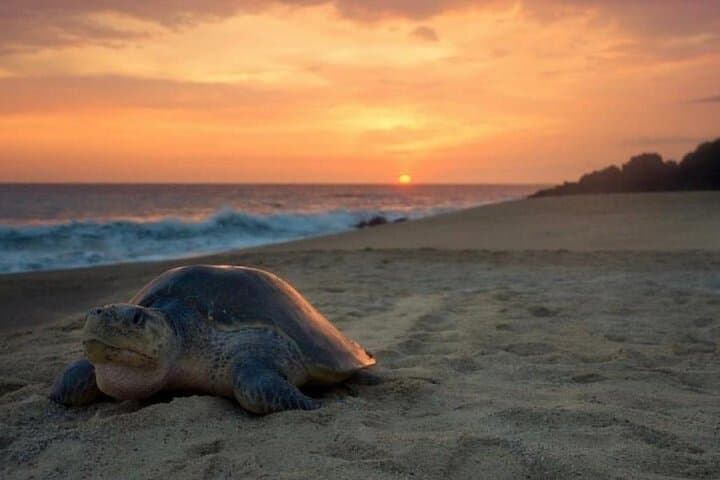
Head out of Tamarindo after dark to a hidden, car-free beach and watch sea turtles nest above the high tide mark. Guides follow strict conservation rules while you observe green, olive ridley, and sometimes leatherback turtles in a quiet, protected setting.
Head out of Tamarindo after dark to a hidden, car-free beach and watch sea turtles nest above the high tide mark. Guides follow strict conservation rules while you observe green, olive ridley, and sometimes leatherback turtles in a quiet, protected setting.
The night is warm and salt-heavy as the van eases away from Tamarindo, headlights giving way to starlight and the hush of a road that leads to a beach few people see. After a 25 km drive — roughly 40 minutes — you step out where the only path to the shore is a 10–15 minute walk across dark sand. The beach stays undisturbed because cars can’t reach it; that silence is the reason sea turtles choose this place to dig and lay.
Verified experiences and guided adventures in the surrounding area.
Operated by Sol Eco Adventures · Tamarindo, Guanacaste
The night is warm and salt-heavy as the van eases away from Tamarindo, headlights giving way to starlight and the hush of a road that leads to a beach few people see. After a 25 km drive — roughly 40 minutes — you step out where the only path to the shore is a 10–15 minute walk across dark sand. The beach stays undisturbed because cars can’t reach it; that silence is the reason sea turtles choose this place to dig and lay.
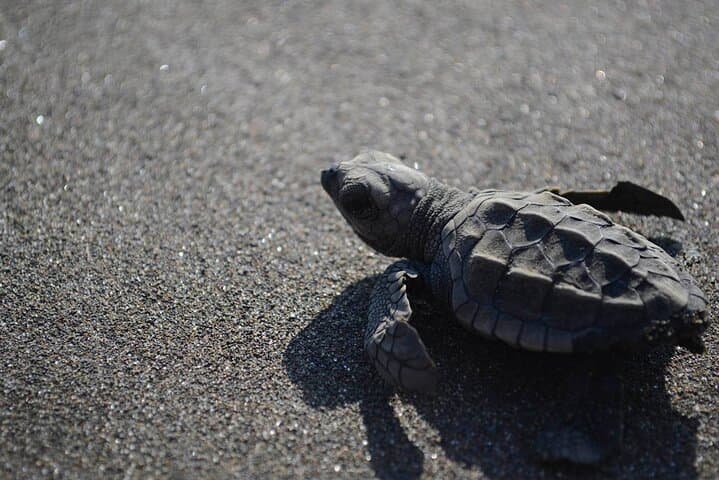
Costa Rica’s Pacific coast has hosted nesting sea turtles for generations, and local conservation rules now guide every visit. Geologically the shoreline is a sweep of volcanic sand and coastal scrub; culturally, communities here balance tourism with protective measures that started picking up in the 1980s. On a guided night watch you’ll learn to read turtle tracks and sit quietly behind a nesting animal — often green, olive ridley, or occasionally the larger leatherback — while it deposits eggs above the high-tide line.
Expect an hour on the beach watching one or more turtles, with bottled water, snacks, and a flashlight provided. Guides follow government protocols: no flash photography, no bright lights, and maintain distance so the turtles remain unaware of observers. The tour suits nearly all fitness levels but requires quiet discipline and simple headlamp management.
Practical things matter here: light yourself with a red-filter lamp, wear closed-toe shoes for the walk across sand, and plan around seasonal nesting peaks. Book in advance — the tour needs at least two bookings to run — and cancel at least 24 hours ahead if plans change.
easy.
3–4 hours.
Suitable for most fitness levels; requires a short walk on sand and the ability to sit quietly for an hour.
Yes — the tour includes pickup and drop-off within Tamarindo; the drive to the beach is about 25 km (40 minutes).
Photography is allowed only under guide direction and without flash; flash photography is prohibited to avoid disturbing nesting turtles.
Yes — the tour is suitable for families, but children must remain quiet, close to the group, and follow guide instructions.
The tour may be canceled for bad weather or if the minimum of two bookings isn’t met; cancel at least 24 hours ahead for a full refund.
Local conservation efforts grew in the late 20th century, with community programs and government protections that regulate night viewing to protect nesting females.
Tours operate under government rules that ban flash photography and close approaches; follow guide instructions and consider donating to local conservation groups to support nesting protections.
Sol Eco Adventures operates guided outdoor trips and adventures with an emphasis on safety, stewardship, and memorable experiences.
The night is warm and salt-heavy as the van eases away from Tamarindo, headlights giving way to starlight and the hush of a road that leads to a beach few people see. After a 25 km drive — roughly 40 minutes — you step out where the only path to the shore is a 10–15 minute walk across dark sand. The beach stays undisturbed because cars can’t reach it; that silence is the reason sea turtles choose this place to dig and lay.
The night is warm and salt-heavy as the van eases away from Tamarindo, headlights giving way to starlight and the hush of a road that leads to a beach few people see. After a 25 km drive — roughly 40 minutes — you step out where the only path to the shore is a 10–15 minute walk across dark sand. The beach stays undisturbed because cars can’t reach it; that silence is the reason sea turtles choose this place to dig and lay.
Costa Rica’s Pacific coast has hosted nesting sea turtles for generations, and local conservation rules now guide every visit. Geologically the shoreline is a sweep of volcanic sand and coastal scrub; culturally, communities here balance tourism with protective measures that started picking up in the 1980s. On a guided night watch you’ll learn to read turtle tracks and sit quietly behind a nesting animal — often green, olive ridley, or occasionally the larger leatherback — while it deposits eggs above the high-tide line.
Expect an hour on the beach watching one or more turtles, with bottled water, snacks, and a flashlight provided. Guides follow government protocols: no flash photography, no bright lights, and maintain distance so the turtles remain unaware of observers. The tour suits nearly all fitness levels but requires quiet discipline and simple headlamp management.
Practical things matter here: light yourself with a red-filter lamp, wear closed-toe shoes for the walk across sand, and plan around seasonal nesting peaks. Book in advance — the tour needs at least two bookings to run — and cancel at least 24 hours ahead if plans change.