THE ADVENTURE COLLECTIVE® · Independent discovery and booking for outdoor travel

Experience a guided night tour from Tamarindo to watch Green and Olive Ridley sea turtles come ashore to nest. Learn the process from bilingual naturalist guides while following strict low-light rules that protect hatchlings.
Experience a guided night tour from Tamarindo to watch Green and Olive Ridley sea turtles come ashore to nest. Learn the process from bilingual naturalist guides while following strict low-light rules that protect hatchlings.
The beach is black under a wide sky; waves push and pull like an insistence, and somewhere on that curve of sand a sea turtle is working—compacting sand, checking the dark, and committing to a nest. On a guided night tour from Tamarindo you stand just beyond the reach of the animal’s labor, watching biology and behavior play out under an infrared beam that keeps the animals calm.
Verified experiences and guided adventures in the surrounding area.
Operated by Nacho Tours · Tamarindo, Guanacaste
The beach is black under a wide sky; waves push and pull like an insistence, and somewhere on that curve of sand a sea turtle is working—compacting sand, checking the dark, and committing to a nest. On a guided night tour from Tamarindo you stand just beyond the reach of the animal’s labor, watching biology and behavior play out under an infrared beam that keeps the animals calm.
Guanacaste’s Pacific coast is one of Costa Rica’s most important nesting zones for Green (black) and Olive Ridley turtles, and, less commonly, Leatherbacks. The volcanic geology offshore and the long, gently sloping beaches create the warm, sandy conditions females seek between October and May, the region’s high season for nesting. Local communities have long balanced fishing, tourism and conservation; bilingual naturalist guides explain life cycles, hatchling orientation, and protections enacted in marine parks.
Expect a two-hour outing held after sunset, short beach walks on firm sand, and strict rules: no flash photography, no bright lights, and quiet observation. Guides carry infrared torches and coordinate with park rangers when nesting activity is present. Dress for humidity and breeze; bring a headlamp with a red cover for personal use only until the beach zone.
Practical tip: these tours prioritize animal welfare over close-up selfies—your best view is patient, respectful observation. Water, low-impact footwear, and mosquito protection make the night comfortable. For photographers, plan on long lenses and a willingness to let the guide set framing limits. The reward is elemental: a living coastline, patient as tide, doing what it has done for millennia.
easy.
2 hours.
Suitable for most fitness levels; requires short walks on sand and standing for observation
Peak nesting in Guanacaste runs roughly October through May; many tours schedule nightly outings during that window.
No—physical contact is prohibited to protect animals and volunteers enforce strict no-touch policies.
Children are usually welcome but must follow quiet, low-light rules; check age limits with the operator when booking.
No—turtles follow natural cycles; guides maximize chances by working in known nesting areas but sightings cannot be guaranteed.
Coastal communities in Guanacaste have a legacy of fishing and more recently conservation, with national parks and local groups protecting nesting beaches since the late 20th century.
Tours operate under strict low-light protocols and often support local monitoring programs; visitors are asked to follow guidelines that minimize disturbance and reduce plastic pollution.
Nacho Tours operates guided outdoor trips and adventures with an emphasis on safety, stewardship, and memorable experiences.
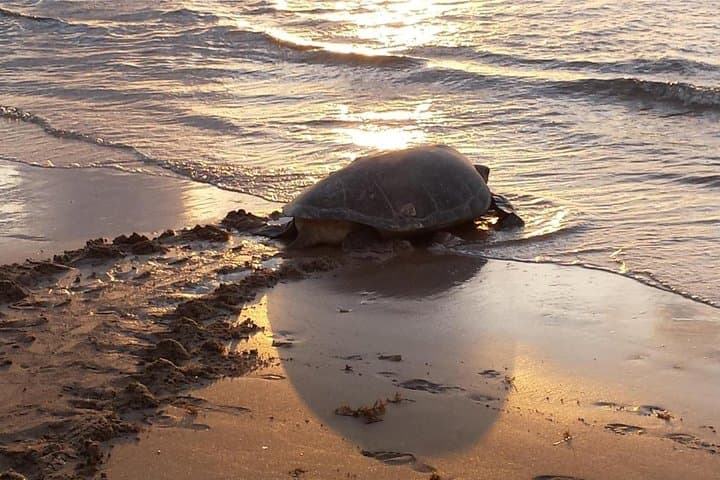
The beach is black under a wide sky; waves push and pull like an insistence, and somewhere on that curve of sand a sea turtle is working—compacting sand, checking the dark, and committing to a nest. On a guided night tour from Tamarindo you stand just beyond the reach of the animal’s labor, watching biology and behavior play out under an infrared beam that keeps the animals calm.
The beach is black under a wide sky; waves push and pull like an insistence, and somewhere on that curve of sand a sea turtle is working—compacting sand, checking the dark, and committing to a nest. On a guided night tour from Tamarindo you stand just beyond the reach of the animal’s labor, watching biology and behavior play out under an infrared beam that keeps the animals calm.
Guanacaste’s Pacific coast is one of Costa Rica’s most important nesting zones for Green (black) and Olive Ridley turtles, and, less commonly, Leatherbacks. The volcanic geology offshore and the long, gently sloping beaches create the warm, sandy conditions females seek between October and May, the region’s high season for nesting. Local communities have long balanced fishing, tourism and conservation; bilingual naturalist guides explain life cycles, hatchling orientation, and protections enacted in marine parks.
Expect a two-hour outing held after sunset, short beach walks on firm sand, and strict rules: no flash photography, no bright lights, and quiet observation. Guides carry infrared torches and coordinate with park rangers when nesting activity is present. Dress for humidity and breeze; bring a headlamp with a red cover for personal use only until the beach zone.
Practical tip: these tours prioritize animal welfare over close-up selfies—your best view is patient, respectful observation. Water, low-impact footwear, and mosquito protection make the night comfortable. For photographers, plan on long lenses and a willingness to let the guide set framing limits. The reward is elemental: a living coastline, patient as tide, doing what it has done for millennia.