THE ADVENTURE COLLECTIVE® · Independent discovery and booking for outdoor travel

Slip off Waikiki and into Turtle Canyon where semi‑private boats put you within viewing distance of Hawaiian green sea turtles. Strong stewardship rules and small groups make this a high‑value snorkeling option for wildlife-minded travelers.
Slip off Waikiki and into Turtle Canyon where semi‑private boats put you within viewing distance of Hawaiian green sea turtles. Strong stewardship rules and small groups make this a high‑value snorkeling option for wildlife-minded travelers.
The ocean opens like a moving wall of glass as the boat slips off Waikiki’s shore; emerald shapes glide below and the guide’s quiet nod points toward a patch of reef where turtles browse. In Turtle Canyon, currents carry reef life in front of you—green sea turtles (honu) drift with purpose, reef fish flit like punctuation, and the surface occasionally breaks with the arc of a spinner dolphin.
Verified experiences and guided adventures in the surrounding area.
Operated by Hawaii Apex Charters · Honolulu, Hawaii
The ocean opens like a moving wall of glass as the boat slips off Waikiki’s shore; emerald shapes glide below and the guide’s quiet nod points toward a patch of reef where turtles browse. In Turtle Canyon, currents carry reef life in front of you—green sea turtles (honu) drift with purpose, reef fish flit like punctuation, and the surface occasionally breaks with the arc of a spinner dolphin.
Waikiki’s coastline is young volcanic rock smoothed by surf and coral growth; Diamond Head’s extinct crater anchors the skyline and sets the stage for coral heads that create the canyon’s pockets. The area has long been part of native Hawaiian life—honored in chants and local lore as guardians of the sea—and modern stewardship efforts emphasize no-touch wildlife viewing and reef-safe practices.
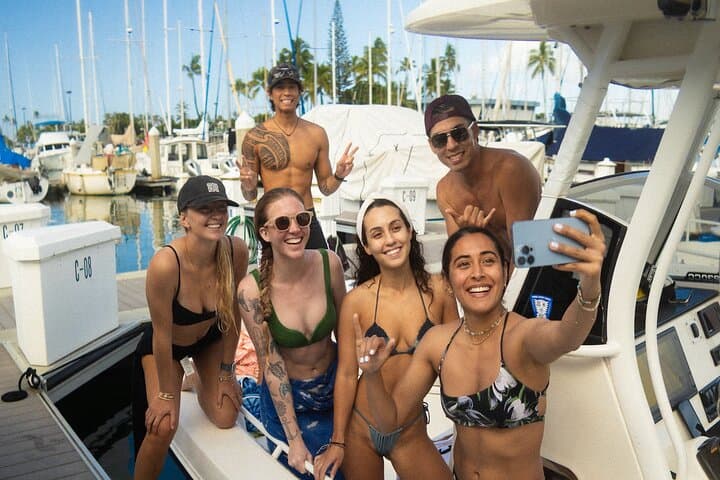
Expect close-but-respectful encounters: semi-private boats limit guests to six, increasing the chance to see turtles while minimizing disturbance. Guides are lifeguard-certified and provide masks, fins and snorkels; a photo package is commonly offered for those who want underwater images without fumbling their own cameras.
Practical guidance: arrive hydrated and sun-protected, wear a rash guard to avoid sunburn and inadvertent reef contact, and practice calm surface breathing before entering. If currents pick up the guide will brief an alternate plan—floatation and swim-back techniques are standard. Snorkeling here is accessible to confident beginners and rewarding for experienced swimmers who want concentrated wildlife viewing without large crowds.
easy.
1.5 hours.
Suitable for people comfortable in open water and able to swim short distances; basic stamina for 20–40 minutes of snorkeling.
Sightings are very likely—Turtle Canyon is named for frequent green sea turtle visits—but wildlife is never guaranteed; guides choose spots with proven activity.
No—tours welcome beginners; guides brief basic skills and provide masks, fins and snorkels, but being comfortable in open water helps.
Yes—guides are lifeguard certified and trained in ocean safety and responsible wildlife interaction.
Trips cancel for unsafe weather or low visibility; operators typically offer full refunds if canceled 24 hours prior or for bad weather.
Waikiki’s shoreline sits below ancient fishponds and was a traditional fishing and recreation area for Hawaiian ali‘i; honu figure prominently in local cultural stories as ocean messengers.
Operators enforce no‑touch policies and recommend reef‑safe sunscreens to reduce coral damage; small boat limits help lower wildlife stress and habitat impact.
Hawaii Apex Charters operates guided outdoor trips and adventures with an emphasis on safety, stewardship, and memorable experiences.
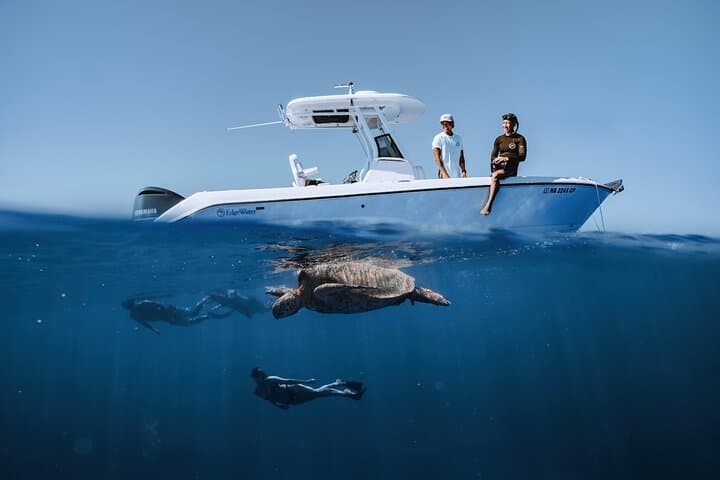
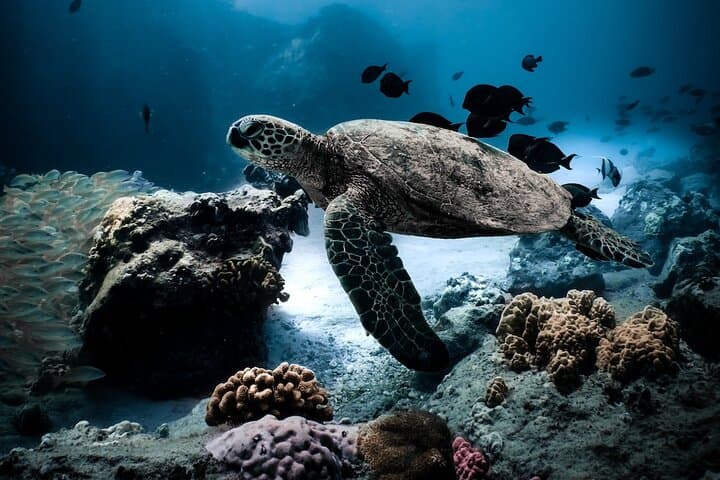
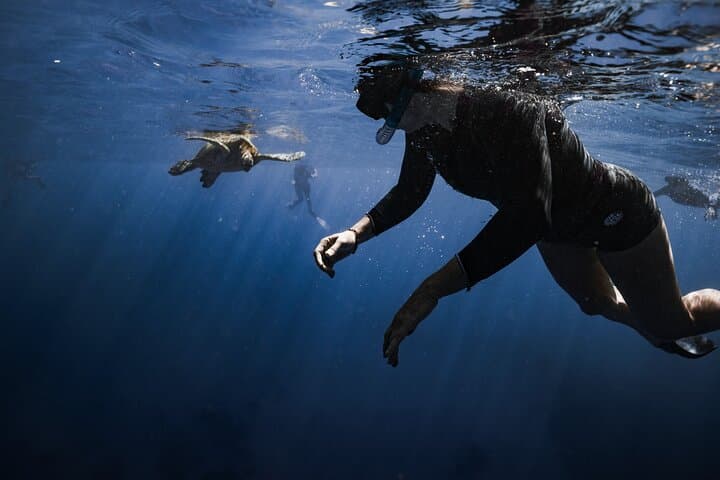
The ocean opens like a moving wall of glass as the boat slips off Waikiki’s shore; emerald shapes glide below and the guide’s quiet nod points toward a patch of reef where turtles browse. In Turtle Canyon, currents carry reef life in front of you—green sea turtles (honu) drift with purpose, reef fish flit like punctuation, and the surface occasionally breaks with the arc of a spinner dolphin.
The ocean opens like a moving wall of glass as the boat slips off Waikiki’s shore; emerald shapes glide below and the guide’s quiet nod points toward a patch of reef where turtles browse. In Turtle Canyon, currents carry reef life in front of you—green sea turtles (honu) drift with purpose, reef fish flit like punctuation, and the surface occasionally breaks with the arc of a spinner dolphin.
Waikiki’s coastline is young volcanic rock smoothed by surf and coral growth; Diamond Head’s extinct crater anchors the skyline and sets the stage for coral heads that create the canyon’s pockets. The area has long been part of native Hawaiian life—honored in chants and local lore as guardians of the sea—and modern stewardship efforts emphasize no-touch wildlife viewing and reef-safe practices.
Expect close-but-respectful encounters: semi-private boats limit guests to six, increasing the chance to see turtles while minimizing disturbance. Guides are lifeguard-certified and provide masks, fins and snorkels; a photo package is commonly offered for those who want underwater images without fumbling their own cameras.
Practical guidance: arrive hydrated and sun-protected, wear a rash guard to avoid sunburn and inadvertent reef contact, and practice calm surface breathing before entering. If currents pick up the guide will brief an alternate plan—floatation and swim-back techniques are standard. Snorkeling here is accessible to confident beginners and rewarding for experienced swimmers who want concentrated wildlife viewing without large crowds.