THE ADVENTURE COLLECTIVE® · Independent discovery and booking for outdoor travel

A quick, scenic shuttle from Anchorage to the Alaska Wildlife Conservation Center along Turnagain Arm. Spend an hour walking the grounds, learning rescue stories, and watching bears, moose and other native species in thoughtfully designed enclosures.
A quick, scenic shuttle from Anchorage to the Alaska Wildlife Conservation Center along Turnagain Arm. Spend an hour walking the grounds, learning rescue stories, and watching bears, moose and other native species in thoughtfully designed enclosures.
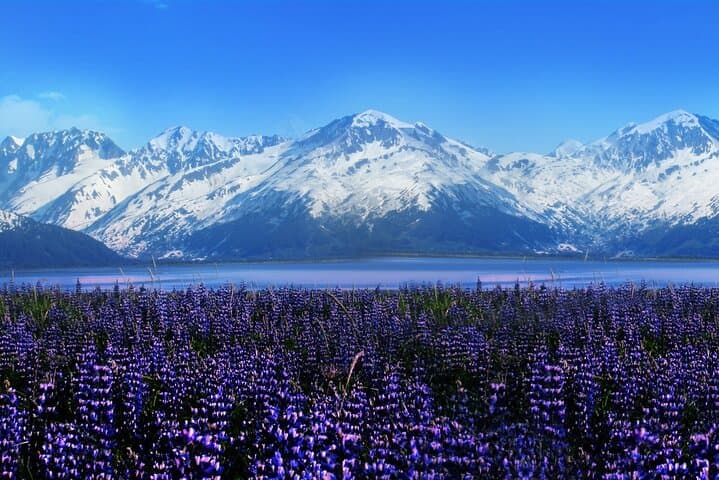
You leave Anchorage with the highway and the sea as companions: Turnagain Arm unfurls beside the van, mountains stepping down into tidal flats and the Cook Inlet glittering like a moving mirror.
Verified experiences and guided adventures in the surrounding area.
Operated by Alaska's Finest Tours & Cruises · Portage, Alaska
You leave Anchorage with the highway and the sea as companions: Turnagain Arm unfurls beside the van, mountains stepping down into tidal flats and the Cook Inlet glittering like a moving mirror.
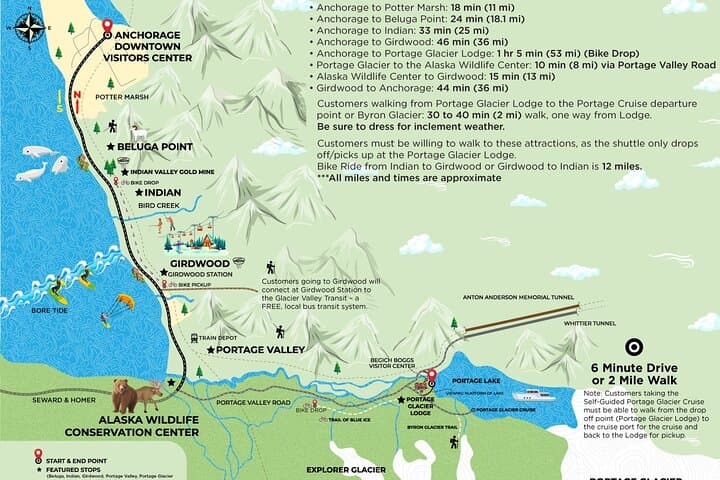
The express shuttle is a brisk introduction to this landscape — a guided drive past Beluga Point with binocular-ready stops, then a direct drop at the Alaska Wildlife Conservation Center (AWCC). The center occupies roughly 140–200 acres of fenced habitat where rescued and non-releasable animals live in settings that echo local terrain.
Geology here is blunt and recent: glacial carving made steep cirques and moraines, and the Chugach Range still hems the road with rocky ridges and hanging valleys. The Dena’ina people have lived in the region for millennia; place names and subsistence knowledge remain part of local culture, and the parkway bears the marks of early 20th-century road and railroad projects that opened southcentral Alaska to visitors.
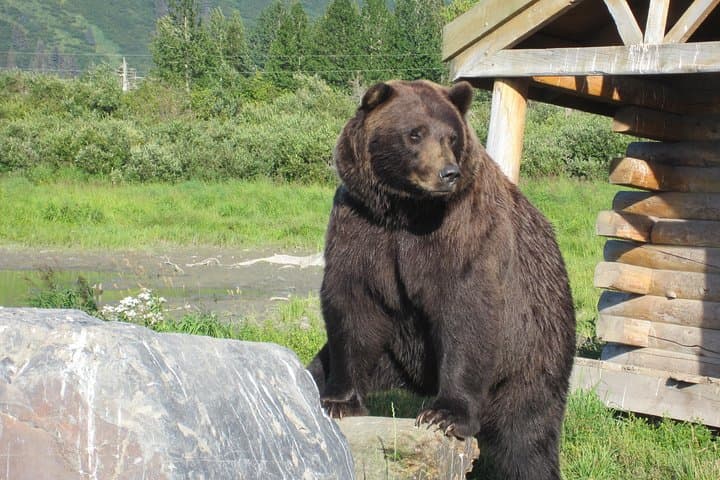
Expect to stroll gravel paths and boardwalks for about an hour, watching moose lowing in willows and bears pacing in enclosures that mimic riparian habitat. Guides explain rescue histories and ongoing rehabilitation work; the center is an educational stop as much as a photo opportunity.
Practical edge: dress in layers, bring a waterproof shell and close-fitting shoes for muddy boardwalks, and arrive early in the day for softer light and more active animals. Binoculars and a telephoto lens are useful; follow staff directions and stay on designated trails to protect animals and habitat.
easy.
3–4 hours.
Light to moderate—able to walk unpaved and sometimes muddy paths for roughly an hour; mostly standing and short strolls.
The shuttle drive to AWCC takes about 45–60 minutes each way along the Seward Highway; the express itinerary includes roughly one hour to explore the center before returning.
Yes — admission to the Alaska Wildlife Conservation Center is included in the express shuttle ticket.
AWCC has restroom facilities and a small gift shop; options for full meals are limited, so bring snacks or plan to eat in Anchorage before or after the tour.
Wildlife sightings at AWCC are reliable for resident, non-releasable animals like bears and moose; sightings of wild beluga whales or Dall sheep along Turnagain Arm are possible but not guaranteed.
The Alaska Wildlife Conservation Center was founded in the early 1990s to provide sanctuary and public education for injured and orphaned Alaskan wildlife; the area itself sits on ancestral Dena’ina lands and along routes used for subsistence and travel.
AWCC focuses on lifelong care for non-releasable animals and public education; visitors help by following signage, not feeding wildlife, and minimizing disturbance around enclosures.
Alaska's Finest Tours & Cruises operates guided outdoor trips and adventures with an emphasis on safety, stewardship, and memorable experiences.
You leave Anchorage with the highway and the sea as companions: Turnagain Arm unfurls beside the van, mountains stepping down into tidal flats and the Cook Inlet glittering like a moving mirror.
You leave Anchorage with the highway and the sea as companions: Turnagain Arm unfurls beside the van, mountains stepping down into tidal flats and the Cook Inlet glittering like a moving mirror.
The express shuttle is a brisk introduction to this landscape — a guided drive past Beluga Point with binocular-ready stops, then a direct drop at the Alaska Wildlife Conservation Center (AWCC). The center occupies roughly 140–200 acres of fenced habitat where rescued and non-releasable animals live in settings that echo local terrain.
Geology here is blunt and recent: glacial carving made steep cirques and moraines, and the Chugach Range still hems the road with rocky ridges and hanging valleys. The Dena’ina people have lived in the region for millennia; place names and subsistence knowledge remain part of local culture, and the parkway bears the marks of early 20th-century road and railroad projects that opened southcentral Alaska to visitors.
Expect to stroll gravel paths and boardwalks for about an hour, watching moose lowing in willows and bears pacing in enclosures that mimic riparian habitat. Guides explain rescue histories and ongoing rehabilitation work; the center is an educational stop as much as a photo opportunity.
Practical edge: dress in layers, bring a waterproof shell and close-fitting shoes for muddy boardwalks, and arrive early in the day for softer light and more active animals. Binoculars and a telephoto lens are useful; follow staff directions and stay on designated trails to protect animals and habitat.