THE ADVENTURE COLLECTIVE® · Independent discovery and booking for outdoor travel

From barefoot mornings on Pamukkale’s white travertines to sunrise over Cappadocia’s fairy chimneys and the marble avenues of Ephesus, Turkey’s Gold Triangle packs ancient history and wild geology into four days. Read this guide for what to expect, how to pack, and the local details that make the route sing.
From barefoot mornings on Pamukkale’s white travertines to sunrise over Cappadocia’s fairy chimneys and the marble avenues of Ephesus, Turkey’s Gold Triangle packs ancient history and wild geology into four days. Read this guide for what to expect, how to pack, and the local details that make the route sing.
Step out of the minibus with the calcite terraces spilling at your feet — white like sugar, steaming in the low sun — and you understand why people have been coming here for millennia. You walk barefoot across Pamukkale’s travertines, the water pushing you forward as if insisting you slow down and take it in. Two days later a different sky waits: the ochre valleys and mushroom-topped fairy chimneys of Cappadocia, where hot-air balloons puncture the horizon like painter’s dots.
Verified experiences and guided adventures in the surrounding area.
Operated by Travel Experts · Göreme, Nevşehir
Step out of the minibus with the calcite terraces spilling at your feet — white like sugar, steaming in the low sun — and you understand why people have been coming here for millennia. You walk barefoot across Pamukkale’s travertines, the water pushing you forward as if insisting you slow down and take it in. Two days later a different sky waits: the ochre valleys and mushroom-topped fairy chimneys of Cappadocia, where hot-air balloons puncture the horizon like painter’s dots.
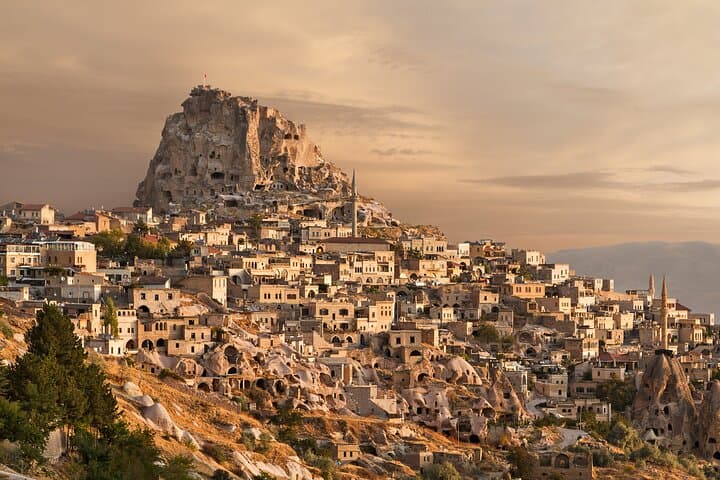
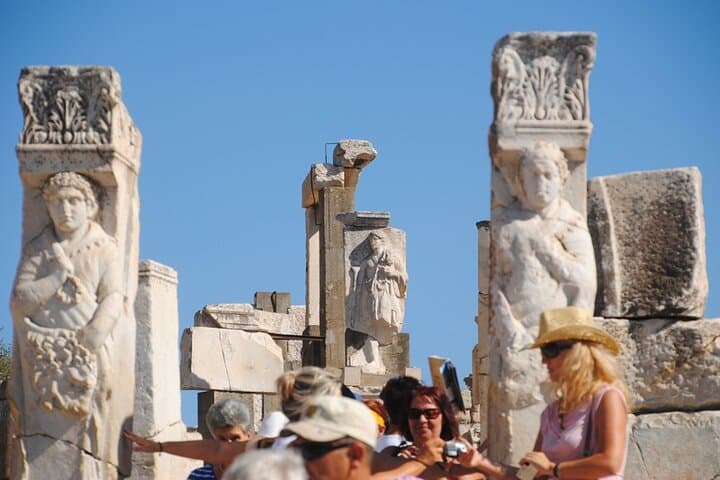
This four-day itinerary threads three of Turkey’s most cinematic sites. At Pamukkale and the adjacent Roman spa-city of Hierapolis you’ll see the Necropolis and the theater carved into history; the geology is simple and dramatic — calcium-rich thermal waters have deposited layered travertine pools for tens of thousands of years. Ephesus, near modern Selçuk, was an ancient Adriatic-era port and later a Roman showpiece; walking the Marble Street past the façade of Celsus Library is to walk the spine of an empire. Cappadocia’s landscape is volcanic tuff eroded into spikes and cones, where people once carved houses and churches into rock — the Göreme Open-Air Museum preserves frescoed caverns that map early Byzantine life.
Local culture threads between the sites: try teste kebab in Avanos, watch potters at the Kızılırmak river, and note that carpet weaving and carved stonework remain everyday crafts. The tour’s semi-private format (max ~10 guests) gives space for stops that go beyond panoramas — a workshop visit, a lunch with regional dishes, and time for the thermal pools.
Practical guidance: the trip runs across domestic flights (Istanbul–Denizli, Izmir–Kayseri, Kayseri–Istanbul) with a 15kg checked + 8kg carry-on allowance typically enforced — pack light and use soft-sided luggage for easier transfers. Expect steady walking: Ephesus alone involves roughly 2 km of uneven marble; Pamukkale’s travertines require you to remove shoes and socks to protect the calcite crust. Cappadocia sits around 1,200m elevation; mornings can be chilly even in summer. Balloon rides are optional and weather-dependent — book early and accept that cancellations yield a refund policy handled by the operator.
Footwear should be sturdy for ruins and sandaled for the travertines; bring sun protection, refillable water, and layered clothing for early starts and cooler evenings. Allow time around airport transfers: domestic flights are included but subject to change. If you want the balloon flight, reserve it when you book to avoid disappointment — and bring a camera with a wide-angle lens for the panoramic valleys.
This compact route offers geological spectacle and classical history in four days — intense, walkable, and richly textured. Arrive ready to remove your shoes, rise with the balloons, and walk through chapters of human history written on stone.
moderate.
4 days.
Moderate fitness: comfortable walking 2–4 km per site, negotiating uneven stone and short stairs.
Yes; domestic flights Istanbul–Denizli, Izmir–Kayseri (to Cappadocia) and Cappadocia–Istanbul are included. E-tickets are sent about six days before departure.
You can add the balloon when booking; availability is limited and flights are weather-dependent, with a partial refund policy if canceled for safety reasons.
Yes—visitors walk barefoot on designated paths only; follow your guide’s instructions to protect the travertines and your feet.
Standard allowance is 15kg checked luggage plus 8kg hand luggage; notify the operator in advance if you need extra allowance (fees may apply).
Breakfasts for three nights and three lunches during guided tours are included; special dietary requirements and vegetarian options can be requested at booking.
The itinerary involves uneven terrain and several stairways; not recommended for travelers with serious mobility or back/heart problems, and children under 5 generally cannot join balloon flights.
Ephesus was a major Roman port and religious center (home to the Temple of Artemis), while Hierapolis grew around thermal springs used since Byzantine times.
Pamukkale is a protected UNESCO site—walking is restricted to specific routes and no soaps/lotions are allowed in thermal waters; follow guides to reduce impact.
Travel Experts operates guided outdoor trips and adventures with an emphasis on safety, stewardship, and memorable experiences.
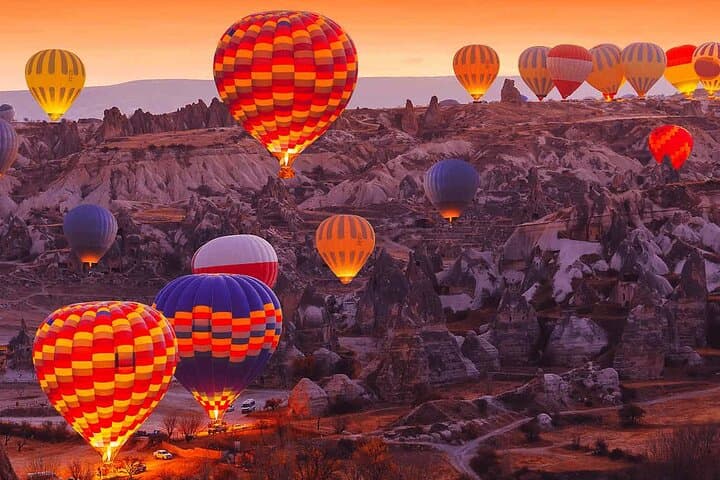
Step out of the minibus with the calcite terraces spilling at your feet — white like sugar, steaming in the low sun — and you understand why people have been coming here for millennia. You walk barefoot across Pamukkale’s travertines, the water pushing you forward as if insisting you slow down and take it in. Two days later a different sky waits: the ochre valleys and mushroom-topped fairy chimneys of Cappadocia, where hot-air balloons puncture the horizon like painter’s dots.
Step out of the minibus with the calcite terraces spilling at your feet — white like sugar, steaming in the low sun — and you understand why people have been coming here for millennia. You walk barefoot across Pamukkale’s travertines, the water pushing you forward as if insisting you slow down and take it in. Two days later a different sky waits: the ochre valleys and mushroom-topped fairy chimneys of Cappadocia, where hot-air balloons puncture the horizon like painter’s dots.
This four-day itinerary threads three of Turkey’s most cinematic sites. At Pamukkale and the adjacent Roman spa-city of Hierapolis you’ll see the Necropolis and the theater carved into history; the geology is simple and dramatic — calcium-rich thermal waters have deposited layered travertine pools for tens of thousands of years. Ephesus, near modern Selçuk, was an ancient Adriatic-era port and later a Roman showpiece; walking the Marble Street past the façade of Celsus Library is to walk the spine of an empire. Cappadocia’s landscape is volcanic tuff eroded into spikes and cones, where people once carved houses and churches into rock — the Göreme Open-Air Museum preserves frescoed caverns that map early Byzantine life.
Local culture threads between the sites: try teste kebab in Avanos, watch potters at the Kızılırmak river, and note that carpet weaving and carved stonework remain everyday crafts. The tour’s semi-private format (max ~10 guests) gives space for stops that go beyond panoramas — a workshop visit, a lunch with regional dishes, and time for the thermal pools.
Practical guidance: the trip runs across domestic flights (Istanbul–Denizli, Izmir–Kayseri, Kayseri–Istanbul) with a 15kg checked + 8kg carry-on allowance typically enforced — pack light and use soft-sided luggage for easier transfers. Expect steady walking: Ephesus alone involves roughly 2 km of uneven marble; Pamukkale’s travertines require you to remove shoes and socks to protect the calcite crust. Cappadocia sits around 1,200m elevation; mornings can be chilly even in summer. Balloon rides are optional and weather-dependent — book early and accept that cancellations yield a refund policy handled by the operator.
Footwear should be sturdy for ruins and sandaled for the travertines; bring sun protection, refillable water, and layered clothing for early starts and cooler evenings. Allow time around airport transfers: domestic flights are included but subject to change. If you want the balloon flight, reserve it when you book to avoid disappointment — and bring a camera with a wide-angle lens for the panoramic valleys.
This compact route offers geological spectacle and classical history in four days — intense, walkable, and richly textured. Arrive ready to remove your shoes, rise with the balloons, and walk through chapters of human history written on stone.