THE ADVENTURE COLLECTIVE® · Independent discovery and booking for outdoor travel

A four-day loop through Turkey’s most iconic landscapes: soak the travertine terraces of Pamukkale, walk the marbled avenues of Ephesus, and rise over Cappadocia in a hot-air balloon or cross its valleys on camelback. This semi-private package blends natural wonders with centuries of history.
A four-day loop through Turkey’s most iconic landscapes: soak the travertine terraces of Pamukkale, walk the marbled avenues of Ephesus, and rise over Cappadocia in a hot-air balloon or cross its valleys on camelback. This semi-private package blends natural wonders with centuries of history.
Dawn in Cappadocia looks like a map being folded — balloons inflate like slow planets, and the valley floor exhales cool, mineral-scented air. On this multi-day route travelers move from the white terraces of Pamukkale to the marble streets of Ephesus, then into the ochre, wind-sculpted world of Göreme, where camels chew quietly and the first light paints fairy chimneys gold.
Verified experiences and guided adventures in the surrounding area.
Operated by Turkey Experiences · Göreme, Nevşehir
Dawn in Cappadocia looks like a map being folded — balloons inflate like slow planets, and the valley floor exhales cool, mineral-scented air. On this multi-day route travelers move from the white terraces of Pamukkale to the marble streets of Ephesus, then into the ochre, wind-sculpted world of Göreme, where camels chew quietly and the first light paints fairy chimneys gold.
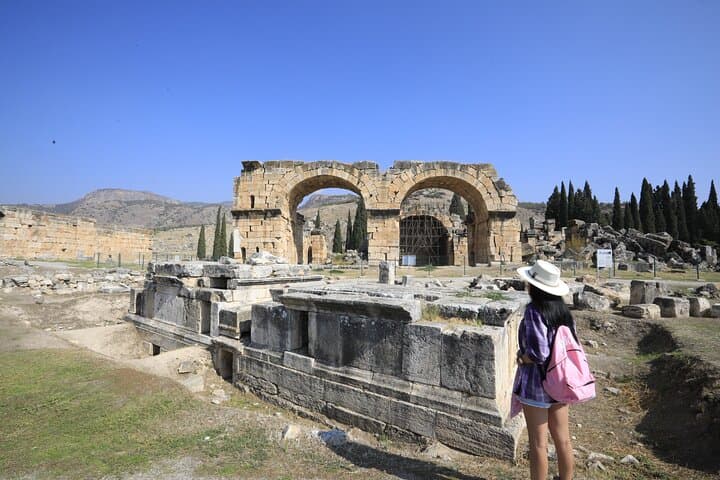
These landscapes are layered history: Pamukkale’s travertines are thermal calcium deposits that have accumulated for millennia around active springs; Hierapolis grew above those springs as a Roman spa city. Ephesus was a major Mediterranean port and a commercial and religious hub in the classical era, while Cappadocia’s surreal hoodoos formed in soft tuff after volcanic ash consolidated and erosion went to work. Avanos preserves a pottery tradition reaching back to Hittite times and local carpet cooperatives keep weaving techniques alive.
Practical guidance: pack good walking shoes for uneven marble, a sun layer for midday heat, and a warm jacket for pre-dawn balloon pickups. Hot-air flights are weather-dependent — expect early starts and possible rescheduling; the operator’s balloon guarantee protects the add-on cost. Domestic flights in the package limit checked luggage to about 15 kg; carry essentials and medications in a daypack. Bring local-currency cash for small purchases, and leave fragile souvenirs and rocks in the past — both sites are protected UNESCO attractions.
This itinerary balances cultural depth and landscape spectacle: move deliberately, hydrate often, and plan extra time for photography and brief, quiet moments in these ancient places.
moderate.
4 days.
Moderate fitness: able to walk on uneven, sometimes steep paths and tolerate early starts for ballooning.
Balloon flights are weather-dependent; the operator offers a money-back guarantee if the flight is canceled due to conditions, and rescheduling is common when possible.
Walking on the white travertine is regulated to protect the formations; visitors can bathe in designated pools and pay extra for the Antique (Cleopatra) Pool where available.
Yes — domestic flights (Istanbul–Denizli, Izmir–Cappadocia, Cappadocia–Istanbul) are included; provide passport details in advance and note luggage limits of about 15 kg per checked bag.
Breakfasts and three lunches are included; vegetarian and halal options are available if requested at booking. Inform the operator of dietary needs ahead of time.
Ephesus was a major Roman port and religious hub; Pamukkale’s Hierapolis served as an ancient spa town whose sacred springs attracted pilgrims and emperors.
Both Göreme and Pamukkale are UNESCO World Heritage Sites with strict path and access rules — stay on marked routes, avoid removing natural or archaeological samples, and reduce plastic waste.
Turkey Experiences operates guided outdoor trips and adventures with an emphasis on safety, stewardship, and memorable experiences.

Dawn in Cappadocia looks like a map being folded — balloons inflate like slow planets, and the valley floor exhales cool, mineral-scented air. On this multi-day route travelers move from the white terraces of Pamukkale to the marble streets of Ephesus, then into the ochre, wind-sculpted world of Göreme, where camels chew quietly and the first light paints fairy chimneys gold.
Dawn in Cappadocia looks like a map being folded — balloons inflate like slow planets, and the valley floor exhales cool, mineral-scented air. On this multi-day route travelers move from the white terraces of Pamukkale to the marble streets of Ephesus, then into the ochre, wind-sculpted world of Göreme, where camels chew quietly and the first light paints fairy chimneys gold.
These landscapes are layered history: Pamukkale’s travertines are thermal calcium deposits that have accumulated for millennia around active springs; Hierapolis grew above those springs as a Roman spa city. Ephesus was a major Mediterranean port and a commercial and religious hub in the classical era, while Cappadocia’s surreal hoodoos formed in soft tuff after volcanic ash consolidated and erosion went to work. Avanos preserves a pottery tradition reaching back to Hittite times and local carpet cooperatives keep weaving techniques alive.
Practical guidance: pack good walking shoes for uneven marble, a sun layer for midday heat, and a warm jacket for pre-dawn balloon pickups. Hot-air flights are weather-dependent — expect early starts and possible rescheduling; the operator’s balloon guarantee protects the add-on cost. Domestic flights in the package limit checked luggage to about 15 kg; carry essentials and medications in a daypack. Bring local-currency cash for small purchases, and leave fragile souvenirs and rocks in the past — both sites are protected UNESCO attractions.
This itinerary balances cultural depth and landscape spectacle: move deliberately, hydrate often, and plan extra time for photography and brief, quiet moments in these ancient places.