THE ADVENTURE COLLECTIVE® · Independent discovery and booking for outdoor travel

See three of East Java’s headline landscapes in one trip: the curtain‑drop of Tumpak Sewu, Bromo’s dramatic sunrise over a sea of sand, and Ijen’s rare blue fire. Expect early starts, long drives, and intimate encounters with volcanic terrain and local miners.
See three of East Java’s headline landscapes in one trip: the curtain‑drop of Tumpak Sewu, Bromo’s dramatic sunrise over a sea of sand, and Ijen’s rare blue fire. Expect early starts, long drives, and intimate encounters with volcanic terrain and local miners.
Dawn arrives before most towns do: you feel the night compress around the jeep as it rumbles toward Bromo’s sea of sand, and later the morning mist parts to reveal a vertical sheet of water at Tumpak Sewu. This three-day circuit stitches together East Java’s most kinetic landscapes — a plunging waterfall, a volcanic caldera that blooms gold at sunrise, and a sulfur-scented crater where blue flames flare in the dark.
Verified experiences and guided adventures in the surrounding area.
Operated by bromo backpackers · Malang, East Java
Dawn arrives before most towns do: you feel the night compress around the jeep as it rumbles toward Bromo’s sea of sand, and later the morning mist parts to reveal a vertical sheet of water at Tumpak Sewu. This three-day circuit stitches together East Java’s most kinetic landscapes — a plunging waterfall, a volcanic caldera that blooms gold at sunrise, and a sulfur-scented crater where blue flames flare in the dark.
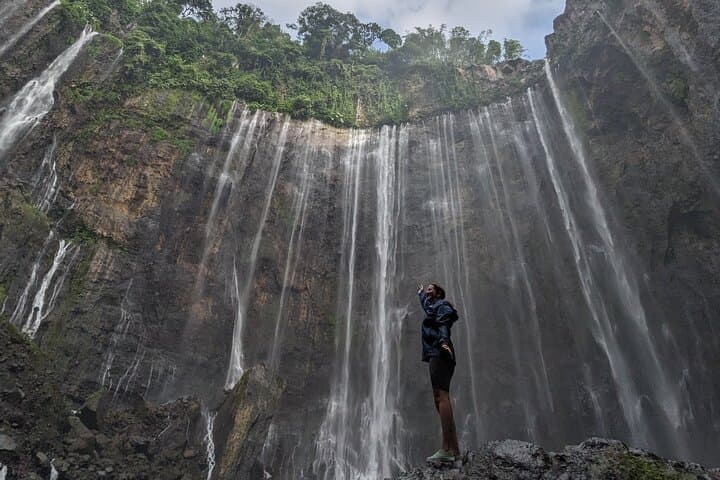
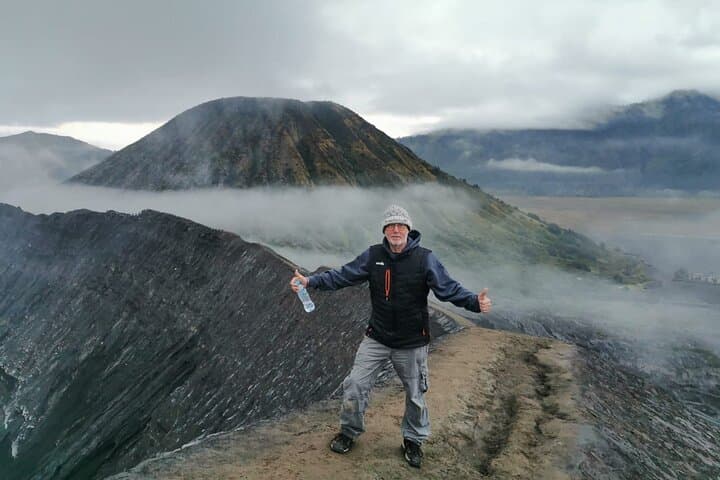
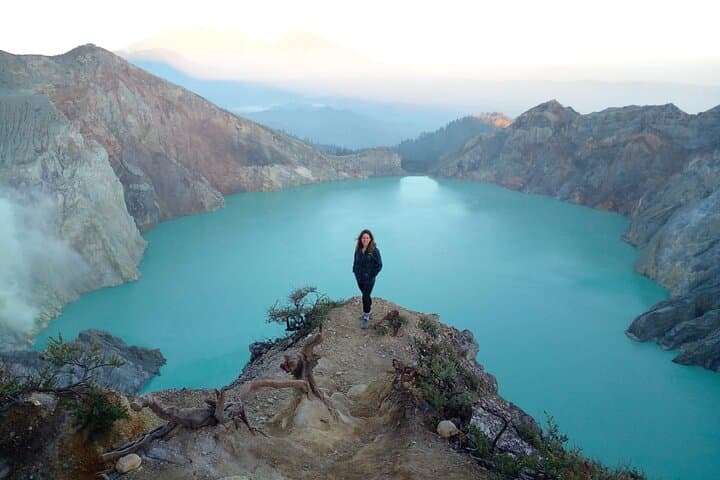
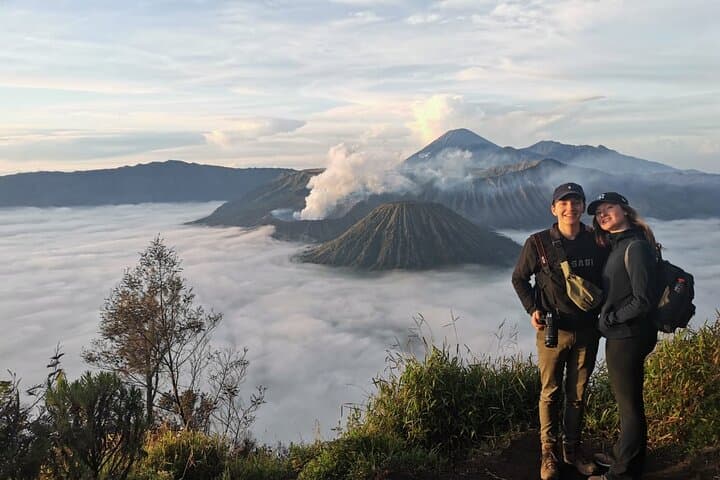
Geology drives the itinerary. Mount Bromo sits on the Tengger massif (crater rim ~2,329 m), a young volcanic system whose ash-sculpted plain creates the “sea of sand” walkers cross to reach the rim. Ijen’s acidic crater (rim ~2,443 m) hosts a rare combustion of sulfur gases that glows electric blue at night; miners still extract sulfur with hand tools below the rim. Tumpak Sewu, in Lumajang regency, is a segmented curtain waterfall dropping roughly 100–120 m through a narrow amphitheater.
Culturally you’ll meet Tenggerese guides and see mining camps whose routines predate modern permits; respect and discretion are required. Expect long drives (Surabaya to Tumpak Sewu ~4 h; Bromo to Ijen ~6 h) and early starts (Bromo 03:00, Ijen 01:00).
Practical notes: bring layered clothing for cold crater rims, a headlamp for early climbs, and sturdy boots for muddy steps and rocky trails. Gas masks and goggles are typically provided for Ijen; follow your guide’s safety brief when descending to see the blue fire. Plan for ferry time to Bali (~1 h) and remember Bali is one hour ahead of Java.
moderate.
3 days.
Moderate fitness — should be comfortable with hour-long uphill/downhill walks, uneven steps and several early-morning climbs.
Not guaranteed — blue fire visibility depends on volcanic activity and wind; guides monitor conditions and will advise, but chance improves on clear nights with minimal wind.
Yes — operators typically supply gas masks and goggles; always use them and follow your guide’s safety instructions when descending into the crater.
Yes — horse rentals are available to reach the crater stairs, but horses are not suitable for everyone; choose walking if you have balance or back issues.
After Ijen you’ll travel to Ketapang Ferry Port (about 1 hour), take the ferry to Gilimanuk (~1 hour in good conditions) and note Bali is one hour ahead of Java time.
The Tenggerese community around Bromo practices Hindu rituals tied to the volcano; Ijen’s sulfur extraction has been a local livelihood for generations.
These landscapes are fragile — stick to trails, pack out waste, and hire licensed local guides to minimize impact and support the community.
bromo backpackers operates guided outdoor trips and adventures with an emphasis on safety, stewardship, and memorable experiences.
Dawn arrives before most towns do: you feel the night compress around the jeep as it rumbles toward Bromo’s sea of sand, and later the morning mist parts to reveal a vertical sheet of water at Tumpak Sewu. This three-day circuit stitches together East Java’s most kinetic landscapes — a plunging waterfall, a volcanic caldera that blooms gold at sunrise, and a sulfur-scented crater where blue flames flare in the dark.
Dawn arrives before most towns do: you feel the night compress around the jeep as it rumbles toward Bromo’s sea of sand, and later the morning mist parts to reveal a vertical sheet of water at Tumpak Sewu. This three-day circuit stitches together East Java’s most kinetic landscapes — a plunging waterfall, a volcanic caldera that blooms gold at sunrise, and a sulfur-scented crater where blue flames flare in the dark.
Geology drives the itinerary. Mount Bromo sits on the Tengger massif (crater rim ~2,329 m), a young volcanic system whose ash-sculpted plain creates the “sea of sand” walkers cross to reach the rim. Ijen’s acidic crater (rim ~2,443 m) hosts a rare combustion of sulfur gases that glows electric blue at night; miners still extract sulfur with hand tools below the rim. Tumpak Sewu, in Lumajang regency, is a segmented curtain waterfall dropping roughly 100–120 m through a narrow amphitheater.
Culturally you’ll meet Tenggerese guides and see mining camps whose routines predate modern permits; respect and discretion are required. Expect long drives (Surabaya to Tumpak Sewu ~4 h; Bromo to Ijen ~6 h) and early starts (Bromo 03:00, Ijen 01:00).
Practical notes: bring layered clothing for cold crater rims, a headlamp for early climbs, and sturdy boots for muddy steps and rocky trails. Gas masks and goggles are typically provided for Ijen; follow your guide’s safety brief when descending to see the blue fire. Plan for ferry time to Bali (~1 h) and remember Bali is one hour ahead of Java.