THE ADVENTURE COLLECTIVE® · Independent discovery and booking for outdoor travel

Spend a day exploring Tulum’s clifftop ruins, snorkeling with green sea turtles in protected shallows, and relaxing on powder-white beaches. This all‑inclusive day tour pairs concise archaeology with safe, guided marine encounters—ideal for travelers seeking history and wildlife in one easily accessible package.
Spend a day exploring Tulum’s clifftop ruins, snorkeling with green sea turtles in protected shallows, and relaxing on powder-white beaches. This all‑inclusive day tour pairs concise archaeology with safe, guided marine encounters—ideal for travelers seeking history and wildlife in one easily accessible package.
A low cliff drops to a bright Caribbean horizon and gulls wheel like punctuation marks above stone. Visitors step from shaded paths into the open at Tulum’s clifftop ruins, where wind and sea have shaped both the stones and the view.
Verified experiences and guided adventures in the surrounding area.
Operated by ALEMAN TRAVEL AGENCY · Tulum, Quintana Roo
A low cliff drops to a bright Caribbean horizon and gulls wheel like punctuation marks above stone. Visitors step from shaded paths into the open at Tulum’s clifftop ruins, where wind and sea have shaped both the stones and the view.
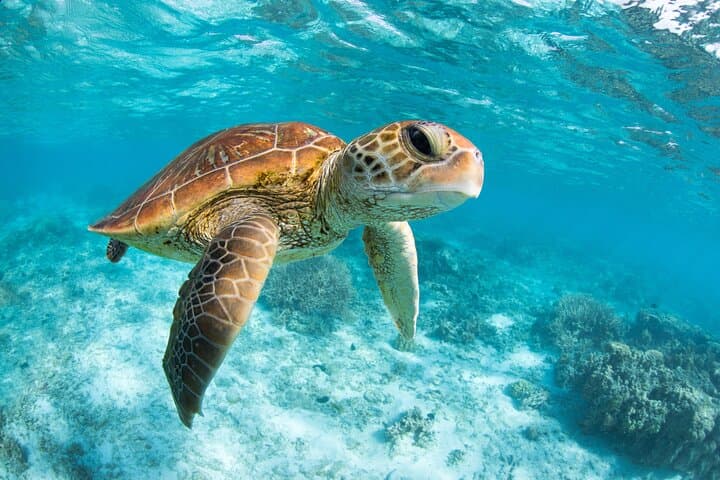
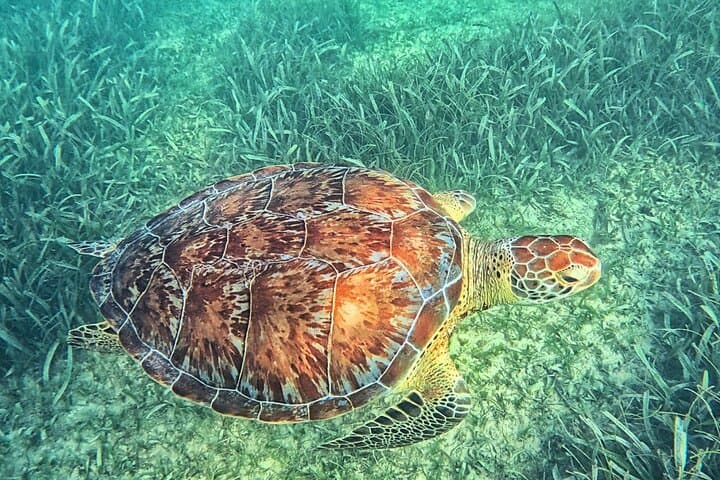
The site sits on limestone escarpments formed by ancient coral reef and sea-level change; the Maya used this defensible perch for trade and ceremony. Nearby sands—soft, white, and quarried from eroded reefs—give way to seagrass flats where green turtles feed. Local culture remains palpable: fishermen, archaeological stewards, and small vendors keep contemporary life threaded through the old stones.
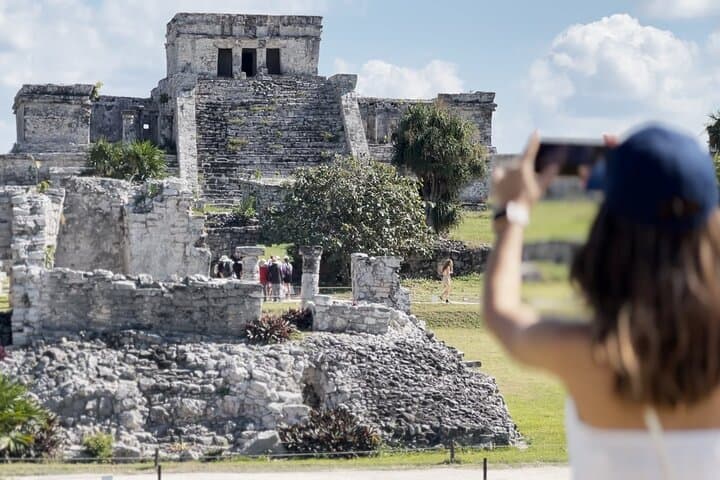
On an all‑inclusive day tour, expect a morning archaeological walk with concise historical interpretation, mid‑day beach time at a protected stretch called Tortugas for snorkeling with sea turtles, and a casual lunch featuring regional flavors. The water is typically warm, visibility good in calm conditions, and currents gentle in the turtle feeding grounds; basic snorkeling ability and respect for wildlife are required. Elevation change is negligible—most movement is horizontal across sand, coastal ridge and boardwalks.
Practical guidance: bring reef‑safe sunscreen, a well‑fitting snorkel mask, and a moisture barrier for electronics; arrive early to avoid crowds and midday heat. Hydrate steadily—the sun can feel harsher near the pale sand—and follow guides’ instructions when swimming near turtles. The outing is approachable for a broad range of travelers but rewards simple preparation.
easy.
8–9 hours.
Suitable for people in average fitness; must be able to enter/exit water and swim short distances with a mask and snorkel.
Yes; operators typically accommodate families, but children should be comfortable in water and supervised—infant seats and stroller options may be available.
Basic snorkeling skills are recommended; guides provide a brief orientation and can assist beginners in calm shallows.
Expect guided visits, lunch, transportation, and snorkeling equipment (confirm mask/snorkel availability if you prefer personal gear).
No—touching or harassing wildlife is prohibited; maintain distance so turtles can feed and surface naturally.
Tulum was a late Postclassic Maya coastal trade hub, notable for its cliffside El Castillo temple overlooking the Caribbean and its role in maritime commerce.
The coast is ecologically sensitive—use reef‑safe sunscreen, avoid stepping on seagrass, and follow local guides to reduce impact on turtle feeding areas.
ALEMAN TRAVEL AGENCY operates guided outdoor trips and adventures with an emphasis on safety, stewardship, and memorable experiences.
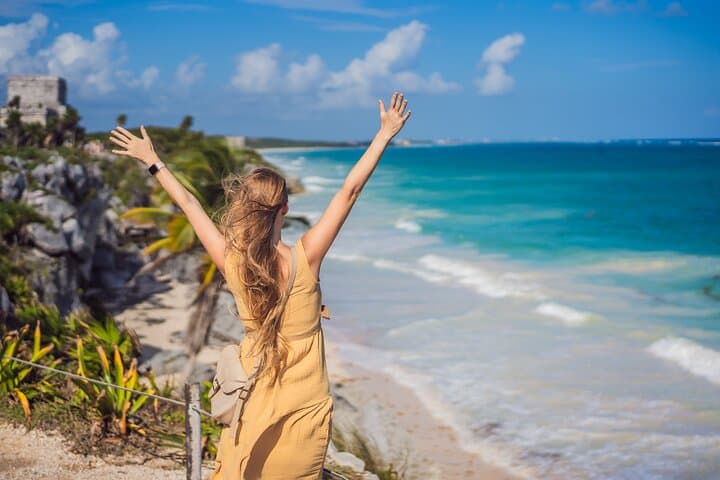
A low cliff drops to a bright Caribbean horizon and gulls wheel like punctuation marks above stone. Visitors step from shaded paths into the open at Tulum’s clifftop ruins, where wind and sea have shaped both the stones and the view.
A low cliff drops to a bright Caribbean horizon and gulls wheel like punctuation marks above stone. Visitors step from shaded paths into the open at Tulum’s clifftop ruins, where wind and sea have shaped both the stones and the view.
The site sits on limestone escarpments formed by ancient coral reef and sea-level change; the Maya used this defensible perch for trade and ceremony. Nearby sands—soft, white, and quarried from eroded reefs—give way to seagrass flats where green turtles feed. Local culture remains palpable: fishermen, archaeological stewards, and small vendors keep contemporary life threaded through the old stones.
On an all‑inclusive day tour, expect a morning archaeological walk with concise historical interpretation, mid‑day beach time at a protected stretch called Tortugas for snorkeling with sea turtles, and a casual lunch featuring regional flavors. The water is typically warm, visibility good in calm conditions, and currents gentle in the turtle feeding grounds; basic snorkeling ability and respect for wildlife are required. Elevation change is negligible—most movement is horizontal across sand, coastal ridge and boardwalks.
Practical guidance: bring reef‑safe sunscreen, a well‑fitting snorkel mask, and a moisture barrier for electronics; arrive early to avoid crowds and midday heat. Hydrate steadily—the sun can feel harsher near the pale sand—and follow guides’ instructions when swimming near turtles. The outing is approachable for a broad range of travelers but rewards simple preparation.