THE ADVENTURE COLLECTIVE® · Independent discovery and booking for outdoor travel

Explore clifftop Mayan ruins, descend into a closed flooded cenote and finish with fresh Caribbean flavors in Akumal. This private six-hour excursion blends history, geology and hands-on natural wonder.
Explore clifftop Mayan ruins, descend into a closed flooded cenote and finish with fresh Caribbean flavors in Akumal. This private six-hour excursion blends history, geology and hands-on natural wonder.
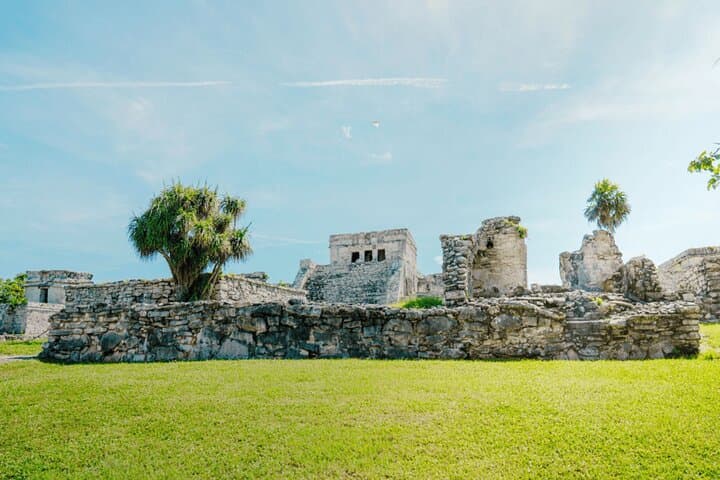
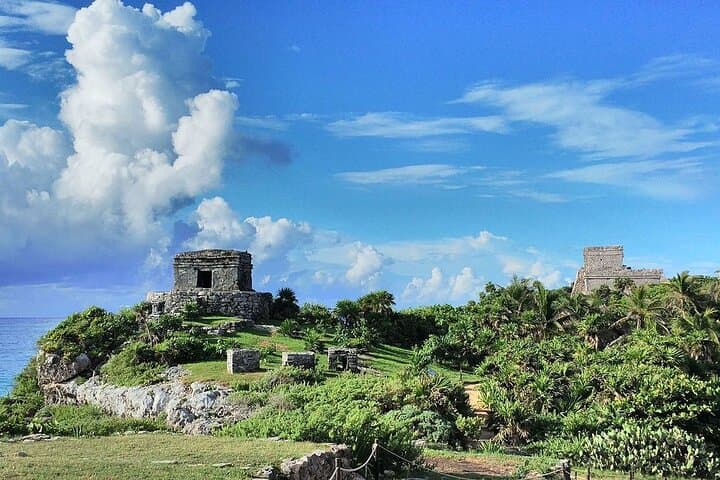
The limestone cliff drops away to a wide blue that dares you to look longer; gulls wheel above a square stone temple and the Caribbean tugs at the horizon. Beginning at the clifftop ruins of Tulum, this day pairs archaeological perspective with subterranean geology: a morning among the Mayan battlements, a guided descent into a flooded cave system at Cenote Rancho Santa Cruz, and a relaxed, locally sourced lunch in Akumal.
Verified experiences and guided adventures in the surrounding area.
Operated by Mexico Sol Tours · Tulum, Quintana Roo
The limestone cliff drops away to a wide blue that dares you to look longer; gulls wheel above a square stone temple and the Caribbean tugs at the horizon. Beginning at the clifftop ruins of Tulum, this day pairs archaeological perspective with subterranean geology: a morning among the Mayan battlements, a guided descent into a flooded cave system at Cenote Rancho Santa Cruz, and a relaxed, locally sourced lunch in Akumal.
Tulum was a strategic late-Postclassic port, its masonry and murals speaking to trade and ritual on this stretch of coast. The Yucatán’s geology is a story of porous limestone and rain-carved conduits—cenotes are the peninsula’s aquifers exposed, their stalactites and clear waters recording millennia of chemical weathering.
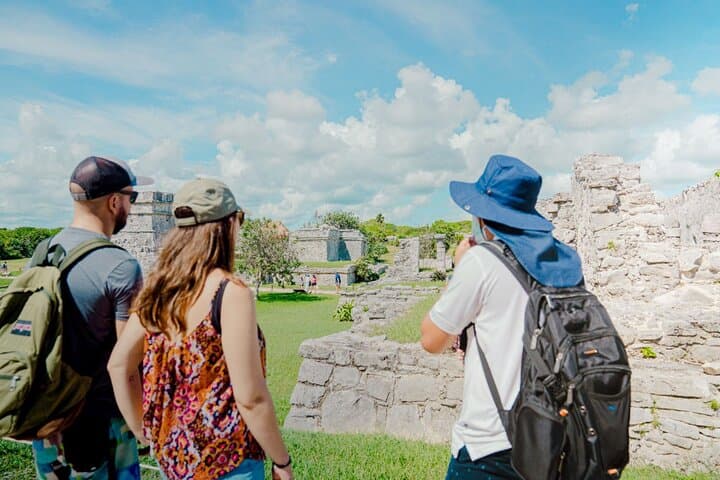
Culturally, Akumal still feels small—fishermen, family-run kitchens and a coastline slowly shifting toward ecotourism. Expect an interpretive guide at each stop: archaeology at El Castillo, careful navigation of low cave ceilings, and a regional meal highlighting fresh fish and citrus flavors.
Practical notes: bring reef-safe sunscreen, a swimsuit under quick-dry clothes and shoes that handle wet steps. The cenote visit involves short swims and tight spaces; life jackets and masks are provided, fins are omitted to protect fragile beds of coral and cave formations. Allow roughly six hours for the tour, plan mornings for cooler light at the ruins, and keep mobile tickets handy for admissions. Respect posted signs and trained guides—these sites are fragile but immediate, and a thoughtful visit keeps them that way.
easy.
6 hours.
Light fitness suitable—short walks at ruins and moderate swimming in calm cenote water; minimal endurance required.
Yes—private air-conditioned round-trip van transportation is included from your pickup point.
No—life jackets are provided, but basic swimming ability and comfort in water are recommended.
Yes—admissions to the Tulum ruins and the cenote, plus the restaurant lunch in Akumal, are included.
Phones are allowed but keep them on a secure, waterproof strap or case; follow guide instructions to protect both gear and formations.
Tulum functioned as a coastal trading port in the late Postclassic Maya period; cenotes have long been sacred freshwater sources and ceremonial sites across the Yucatán.
Operators often omit fins and encourage reef-safe sunscreen to protect coral and cenote formations; stick to marked paths and avoid touching formations or marine life.
Mexico Sol Tours operates guided outdoor trips and adventures with an emphasis on safety, stewardship, and memorable experiences.
The limestone cliff drops away to a wide blue that dares you to look longer; gulls wheel above a square stone temple and the Caribbean tugs at the horizon. Beginning at the clifftop ruins of Tulum, this day pairs archaeological perspective with subterranean geology: a morning among the Mayan battlements, a guided descent into a flooded cave system at Cenote Rancho Santa Cruz, and a relaxed, locally sourced lunch in Akumal.
The limestone cliff drops away to a wide blue that dares you to look longer; gulls wheel above a square stone temple and the Caribbean tugs at the horizon. Beginning at the clifftop ruins of Tulum, this day pairs archaeological perspective with subterranean geology: a morning among the Mayan battlements, a guided descent into a flooded cave system at Cenote Rancho Santa Cruz, and a relaxed, locally sourced lunch in Akumal.
Tulum was a strategic late-Postclassic port, its masonry and murals speaking to trade and ritual on this stretch of coast. The Yucatán’s geology is a story of porous limestone and rain-carved conduits—cenotes are the peninsula’s aquifers exposed, their stalactites and clear waters recording millennia of chemical weathering.
Culturally, Akumal still feels small—fishermen, family-run kitchens and a coastline slowly shifting toward ecotourism. Expect an interpretive guide at each stop: archaeology at El Castillo, careful navigation of low cave ceilings, and a regional meal highlighting fresh fish and citrus flavors.
Practical notes: bring reef-safe sunscreen, a swimsuit under quick-dry clothes and shoes that handle wet steps. The cenote visit involves short swims and tight spaces; life jackets and masks are provided, fins are omitted to protect fragile beds of coral and cave formations. Allow roughly six hours for the tour, plan mornings for cooler light at the ruins, and keep mobile tickets handy for admissions. Respect posted signs and trained guides—these sites are fragile but immediate, and a thoughtful visit keeps them that way.