THE ADVENTURE COLLECTIVE® · Independent discovery and booking for outdoor travel

Explore cliff-top Mayan ruins, ride through jungle trails, and swim in a cavern cenote on a full-day guided combo from Tulum. Practical tips on timing, gear and local rules to make the most of your day.
Explore cliff-top Mayan ruins, ride through jungle trails, and swim in a cavern cenote on a full-day guided combo from Tulum. Practical tips on timing, gear and local rules to make the most of your day.
The morning opens with salt on the air and gulls tracing the sea as the party climbs toward the cliff-top ruins of Tulum. Stone steps underfoot, a guide points out carvings while the Caribbean below dares the wind to take its breath; the walls here read like a map of coastal trade and weather. After the archaeological visit the group slips into the green hush of jungle trails, horses padding over soft earth as sunlight punches through leaves. The day finishes underground: a cavern cenote where water is glass-clear and stalactites hang like the teeth of the earth.
Verified experiences and guided adventures in the surrounding area.
Operated by The Jungle Experience · Tulum, Quintana Roo
The morning opens with salt on the air and gulls tracing the sea as the party climbs toward the cliff-top ruins of Tulum. Stone steps underfoot, a guide points out carvings while the Caribbean below dares the wind to take its breath; the walls here read like a map of coastal trade and weather. After the archaeological visit the group slips into the green hush of jungle trails, horses padding over soft earth as sunlight punches through leaves. The day finishes underground: a cavern cenote where water is glass-clear and stalactites hang like the teeth of the earth.
Tulum was a late-Postclassic Maya coastal fortress and trading port—walls and watchtowers date from roughly the 13th–16th centuries—and its limestone cliffs sit atop a porous karst system that forms the cenotes. Culturally, the site blends Maya ritual importance with a centuries-long coastal economy; locally, guides often weave oral histories about the sea, storms and trade. The cenote’s crystal waters are part of an aquifer essential to the Yucatán and sensitive to contamination.
Practical guidance: the combined tour runs about 6–7 hours, expect roughly 90–120 minutes at the ruins and the rest split between riding and the cenote. Plastic bottles are prohibited in the archaeological zone—bring a refillable thermos. Weight limit on horses is 125 kg (250 lb). Wear closed-toe shoes for riding and a swimsuit for the cenote; reef-safe sunscreen and a towel are smart. Carry small cash for the park tax and any optional gratuities. Moderate fitness is needed for short walks, mounting horses and stairs in the ruins. Travel light, respect fragile cave formations, and follow guides’ safety briefings for a smooth, memorable day.
moderate.
6–7 hours.
Suitable for travelers with moderate fitness: must handle stairs, short hikes, mounting a horse and swimming in calm water
The full experience is about 6–7 hours: roughly 1.5–2 hours at Tulum ruins, 1–2 hours for horseback riding and transfers, and time at the cenote to swim and explore.
No—plastic bottles are prohibited in the archaeological zone; bring a refillable thermos instead.
No formal experience is required; basic riding instructions and helmets are provided, but you should be comfortable mounting and sitting on a horse.
Yes—horse weight limit is 125 kg (250 lb); the tour is not recommended for travelers with serious heart conditions or limited mobility.
Tulum was a late-Postclassic Maya walled city and important coastal trading port; many structures were occupied until the early 16th century.
Cenote ecosystems are fragile—avoid sunscreens and soaps before entering and follow guide instructions to minimize contamination of the aquifer.
The Jungle Experience operates guided outdoor trips and adventures with an emphasis on safety, stewardship, and memorable experiences.
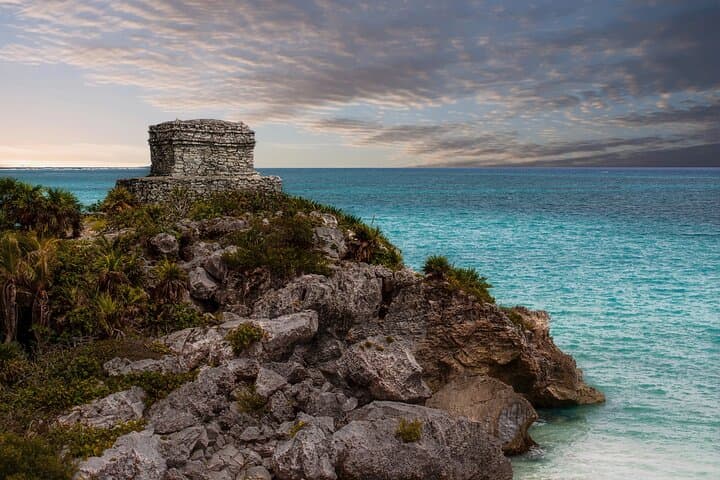
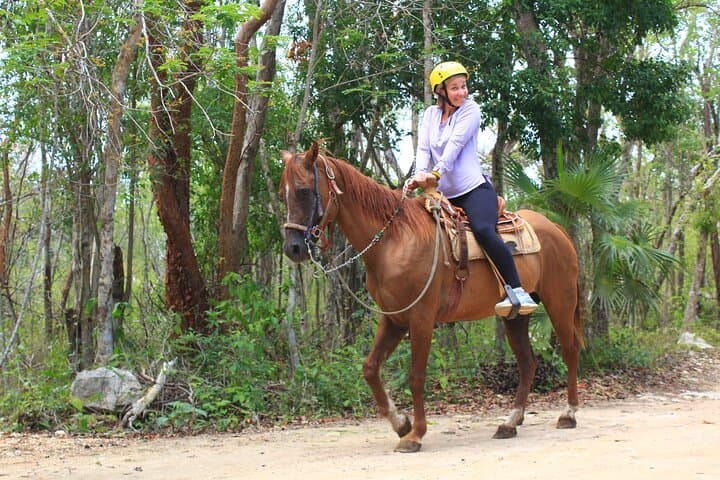
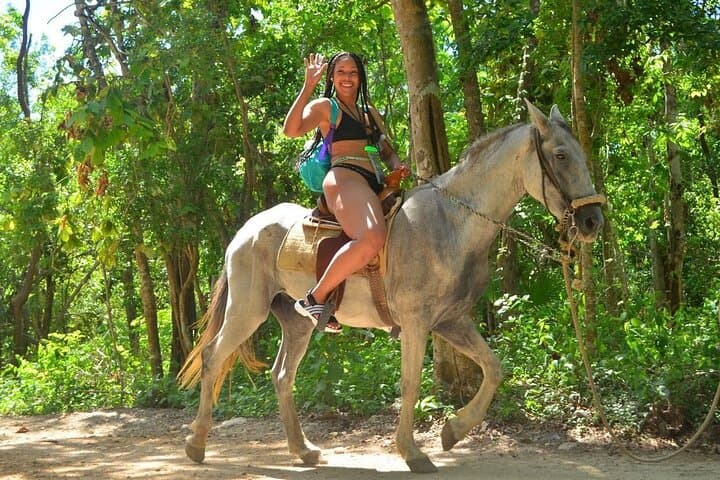
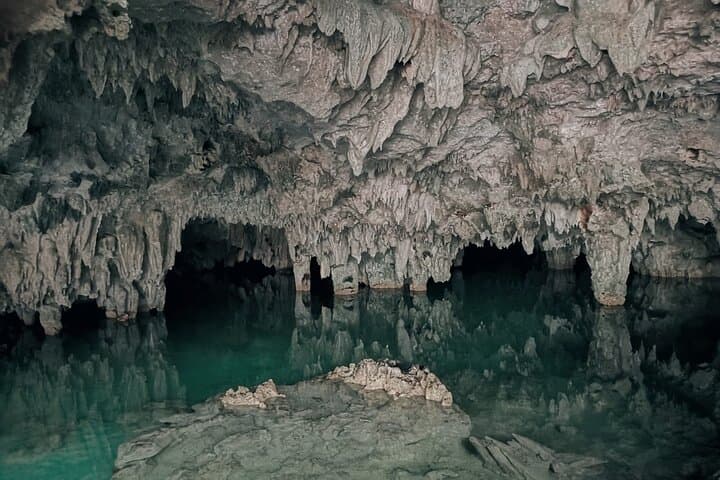
The morning opens with salt on the air and gulls tracing the sea as the party climbs toward the cliff-top ruins of Tulum. Stone steps underfoot, a guide points out carvings while the Caribbean below dares the wind to take its breath; the walls here read like a map of coastal trade and weather. After the archaeological visit the group slips into the green hush of jungle trails, horses padding over soft earth as sunlight punches through leaves. The day finishes underground: a cavern cenote where water is glass-clear and stalactites hang like the teeth of the earth.
The morning opens with salt on the air and gulls tracing the sea as the party climbs toward the cliff-top ruins of Tulum. Stone steps underfoot, a guide points out carvings while the Caribbean below dares the wind to take its breath; the walls here read like a map of coastal trade and weather. After the archaeological visit the group slips into the green hush of jungle trails, horses padding over soft earth as sunlight punches through leaves. The day finishes underground: a cavern cenote where water is glass-clear and stalactites hang like the teeth of the earth.
Tulum was a late-Postclassic Maya coastal fortress and trading port—walls and watchtowers date from roughly the 13th–16th centuries—and its limestone cliffs sit atop a porous karst system that forms the cenotes. Culturally, the site blends Maya ritual importance with a centuries-long coastal economy; locally, guides often weave oral histories about the sea, storms and trade. The cenote’s crystal waters are part of an aquifer essential to the Yucatán and sensitive to contamination.
Practical guidance: the combined tour runs about 6–7 hours, expect roughly 90–120 minutes at the ruins and the rest split between riding and the cenote. Plastic bottles are prohibited in the archaeological zone—bring a refillable thermos. Weight limit on horses is 125 kg (250 lb). Wear closed-toe shoes for riding and a swimsuit for the cenote; reef-safe sunscreen and a towel are smart. Carry small cash for the park tax and any optional gratuities. Moderate fitness is needed for short walks, mounting horses and stairs in the ruins. Travel light, respect fragile cave formations, and follow guides’ safety briefings for a smooth, memorable day.