THE ADVENTURE COLLECTIVE® · Independent discovery and booking for outdoor travel

Walk the only Maya city built beside the Caribbean with a certified federal guide. Explore El Castillo, the Temple of the Frescoes, and finish with an optional beach dip or nearby cenote visit on this focused 4‑hour small-group tour.
Walk the only Maya city built beside the Caribbean with a certified federal guide. Explore El Castillo, the Temple of the Frescoes, and finish with an optional beach dip or nearby cenote visit on this focused 4‑hour small-group tour.
The morning light hits the limestone cliffs and the Caribbean throws turquoise color against the ruins as the group threads through a low stone wall toward El Castillo. Seabirds wheel above and iguanas sun themselves on broken steps as a certified federal guide points out faded murals and weathered carvings that still hold meaning.
Verified experiences and guided adventures in the surrounding area.
Operated by Tour Guide Terry · Tulum, Quintana Roo
The morning light hits the limestone cliffs and the Caribbean throws turquoise color against the ruins as the group threads through a low stone wall toward El Castillo. Seabirds wheel above and iguanas sun themselves on broken steps as a certified federal guide points out faded murals and weathered carvings that still hold meaning.
Tulum was a rare walled Maya port—an active coastal fortress and trade hub during the Late Postclassic period—and its position on a reef-lined shore shaped both its economy and its architecture. Geologically the site sits on exposed limestone karst; the same porous bedrock that feeds the region’s cenotes also channels rainwater and shapes the coastline. Culturally, Tulum reflects maritime trade routes and the blend of ritual and commerce in Maya life.
On a four-hour small-group tour expect 60–90 minutes of on-site interpretation among the Temple of the Frescoes, the Temple of the Descending God and the Castillo viewpoint, plus time for photos and questions. Guides usually offer the option to descend to the beach for a swim or to add a nearby cenote visit; entrance fees are typically included with this tour.
Practical edge: bring reef-safe sunscreen, a brimmed hat, plenty of water and sturdy walking shoes—the stone is uneven and exposed to sun. Mornings are cooler and less crowded; afternoons can be windy and hot. The site is protected: follow paths, avoid climbing on structures, and keep swimwear and towels dry in your daypack until permitted to change. This tour blends concise archaeology with coastal nature—easy to access, rich in context, and ideal for travelers who want both history and a brief Caribbean dip.
moderate.
4 hours.
Moderate fitness—able to walk 1–2 miles on uneven, sun-exposed terrain and climb stairs/steps.
Yes—this tour itinerary lists admission included as part of the booking, though confirm at checkout for any vendor changes.
Yes—most tours offer an optional short swim at the beach below El Castillo; changing facilities are limited, so bring a quick-dry towel.
The archaeological zone has uneven paths, stairs and limited ramps; it’s not fully wheelchair accessible—contact the operator for accommodations and alternative viewpoints.
Early morning (shortly after opening) offers cooler temperatures, softer light for photos and smaller crowds; late afternoon can be windy but less hot than midday.
Tulum was a fortified coastal trading city in the Late Postclassic Maya period, strategically positioned on a limestone cliff to oversee maritime routes and reef networks.
The coastline and cenote systems are fragile—use reef-safe products, stay on marked paths, and avoid touching murals or climbing structures to help preserve the site.
Tour Guide Terry operates guided outdoor trips and adventures with an emphasis on safety, stewardship, and memorable experiences.


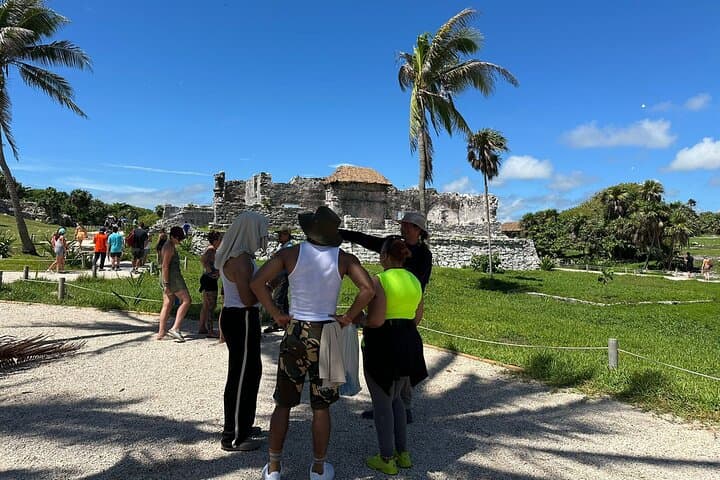

The morning light hits the limestone cliffs and the Caribbean throws turquoise color against the ruins as the group threads through a low stone wall toward El Castillo. Seabirds wheel above and iguanas sun themselves on broken steps as a certified federal guide points out faded murals and weathered carvings that still hold meaning.
The morning light hits the limestone cliffs and the Caribbean throws turquoise color against the ruins as the group threads through a low stone wall toward El Castillo. Seabirds wheel above and iguanas sun themselves on broken steps as a certified federal guide points out faded murals and weathered carvings that still hold meaning.
Tulum was a rare walled Maya port—an active coastal fortress and trade hub during the Late Postclassic period—and its position on a reef-lined shore shaped both its economy and its architecture. Geologically the site sits on exposed limestone karst; the same porous bedrock that feeds the region’s cenotes also channels rainwater and shapes the coastline. Culturally, Tulum reflects maritime trade routes and the blend of ritual and commerce in Maya life.
On a four-hour small-group tour expect 60–90 minutes of on-site interpretation among the Temple of the Frescoes, the Temple of the Descending God and the Castillo viewpoint, plus time for photos and questions. Guides usually offer the option to descend to the beach for a swim or to add a nearby cenote visit; entrance fees are typically included with this tour.
Practical edge: bring reef-safe sunscreen, a brimmed hat, plenty of water and sturdy walking shoes—the stone is uneven and exposed to sun. Mornings are cooler and less crowded; afternoons can be windy and hot. The site is protected: follow paths, avoid climbing on structures, and keep swimwear and towels dry in your daypack until permitted to change. This tour blends concise archaeology with coastal nature—easy to access, rich in context, and ideal for travelers who want both history and a brief Caribbean dip.