THE ADVENTURE COLLECTIVE® · Independent discovery and booking for outdoor travel

Combine coastal archaeology with freshwater cenotes on a six‑hour day trip from Cancun or Playa del Carmen. Explore Tulum’s seaside ruins, swim four distinct cenotes at Casa Tortuga, enjoy regional lunch, and finish with free time on Playa del Carmen’s Fifth Avenue.
Combine coastal archaeology with freshwater cenotes on a six‑hour day trip from Cancun or Playa del Carmen. Explore Tulum’s seaside ruins, swim four distinct cenotes at Casa Tortuga, enjoy regional lunch, and finish with free time on Playa del Carmen’s Fifth Avenue.
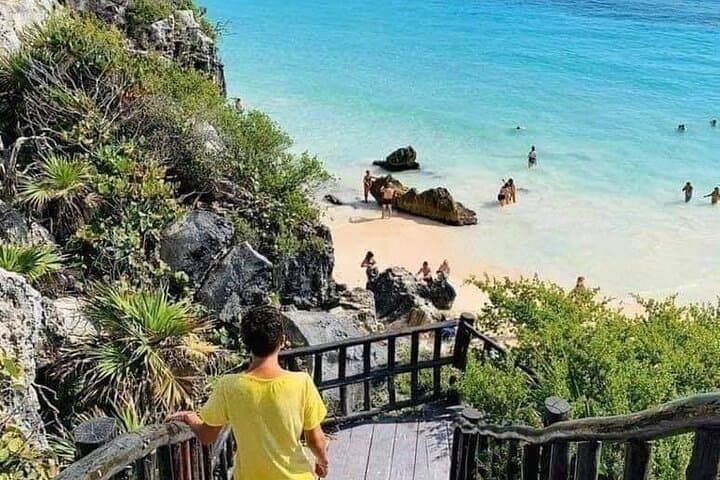
You step off the shuttle and feel the Caribbean breeze challenge you—warm, salty, and insistent—while limestone cliffs hold the horizon and the ruins keep their patient watch. The Tulum archaeological site rises on a bluff where sea and stone meet; gulls wheel and the waves below push rhythmically against the shore, daring you to take in the view.
Verified experiences and guided adventures in the surrounding area.
Operated by Cancun City Tour · Tulum, Quintana Roo
You step off the shuttle and feel the Caribbean breeze challenge you—warm, salty, and insistent—while limestone cliffs hold the horizon and the ruins keep their patient watch. The Tulum archaeological site rises on a bluff where sea and stone meet; gulls wheel and the waves below push rhythmically against the shore, daring you to take in the view.
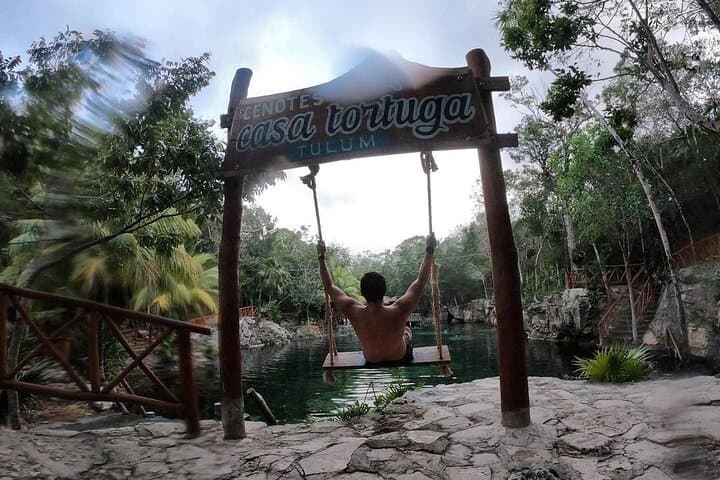
Tulum was a fortified Mayan trading port in the Late Postclassic period, its compact architecture built to navigate trade winds and coastal routes. The coastline here is coral limestone; the same porous rock forms the cenotes—collapsed cave systems that expose groundwater and sculpt dramatic sinkholes. Casa Tortuga contains two open cenotes and two cavern types, each with distinct light and mineral textures. Expect the cool, quiet water to feel like a separate world, and the cave cenotes to hush the outside noise.
After swimming, a regional lunch highlights Yucatecan flavors—fresh ceviche-style fish, lime, and habanero on the side—and you’ll end in Playa del Carmen’s Fifth Avenue for a street-level dose of local life.
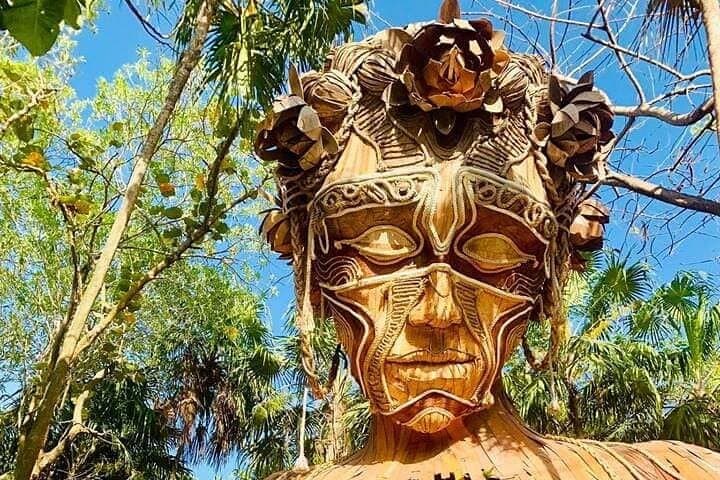
Practical guidance: bring reef-safe sunscreen and water shoes for slippery limestone and cenote ladders. Allow 90–120 minutes at Tulum and three hours at Casa Tortuga to sample all four cenotes. There’s a preservation tax at Tulum (cash), and some monuments or stops—like the Mother Nature sculpture—depend on availability. Plan for sun, a short climb up ruin stairs, and a wet change of clothes for the return trip.
easy.
6 hours.
Light walking, short stair climbs at the ruins, and basic swimming ability for cenotes; suitable for most fitness levels
Entrance to the Tulum archaeological site is not included in the tour price; a preservation tax (around USD 25) is paid on arrival.
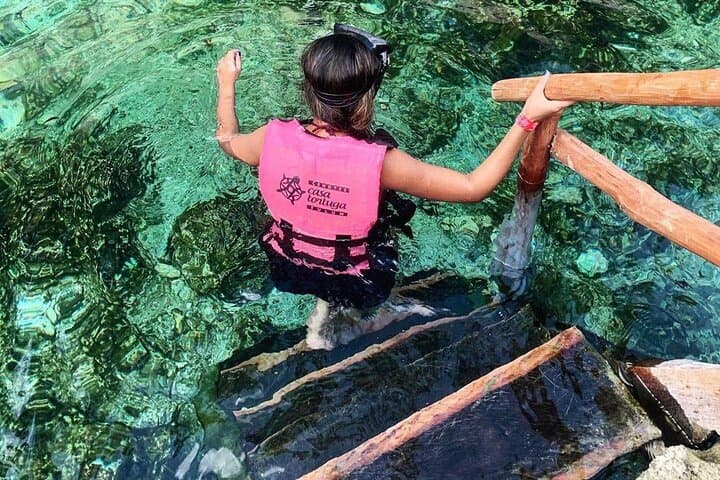
Yes, visitors who can swim and are comfortable with ladders and steps can swim; life jackets are typically available and recommended for non‑swimmers.
The Mother Nature monument visit depends on availability; the stop at Tulum letters is commonly included but timing can vary.
Round transportation is included from specified pickup points in Cancun and Playa del Carmen; confirm your exact pickup time with the supplier after booking.
Tulum functioned as a Late Postclassic coastal trading port for the Maya, positioned to control sea routes and maritime trade along the Yucatán coast.
Cenotes are freshwater aquifers; practice leave‑no‑trace, use biodegradable products, and respect park rules to protect fragile underground water systems.
Cancun City Tour operates guided outdoor trips and adventures with an emphasis on safety, stewardship, and memorable experiences.
You step off the shuttle and feel the Caribbean breeze challenge you—warm, salty, and insistent—while limestone cliffs hold the horizon and the ruins keep their patient watch. The Tulum archaeological site rises on a bluff where sea and stone meet; gulls wheel and the waves below push rhythmically against the shore, daring you to take in the view.
You step off the shuttle and feel the Caribbean breeze challenge you—warm, salty, and insistent—while limestone cliffs hold the horizon and the ruins keep their patient watch. The Tulum archaeological site rises on a bluff where sea and stone meet; gulls wheel and the waves below push rhythmically against the shore, daring you to take in the view.
Tulum was a fortified Mayan trading port in the Late Postclassic period, its compact architecture built to navigate trade winds and coastal routes. The coastline here is coral limestone; the same porous rock forms the cenotes—collapsed cave systems that expose groundwater and sculpt dramatic sinkholes. Casa Tortuga contains two open cenotes and two cavern types, each with distinct light and mineral textures. Expect the cool, quiet water to feel like a separate world, and the cave cenotes to hush the outside noise.
After swimming, a regional lunch highlights Yucatecan flavors—fresh ceviche-style fish, lime, and habanero on the side—and you’ll end in Playa del Carmen’s Fifth Avenue for a street-level dose of local life.
Practical guidance: bring reef-safe sunscreen and water shoes for slippery limestone and cenote ladders. Allow 90–120 minutes at Tulum and three hours at Casa Tortuga to sample all four cenotes. There’s a preservation tax at Tulum (cash), and some monuments or stops—like the Mother Nature sculpture—depend on availability. Plan for sun, a short climb up ruin stairs, and a wet change of clothes for the return trip.