THE ADVENTURE COLLECTIVE® · Independent discovery and booking for outdoor travel

Ride through the Mayan jungle, cool off in an underground cenote, and share a traditional lunch—this four-hour excursion blends light adventure, local culture, and geology into one practical day trip from Tulum.
Ride through the Mayan jungle, cool off in an underground cenote, and share a traditional lunch—this four-hour excursion blends light adventure, local culture, and geology into one practical day trip from Tulum.
A morning here begins with the clack of horses' hooves on a sandy trail and the jungle pressing close, green and noisy. Riders pick their pace—easy walk or steady trot—as the forest opens onto limestone clearings where sunlight slices the canopy. The cenote waits ahead: a round, subterranean pool that glints like a pocket of sky, daring you to dive in.
Verified experiences and guided adventures in the surrounding area.
A morning here begins with the clack of horses' hooves on a sandy trail and the jungle pressing close, green and noisy. Riders pick their pace—easy walk or steady trot—as the forest opens onto limestone clearings where sunlight slices the canopy. The cenote waits ahead: a round, subterranean pool that glints like a pocket of sky, daring you to dive in.
The landscape is limestone karst shaped by millennia of groundwater, the same geology that yielded the cenotes the Maya called sacbés to the underworld. Tulum’s coastline and inland jungle were highways for ancient communities; a ride through these paths passes lands still shaped by rural farms and small ranches that keep local equestrian traditions alive.
Expect a mixed sensory day: earthy scents from wet soil, the occasional call of a motmot or iguana slipping across a sun-warmed rock, and the cool hush of the cenote water. Lunch typically features regional staples—corn tortillas, stewed chicken or fish, and fresh fruit—served family-style so visitors taste local flavors and hospitality.
Practical notes: the overall outing runs about four hours, with roughly 1–2 hours in the saddle and time on foot at the cenote. Bring biodegradable sunscreen, closed-toe shoes for the ride, a towel and lightweight change of clothes for the swim, and a reusable bottle. Guides lead the group, but basic riding balance and a comfortable fitness level help you enjoy the trot sections. Midday heat can be strong; early starts or late afternoons are better for cooler air and softer light for photos.
moderate.
4 hours.
Light to moderate fitness—able to sit in the saddle for 1–2 hours and walk short uneven sections at the cenote.
Riders typically spend 1–2 hours on horseback, covering a mix of slow trails and short trotting stretches within the jungle property.
No advanced experience is required, but basic balance and comfort sitting for up to two hours helps; guides assist beginners and set appropriate paces.
Yes—many cenotes have shallow edges or guided areas; inform your guide so they can assign safer spots and provide flotation if needed.
Traditional lunches are often flexible—inform the operator in advance about allergies or preferences so they can adjust ingredients or offer alternatives.
Cenotes are karst sinkholes central to Maya life and ritual; many near Tulum were freshwater sources and had cultural importance to pre-Columbian communities.
Respect local guidelines: avoid regular sunscreens in the water, use provided rinse areas, and minimize plastic—these measures protect delicate cenote ecosystems.
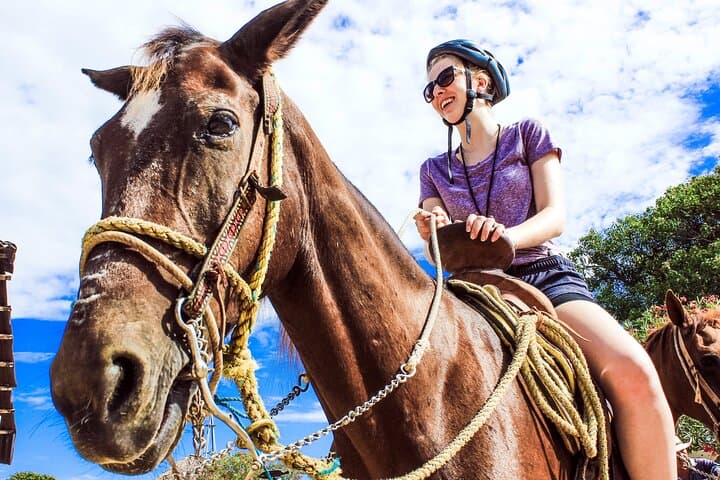
A morning here begins with the clack of horses' hooves on a sandy trail and the jungle pressing close, green and noisy. Riders pick their pace—easy walk or steady trot—as the forest opens onto limestone clearings where sunlight slices the canopy. The cenote waits ahead: a round, subterranean pool that glints like a pocket of sky, daring you to dive in.
A morning here begins with the clack of horses' hooves on a sandy trail and the jungle pressing close, green and noisy. Riders pick their pace—easy walk or steady trot—as the forest opens onto limestone clearings where sunlight slices the canopy. The cenote waits ahead: a round, subterranean pool that glints like a pocket of sky, daring you to dive in.
The landscape is limestone karst shaped by millennia of groundwater, the same geology that yielded the cenotes the Maya called sacbés to the underworld. Tulum’s coastline and inland jungle were highways for ancient communities; a ride through these paths passes lands still shaped by rural farms and small ranches that keep local equestrian traditions alive.
Expect a mixed sensory day: earthy scents from wet soil, the occasional call of a motmot or iguana slipping across a sun-warmed rock, and the cool hush of the cenote water. Lunch typically features regional staples—corn tortillas, stewed chicken or fish, and fresh fruit—served family-style so visitors taste local flavors and hospitality.
Practical notes: the overall outing runs about four hours, with roughly 1–2 hours in the saddle and time on foot at the cenote. Bring biodegradable sunscreen, closed-toe shoes for the ride, a towel and lightweight change of clothes for the swim, and a reusable bottle. Guides lead the group, but basic riding balance and a comfortable fitness level help you enjoy the trot sections. Midday heat can be strong; early starts or late afternoons are better for cooler air and softer light for photos.