THE ADVENTURE COLLECTIVE® · Independent discovery and booking for outdoor travel

Spend half a day exploring Tulum’s cliff-top Maya ruins with a guided express tour that pairs sea views with centuries of history. This practical guide covers what you’ll see, why the site matters, and how to prepare for a comfortable visit.
Spend half a day exploring Tulum’s cliff-top Maya ruins with a guided express tour that pairs sea views with centuries of history. This practical guide covers what you’ll see, why the site matters, and how to prepare for a comfortable visit.
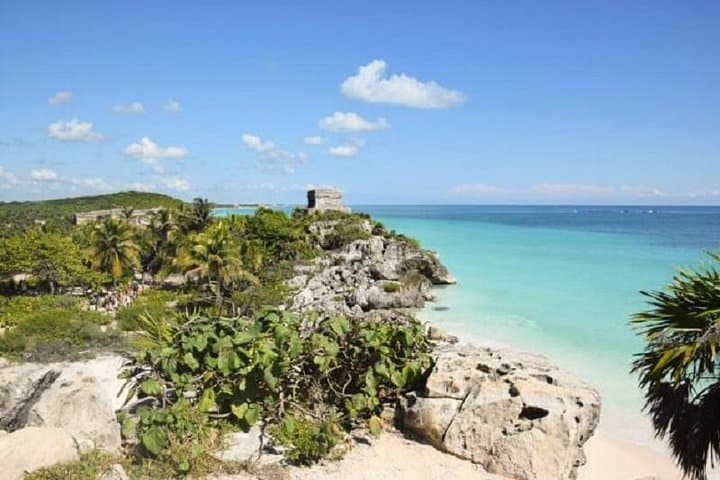
The wind off the Caribbean cuts across the limestone cliff as you step onto the sun-warmed stones of Tulum. Salt-scented air and a horizon of turquoise frame the views; gulls and frigatebirds wheel above the crumbling facades while the main castle—El Castillo—keeps watch over the reef below.
Verified experiences and guided adventures in the surrounding area.
Operated by Viajes Tours Maya · Tulum, Quintana Roo
The wind off the Caribbean cuts across the limestone cliff as you step onto the sun-warmed stones of Tulum. Salt-scented air and a horizon of turquoise frame the views; gulls and frigatebirds wheel above the crumbling facades while the main castle—El Castillo—keeps watch over the reef below.
Tulum is a late Postclassic Maya coastal fortress and trading post that flourished between the 13th and 15th centuries. Built atop a narrow escarpment, the site’s coral-skeleton bedrock and exposed limestone tell a story of sea-level changes and tropical erosion. Close by, the Sian Ka’an Biosphere Reserve preserves a range of ecosystems from mangroves to coral reef, underscoring the region’s ecological value and its maritime trade legacy.
On a five- to six-hour express visit you’ll get a guided walk through key temples—the Temple of the Frescoes, the Castillo, and the small coastal platforms—plus time to stand on the beach beneath the ruins for photos. Guides typically weave in Mayan cosmology, the site’s defensive layout and the role of coastal navigation.
Practical notes: wear sturdy, closed-toe shoes for uneven stone and short stair sections; bring biodegradable sunscreen and a hat; carry water and a light towel if you plan to visit the beach after the site. Mornings are cooler and less crowded; mid-day brings strong sun and peak photography light. Expect paved pathways near main sights but uneven surfaces elsewhere—watch your step and respect fenced-off areas to protect fragile structures.
easy.
5–6 hours.
Suitable for most fitness levels; involves moderate walking on uneven surfaces and short steps.
The tour runs about 5–6 hours total, which typically includes transport time, a guided 2–3 hour visit at the archaeological zone, and time at the adjacent beach.
Yes—there’s beach access beneath the cliffs. Conditions vary; check for currents and local advisories before entering the water.
Main pathways and some viewing platforms are accessible, but many areas have uneven stone or stairs; contact the operator for specific accessibility arrangements.
Basic facilities and vendors are located near the site entrance; bring cash for small purchases and bottled water if needed.
Tulum was a strategic late Postclassic Maya port and ceremonial center that controlled coastal trade routes and watched over the Mesoamerican Barrier Reef.
The nearby Sian Ka’an Biosphere Reserve is a UNESCO World Heritage site; visitors are encouraged to use biodegradable sunscreen and minimize disturbance to fragile coastal ecosystems.
Viajes Tours Maya operates guided outdoor trips and adventures with an emphasis on safety, stewardship, and memorable experiences.
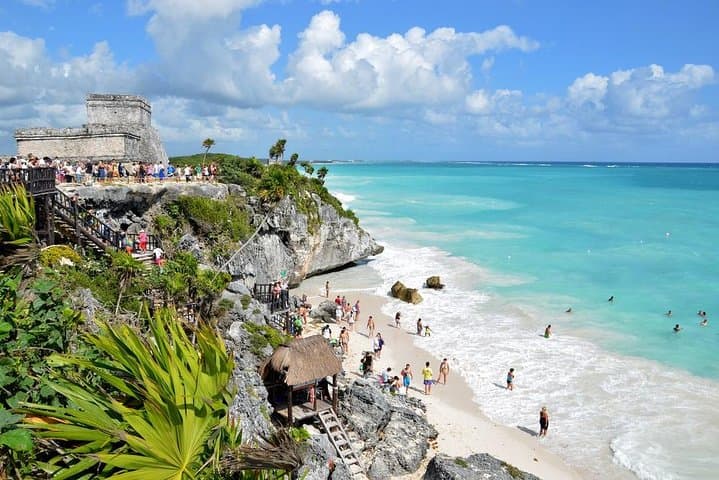
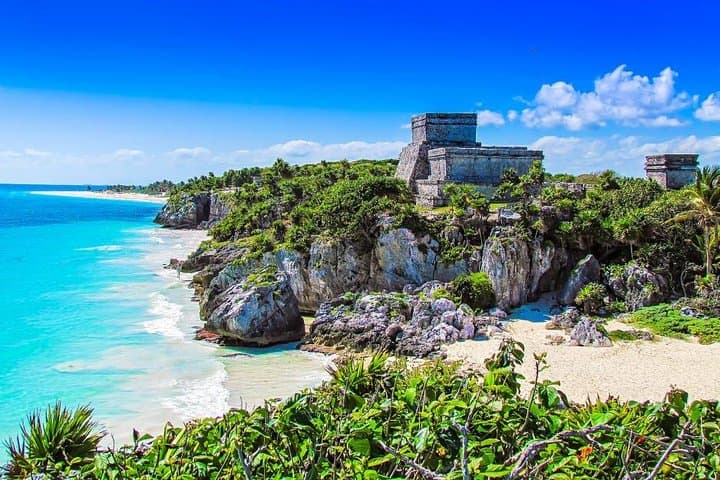
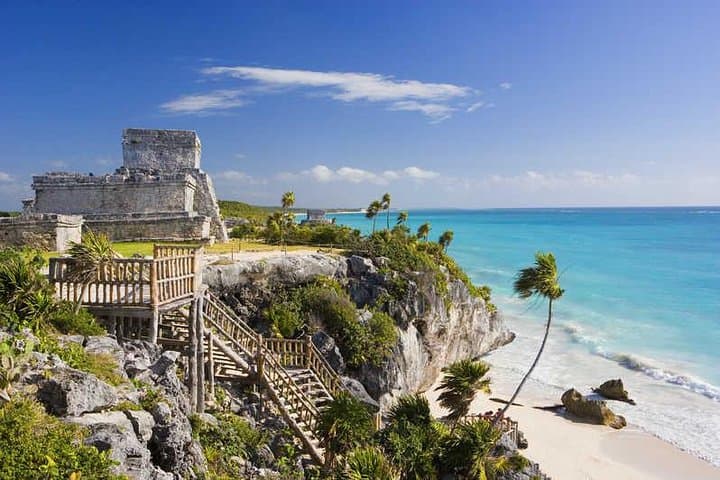
The wind off the Caribbean cuts across the limestone cliff as you step onto the sun-warmed stones of Tulum. Salt-scented air and a horizon of turquoise frame the views; gulls and frigatebirds wheel above the crumbling facades while the main castle—El Castillo—keeps watch over the reef below.
The wind off the Caribbean cuts across the limestone cliff as you step onto the sun-warmed stones of Tulum. Salt-scented air and a horizon of turquoise frame the views; gulls and frigatebirds wheel above the crumbling facades while the main castle—El Castillo—keeps watch over the reef below.
Tulum is a late Postclassic Maya coastal fortress and trading post that flourished between the 13th and 15th centuries. Built atop a narrow escarpment, the site’s coral-skeleton bedrock and exposed limestone tell a story of sea-level changes and tropical erosion. Close by, the Sian Ka’an Biosphere Reserve preserves a range of ecosystems from mangroves to coral reef, underscoring the region’s ecological value and its maritime trade legacy.
On a five- to six-hour express visit you’ll get a guided walk through key temples—the Temple of the Frescoes, the Castillo, and the small coastal platforms—plus time to stand on the beach beneath the ruins for photos. Guides typically weave in Mayan cosmology, the site’s defensive layout and the role of coastal navigation.
Practical notes: wear sturdy, closed-toe shoes for uneven stone and short stair sections; bring biodegradable sunscreen and a hat; carry water and a light towel if you plan to visit the beach after the site. Mornings are cooler and less crowded; mid-day brings strong sun and peak photography light. Expect paved pathways near main sights but uneven surfaces elsewhere—watch your step and respect fenced-off areas to protect fragile structures.