
Tulum & Dos Ojos Cenote Day Tour — Tulum Ruins, Grand Cenote and Dos Ojos with Lunch
Spend a full day crossing the cultural coast and subterranean rivers of the Riviera Maya. This guided tour pairs Tulum’s cliff-top ruins and Popper’s giant sculpture with swims in Dos Ojos and Grand Cenote—admission, lunch, and hotel transport included.
An Adventure In Tulum.
Spend a full day crossing the cultural coast and subterranean rivers of the Riviera Maya. This guided tour pairs Tulum’s cliff-top ruins and Popper’s giant sculpture with swims in Dos Ojos and Grand Cenote—admission, lunch, and hotel transport included.
Read the full experience
You step off the air-conditioned van into a squat plaza where a colossal wooden woman presses palms to the sky. Daniel Popper’s sculpture—Madre Naturaleza ven a la luz—absorbs the morning light and seems to breathe with the jungle around it. A boxed breakfast in your hand, you can already hear the ocean rolling somewhere beyond the limestone ridge; today is a study in contrasts: stone and water, sun-warmed ruin and cavernous freshwater.
You step off the air-conditioned van into a squat plaza where a colossal wooden woman presses palms to the sky. Daniel Popper’s sculpture—Madre Naturaleza ven a la luz—absorbs the morning light and seems to breathe with the jungle around it. A boxed breakfast in your hand, you can already hear the ocean rolling somewhere beyond the limestone ridge; today is a study in contrasts: stone and water, sun-warmed ruin and cavernous freshwater.
The tour threads through three distinct chapters. First, the Tulum ruins perch on a low cliff, the remains of a late-Postclassic Maya port where whitewashed stone buildings kept watch over turquoise Caribbean water. The site’s compact layout and ocean outlook explain why it was both a defensive post and a pageant stage for trade and ritual.
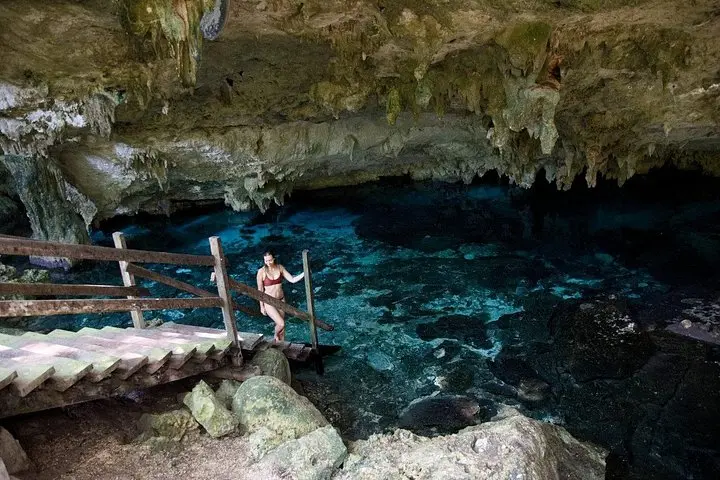
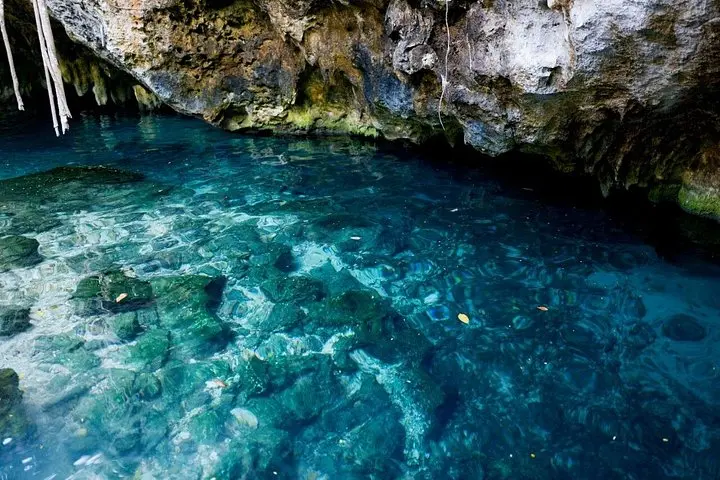
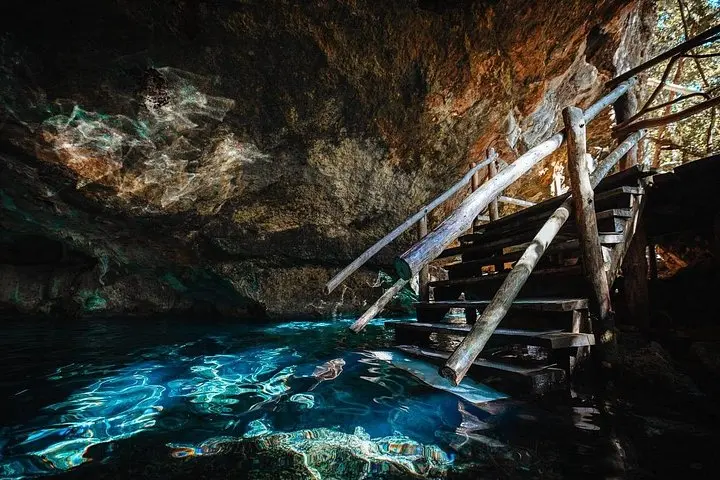
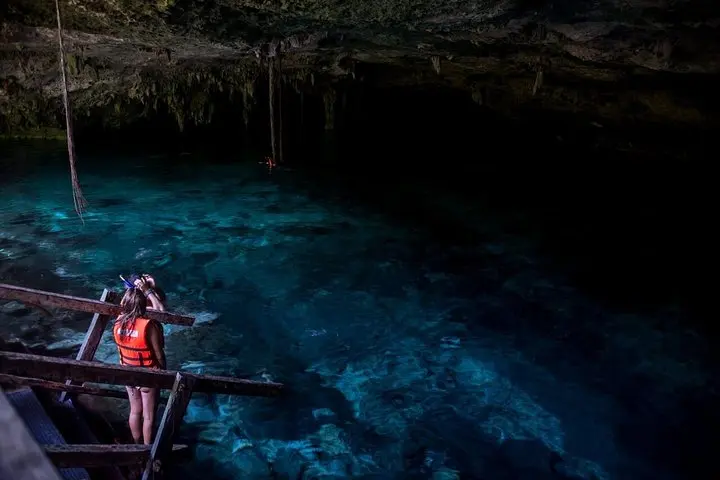
Geology takes the lead for the rest of the day. The Yucatán is a vast limestone sponge. Over millennia rainwater dissolved tunnels into the bedrock, creating a network of cenotes—open sinkholes and cavern pools where the groundwater lens surfaces. Dos Ojos, literally “two eyes,” is a paired system of caverns known for long underwater galleries and crystalline visibility. Grand Cenote is more open, a cavern with skylights where sunlight pins shafts through suspended chlorophyll and casts a green-blue glow.
Culture threads through each stop. Cenotes were sacred to the Maya—gates to the underworld and sources of life. Today they remain places of quiet reflection and careful recreation: snorkelers drifting past stalactites, guides pointing out fish that have adapted to low light, and small altars left by local visitors.
Practicalities shape the pace. The operator collects travelers early; expect a 12–14 hour window with hotel pickup between 6:30–7:45 a.m. Bring reef-safe sunscreen, a quick-dry towel, and a water-resistant bag for electronics. Lockers and basic changing facilities are available at the cenotes, and a regional lunch is included at Dos Ojos Park. Swim ability is recommended: some cenote passages can be deep, and while guides supervise, you’ll be in open water. Respect the formations—do not touch stalactites—and avoid lotions or insect repellents that contaminate the fragile water.
For photographers, the ruins reward low-angle, early-light shots; cenotes are best with wide-angle lenses and a fast shutter to catch underwater clarity. The emotional arc of this day—art, archaeology, cave swimming—makes it an efficient way to experience the natural and cultural spine of the Riviera Maya without the logistics headache. It’s equally suitable for families and solo travelers who want a full-day, physically gentle but sensory-rich immersion.
Frequently asked questions
Yes—hotel pickup and return are included; confirm your exact pickup time with the operator after booking.
Admission to the listed cenotes and Tulum Ruins plus a regional lunch and boxed breakfast are included per the tour details.
Basic swimming ability is recommended for cenote sections; flotation devices are available for less confident swimmers.
Yes—personal snorkel gear is fine; the operator may provide basic equipment but a well-fitting personal mask improves visibility.
Cenotes have uneven terrain and steps; access varies—contact the operator in advance to discuss specific needs.
The tour operator may cancel for severe weather; full refunds are available if you cancel at least 24 hours before departure according to the policy.
About This Experience
Holbox and Bacalar Tour operates guided outdoor trips and adventures with an emphasis on safety, stewardship, and memorable experiences.
Adventure tips
Recommended gear
- Quick-dry towel: Dries fast between cenote swims and fits easily in day packs.
- Reef-safe sunscreen: Protects skin without harming cenote and coastal ecosystems.
- Water shoes: Protects feet on rocky cenote shorelines and slippery steps.
- Dry bag or waterproof phone case: Keeps electronics safe during boat transfers and swimming stops.
Photos of the experience
Related adventures & guides
Read the full experience
You step off the air-conditioned van into a squat plaza where a colossal wooden woman presses palms to the sky. Daniel Popper’s sculpture—Madre Naturaleza ven a la luz—absorbs the morning light and seems to breathe with the jungle around it. A boxed breakfast in your hand, you can already hear the ocean rolling somewhere beyond the limestone ridge; today is a study in contrasts: stone and water, sun-warmed ruin and cavernous freshwater.
You step off the air-conditioned van into a squat plaza where a colossal wooden woman presses palms to the sky. Daniel Popper’s sculpture—Madre Naturaleza ven a la luz—absorbs the morning light and seems to breathe with the jungle around it. A boxed breakfast in your hand, you can already hear the ocean rolling somewhere beyond the limestone ridge; today is a study in contrasts: stone and water, sun-warmed ruin and cavernous freshwater.
The tour threads through three distinct chapters. First, the Tulum ruins perch on a low cliff, the remains of a late-Postclassic Maya port where whitewashed stone buildings kept watch over turquoise Caribbean water. The site’s compact layout and ocean outlook explain why it was both a defensive post and a pageant stage for trade and ritual.
Geology takes the lead for the rest of the day. The Yucatán is a vast limestone sponge. Over millennia rainwater dissolved tunnels into the bedrock, creating a network of cenotes—open sinkholes and cavern pools where the groundwater lens surfaces. Dos Ojos, literally “two eyes,” is a paired system of caverns known for long underwater galleries and crystalline visibility. Grand Cenote is more open, a cavern with skylights where sunlight pins shafts through suspended chlorophyll and casts a green-blue glow.
Culture threads through each stop. Cenotes were sacred to the Maya—gates to the underworld and sources of life. Today they remain places of quiet reflection and careful recreation: snorkelers drifting past stalactites, guides pointing out fish that have adapted to low light, and small altars left by local visitors.
Practicalities shape the pace. The operator collects travelers early; expect a 12–14 hour window with hotel pickup between 6:30–7:45 a.m. Bring reef-safe sunscreen, a quick-dry towel, and a water-resistant bag for electronics. Lockers and basic changing facilities are available at the cenotes, and a regional lunch is included at Dos Ojos Park. Swim ability is recommended: some cenote passages can be deep, and while guides supervise, you’ll be in open water. Respect the formations—do not touch stalactites—and avoid lotions or insect repellents that contaminate the fragile water.
For photographers, the ruins reward low-angle, early-light shots; cenotes are best with wide-angle lenses and a fast shutter to catch underwater clarity. The emotional arc of this day—art, archaeology, cave swimming—makes it an efficient way to experience the natural and cultural spine of the Riviera Maya without the logistics headache. It’s equally suitable for families and solo travelers who want a full-day, physically gentle but sensory-rich immersion.
Make a day of it nearby.
Verified experiences and guided adventures in the surrounding area.