THE ADVENTURE COLLECTIVE® · Independent discovery and booking for outdoor travel

Combine a guided tour of Tulum’s cliff-top Mayan ruins with a refreshing swim in a nearby cenote. This full-day excursion pairs cultural insight with time in a turquoise sinkhole and includes priority access to the archaeological site.
Combine a guided tour of Tulum’s cliff-top Mayan ruins with a refreshing swim in a nearby cenote. This full-day excursion pairs cultural insight with time in a turquoise sinkhole and includes priority access to the archaeological site.
A salt-sweet breeze off the Caribbean meets warm stone as the guide leads the group through the low wall of Tulum’s archaeological zone. The Castillo perches on a bluff, windows facing the sea; gulls wheel and the coast dares you to look beyond the reef. The morning light makes the limestone facades readable — weathered mortar, stucco traces, and stairways that still direct visitors where markets and temples once breathed life.
Verified experiences and guided adventures in the surrounding area.
Operated by Touralia · Tulum, Quintana Roo
A salt-sweet breeze off the Caribbean meets warm stone as the guide leads the group through the low wall of Tulum’s archaeological zone. The Castillo perches on a bluff, windows facing the sea; gulls wheel and the coast dares you to look beyond the reef. The morning light makes the limestone facades readable — weathered mortar, stucco traces, and stairways that still direct visitors where markets and temples once breathed life.
Tulum was a coastal port of the Late Postclassic Maya, a trade hub where obsidian, salt and fish moved through the peninsula. Geologically the area is young carbonate platform — porous limestone riddled with underground rivers — which is why cenotes form: collapsed caverns that expose freshwater to the surface. Swimming in a cenote connects modern visitors to Mayan ritual uses of these pools as both water source and ceremonial place.
Expect a guided, interpretive walk of roughly 1.5–2 km inside the site with stair sections and several viewpoints, followed by transport to a nearby open cenote for a swim and relaxation. Priority entry shortens queue time at the ruins; an onsite natural reserve fee (approx. US$15) is paid in cash. Bring swimwear, reef-safe sunscreen, insect repellent and a quick-dry change of clothes. Stay hydrated, wear closed-toe shoes for uneven stone steps, and plan for sun exposure between structures. The tour balances cultural context with hands-on time in a freshwater cenote, making it a compact introduction to Riviera Maya’s layered history and karst landscape.
moderate.
8 hours (includes travel).
Light to moderate fitness: able to walk ~2 km at a leisurely pace and climb/descend stairs; must be comfortable swimming.
Basic swimming ability is recommended for the cenote segment; flotation aids may be available but check with the operator if you are non-swimmer or need assistance.
Hotel pickup in Tulum hotels is not available; if you booked the Tulum option you must meet the tour at the designated meeting point (Super Aki Tulum).
Guided tours commonly run in English and Spanish; confirm language availability when booking or on your voucher.
Admission fees with priority access to Tulum and guided commentary are included; the natural reserve fee for the cenote (approx. US$15) is paid onsite in cash.
Tulum was one of the last major Maya ports occupied prior to Spanish contact and served as a coastal trading center in the Late Postclassic period.
The Tulum zone and nearby cenotes are part of sensitive karst and coastal ecosystems; stick to marked paths, avoid littering and use reef-safe sunscreen to protect aquatic life.
Touralia operates guided outdoor trips and adventures with an emphasis on safety, stewardship, and memorable experiences.

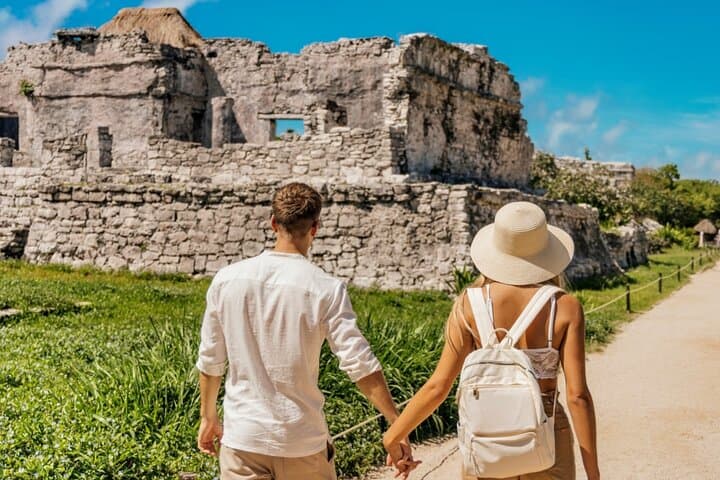
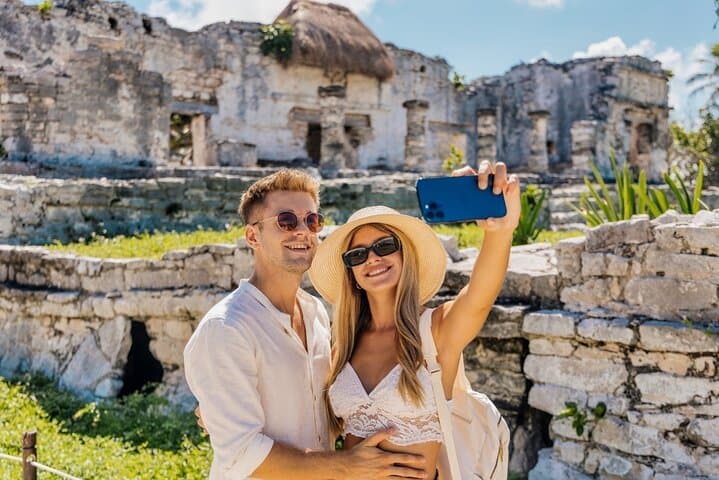
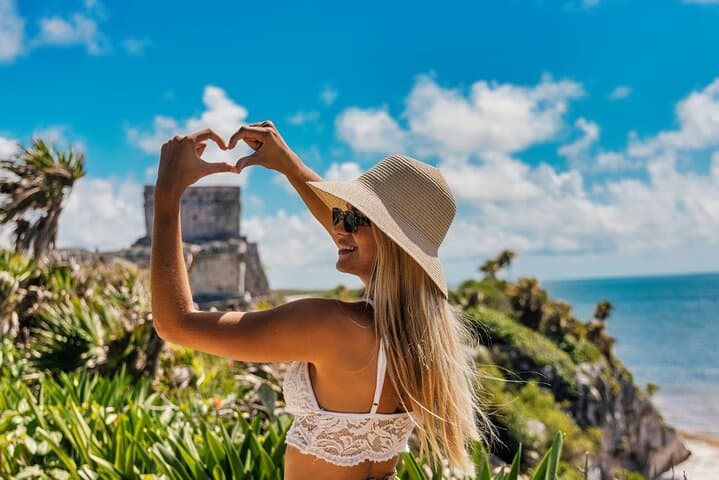
A salt-sweet breeze off the Caribbean meets warm stone as the guide leads the group through the low wall of Tulum’s archaeological zone. The Castillo perches on a bluff, windows facing the sea; gulls wheel and the coast dares you to look beyond the reef. The morning light makes the limestone facades readable — weathered mortar, stucco traces, and stairways that still direct visitors where markets and temples once breathed life.
A salt-sweet breeze off the Caribbean meets warm stone as the guide leads the group through the low wall of Tulum’s archaeological zone. The Castillo perches on a bluff, windows facing the sea; gulls wheel and the coast dares you to look beyond the reef. The morning light makes the limestone facades readable — weathered mortar, stucco traces, and stairways that still direct visitors where markets and temples once breathed life.
Tulum was a coastal port of the Late Postclassic Maya, a trade hub where obsidian, salt and fish moved through the peninsula. Geologically the area is young carbonate platform — porous limestone riddled with underground rivers — which is why cenotes form: collapsed caverns that expose freshwater to the surface. Swimming in a cenote connects modern visitors to Mayan ritual uses of these pools as both water source and ceremonial place.
Expect a guided, interpretive walk of roughly 1.5–2 km inside the site with stair sections and several viewpoints, followed by transport to a nearby open cenote for a swim and relaxation. Priority entry shortens queue time at the ruins; an onsite natural reserve fee (approx. US$15) is paid in cash. Bring swimwear, reef-safe sunscreen, insect repellent and a quick-dry change of clothes. Stay hydrated, wear closed-toe shoes for uneven stone steps, and plan for sun exposure between structures. The tour balances cultural context with hands-on time in a freshwater cenote, making it a compact introduction to Riviera Maya’s layered history and karst landscape.