THE ADVENTURE COLLECTIVE® · Independent discovery and booking for outdoor travel

Explore Tulum’s clifftop ruins, climb Coba’s highest pyramid, swim in the cool Cenote Kuxtal and finish on Playa del Carmen’s lively Quinta Avenida. This full‑day tour pairs archaeology, karst geology and coastal culture with practical logistics for a long day of active exploration.
Explore Tulum’s clifftop ruins, climb Coba’s highest pyramid, swim in the cool Cenote Kuxtal and finish on Playa del Carmen’s lively Quinta Avenida. This full‑day tour pairs archaeology, karst geology and coastal culture with practical logistics for a long day of active exploration.
A salt wind lifts off the Caribbean as the bus eases into the low cliffs above Tulum, and the ruins appear—stone guardians balanced on a bluff, watching the sea dare visitors with a turquoise edge. The morning light makes the limestone facades sharp; a certified guide threads stories of trade, ritual and astronomy through the ruins while waves sound below like a distant drum.
Verified experiences and guided adventures in the surrounding area.
Operated by Cancun City Tour · Tulum, Quintana Roo
A salt wind lifts off the Caribbean as the bus eases into the low cliffs above Tulum, and the ruins appear—stone guardians balanced on a bluff, watching the sea dare visitors with a turquoise edge. The morning light makes the limestone facades sharp; a certified guide threads stories of trade, ritual and astronomy through the ruins while waves sound below like a distant drum.
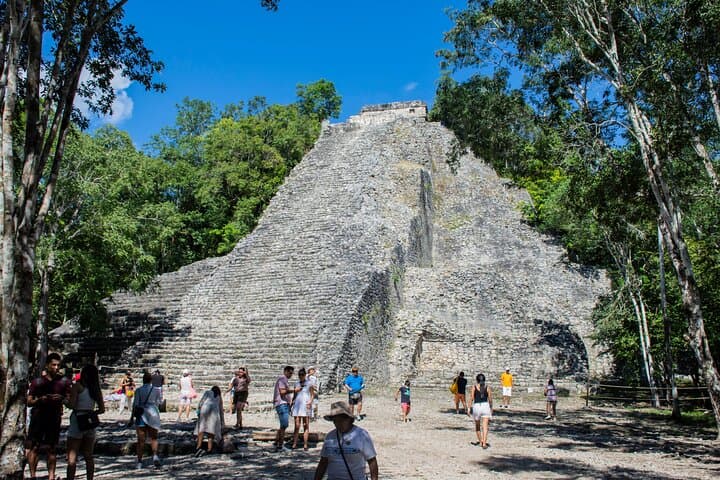
Travel pushes inland next, into the thicker green around Coba where the tallest pyramid of the Yucatán scrapes the canopy. The stone steps and shaded paths give a feel for Classic Maya engineering: raised roads, stone sacbes, and the geometry of a civilization mapped to the stars. Geology here is karst—limestone dissolved over millennia to form cenotes, the underground aquifers that sustained Maya settlements.
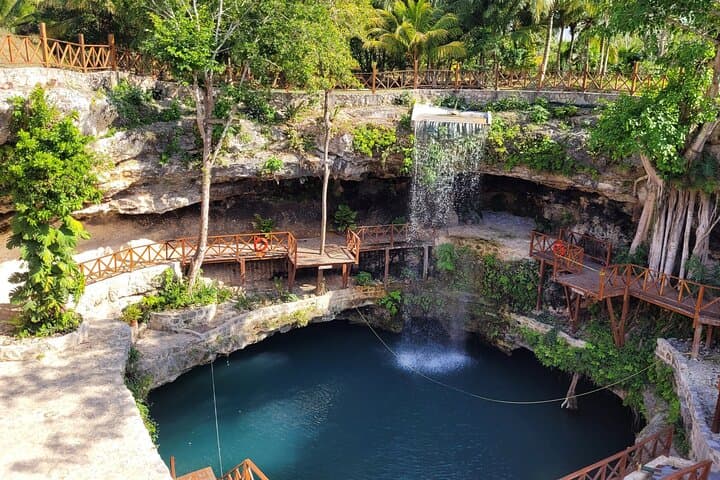
Cenote Kuxtal opens as a cool, clear sink—a vertical doorway to freshwater where light slips through leaves and mineral formations. Swimming in the cenote is tactile: the water pushes and holds you differently than the sea, and the place carries human reverence as much as natural history.
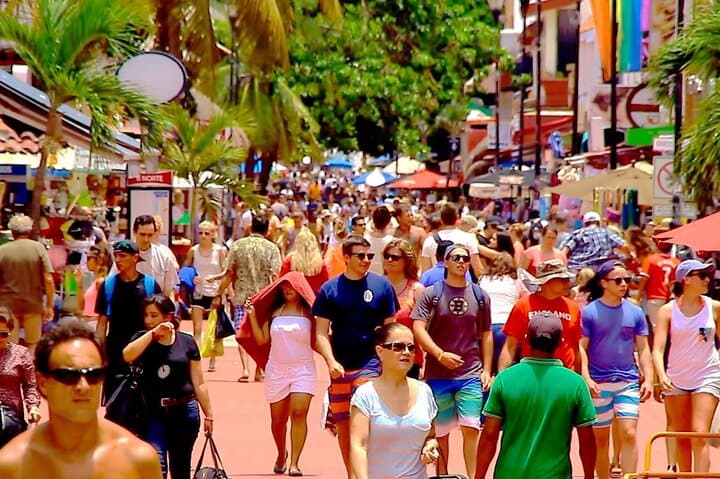
The day closes on Quinta Avenida in Playa del Carmen, a change of tempo: street food, music and people-watching where modern coastal culture meets regional flavors.
Practical guidance: expect 10–11 hours with guided walks at archaeological sites and a supervised swim. Bring biodegradable sunscreen, insect repellent, sturdy closed shoes for ruins, a swimsuit and towel for the cenote, and a refillable water bottle. Note there is a preservation tax for the ruins, life vests are required for cenote swims, and the route is best done early to avoid midday heat.
moderate.
10–11 hours.
Light to moderate fitness; expect several hours of walking on uneven ground and short climbs.
This tour’s guide visits both sites but the preservation tax for Tulum & Coba is often not included and may be charged separately on site.
Yes; the cenote swim is suitable for most visitors and life vests are mandatory—staff supervise swimmers and entry is generally straightforward.
A regional buffet lunch and a boxed lunch option are listed in inclusions, along with bottled drinks during transportation.
The tour is labeled physically easy for general fitness, but the ruins and cenote require stairs and uneven ground; it’s not recommended for guests with serious spinal, cardiovascular, or pregnancy-related restrictions.
Tulum was a Late Postclassic Maya port linked to trade routes; Coba dates earlier, with an inland urban network connected by sacbeob (stone causeways).
Local operators emphasize using biodegradable products, limiting physical impact on stalactites and cenote edges, and paying preservation fees to support site maintenance.
Cancun City Tour operates guided outdoor trips and adventures with an emphasis on safety, stewardship, and memorable experiences.
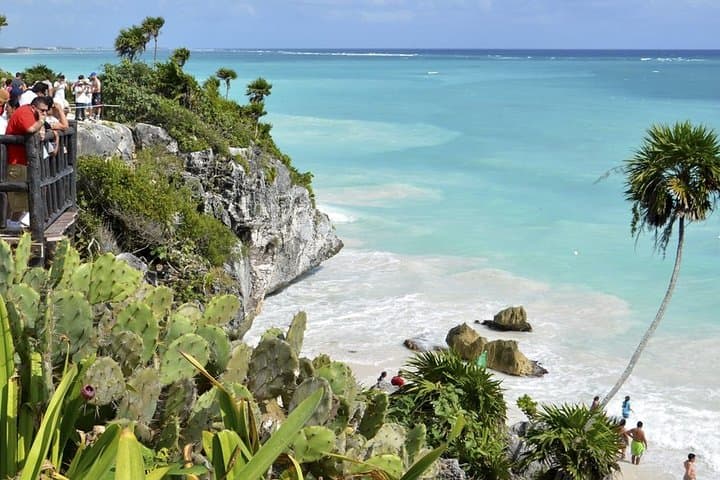
A salt wind lifts off the Caribbean as the bus eases into the low cliffs above Tulum, and the ruins appear—stone guardians balanced on a bluff, watching the sea dare visitors with a turquoise edge. The morning light makes the limestone facades sharp; a certified guide threads stories of trade, ritual and astronomy through the ruins while waves sound below like a distant drum.
A salt wind lifts off the Caribbean as the bus eases into the low cliffs above Tulum, and the ruins appear—stone guardians balanced on a bluff, watching the sea dare visitors with a turquoise edge. The morning light makes the limestone facades sharp; a certified guide threads stories of trade, ritual and astronomy through the ruins while waves sound below like a distant drum.
Travel pushes inland next, into the thicker green around Coba where the tallest pyramid of the Yucatán scrapes the canopy. The stone steps and shaded paths give a feel for Classic Maya engineering: raised roads, stone sacbes, and the geometry of a civilization mapped to the stars. Geology here is karst—limestone dissolved over millennia to form cenotes, the underground aquifers that sustained Maya settlements.
Cenote Kuxtal opens as a cool, clear sink—a vertical doorway to freshwater where light slips through leaves and mineral formations. Swimming in the cenote is tactile: the water pushes and holds you differently than the sea, and the place carries human reverence as much as natural history.
The day closes on Quinta Avenida in Playa del Carmen, a change of tempo: street food, music and people-watching where modern coastal culture meets regional flavors.
Practical guidance: expect 10–11 hours with guided walks at archaeological sites and a supervised swim. Bring biodegradable sunscreen, insect repellent, sturdy closed shoes for ruins, a swimsuit and towel for the cenote, and a refillable water bottle. Note there is a preservation tax for the ruins, life vests are required for cenote swims, and the route is best done early to avoid midday heat.