THE ADVENTURE COLLECTIVE® · Independent discovery and booking for outdoor travel

A full-day loop from Playa del Carmen that pairs cliffside Tulum ruins, the jungle pyramid at Cobá and a swim in a limestone cenote, finishing with a stroll down Playa’s lively Fifth Avenue. Expect history, limestone landscapes and practical notes on timing and gear.
A full-day loop from Playa del Carmen that pairs cliffside Tulum ruins, the jungle pyramid at Cobá and a swim in a limestone cenote, finishing with a stroll down Playa’s lively Fifth Avenue. Expect history, limestone landscapes and practical notes on timing and gear.
You step from the van into the Riviera Maya air and the first thing that hits you is the cliff-edge view at Tulum — limestone temples outlined against a wide, Caribbean blue that seems to dare you to look away.
Verified experiences and guided adventures in the surrounding area.
Operated by Stap Travel · Playa del Carmen, Quintana Roo
You step from the van into the Riviera Maya air and the first thing that hits you is the cliff-edge view at Tulum — limestone temples outlined against a wide, Caribbean blue that seems to dare you to look away.
This full-day route threads three distinct faces of the Yucatán: Tulum’s coastal citadel, the jungle pathways of Cobá and a cool subterranean cenote, ending with the bustle of Playa del Carmen’s Fifth Avenue. Tulum is a late-postclassic Mayan port — compact, strategic and one of the few sites intentionally built facing the sea. Inland, Cobá was a nodal center connected by white sacbés (ancient causeways) and crowned by Nohoch Mul, a pyramid that still pierces the canopy.
Geologically this region sits on porous limestone; cenotes are the landscape’s lungs — collapsed caverns that expose groundwater. Swimming in a cenote feels intimate: light filters like a held breath while stalactites and cliffs keep company.
Practical guidance: the tour is long and involves uneven walking, sun exposure and a mandatory life jacket for the cenote (often paid on site). Bring reef-safe sunscreen, sturdy walking shoes, a towel and cash for the Tulum preservation tax and life vests. Plan for early pickup, carry insect repellent and a refillable water bottle — hydration is critical under the sun and in the jungle.
Expect a mix of taught history and open exploration, limited time at each stop, and a lively finish on La Quinta with shops and street performances to unwind before you return to Playa del Carmen.
moderate.
8–12 hours.
Moderate fitness recommended: able to walk on uneven ground, climb stairs at Cobá, and swim short distances with a life jacket.
The itinerary runs about 8–12 hours depending on pickup location; confirm exact pickup time with the supplier since it varies by hotel location.
No — Tulum has a preservation tax (around USD 32) paid on arrival; bring cash and expect separate payments for some site fees.
The main listed cenote is Tamcach-Ha, but operators may substitute a nearby cenote based on availability; substitutions are common and not refundable.
Life jackets are mandatory at the cenote; they may not be included in the tour price and are often rented on site, paid in cash.
Tulum was a strategic coastal port of the late Mayan world, while Cobá served as a regional hub linked to villages by sacbés; cenotes were sacred water sources central to Mayan ritual life.
Cenote and reef systems are sensitive to pollutants—use reef-safe sunscreen, avoid littering and respect posted rules; Tulum restricts access to protect fragile ruins.
Stap Travel operates guided outdoor trips and adventures with an emphasis on safety, stewardship, and memorable experiences.
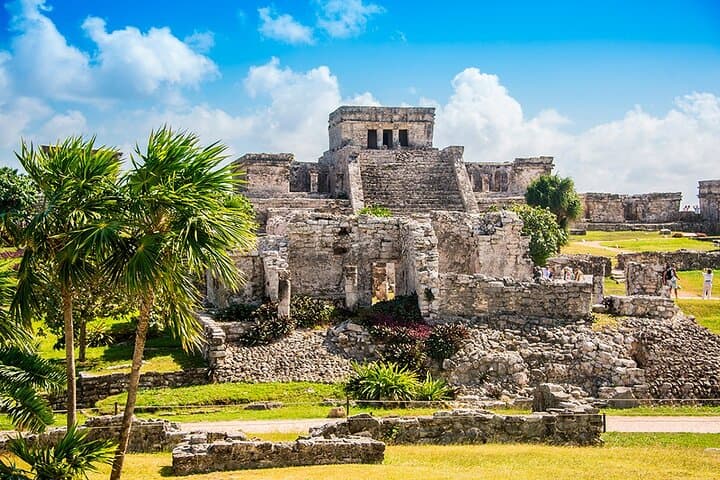
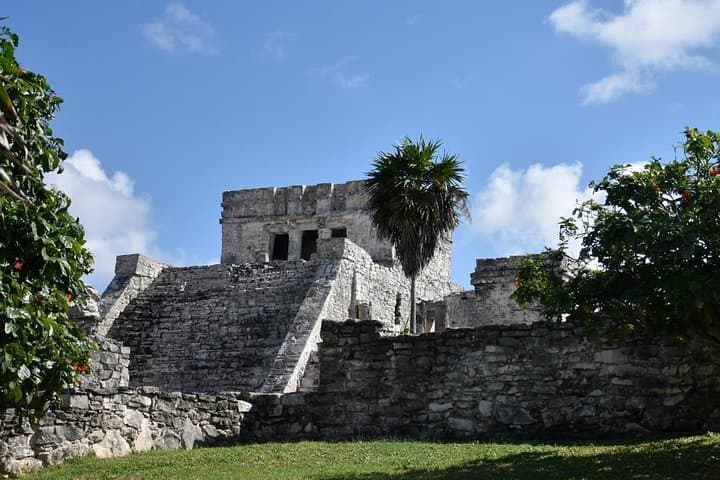
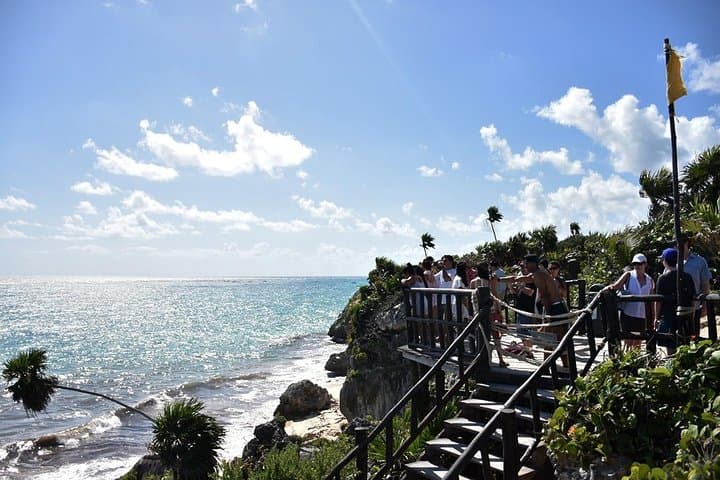
You step from the van into the Riviera Maya air and the first thing that hits you is the cliff-edge view at Tulum — limestone temples outlined against a wide, Caribbean blue that seems to dare you to look away.
You step from the van into the Riviera Maya air and the first thing that hits you is the cliff-edge view at Tulum — limestone temples outlined against a wide, Caribbean blue that seems to dare you to look away.
This full-day route threads three distinct faces of the Yucatán: Tulum’s coastal citadel, the jungle pathways of Cobá and a cool subterranean cenote, ending with the bustle of Playa del Carmen’s Fifth Avenue. Tulum is a late-postclassic Mayan port — compact, strategic and one of the few sites intentionally built facing the sea. Inland, Cobá was a nodal center connected by white sacbés (ancient causeways) and crowned by Nohoch Mul, a pyramid that still pierces the canopy.
Geologically this region sits on porous limestone; cenotes are the landscape’s lungs — collapsed caverns that expose groundwater. Swimming in a cenote feels intimate: light filters like a held breath while stalactites and cliffs keep company.
Practical guidance: the tour is long and involves uneven walking, sun exposure and a mandatory life jacket for the cenote (often paid on site). Bring reef-safe sunscreen, sturdy walking shoes, a towel and cash for the Tulum preservation tax and life vests. Plan for early pickup, carry insect repellent and a refillable water bottle — hydration is critical under the sun and in the jungle.
Expect a mix of taught history and open exploration, limited time at each stop, and a lively finish on La Quinta with shops and street performances to unwind before you return to Playa del Carmen.