THE ADVENTURE COLLECTIVE® · Independent discovery and booking for outdoor travel

Spend a full day where Mayan cliffside ruins meet cenote caverns. Visit Tulum’s dramatic coastal ruins, snap a shot at the Come to the Light sculpture, then cool off snorkeling in Dos Ojos and Gran Cenote.
Spend a full day where Mayan cliffside ruins meet cenote caverns. Visit Tulum’s dramatic coastal ruins, snap a shot at the Come to the Light sculpture, then cool off snorkeling in Dos Ojos and Gran Cenote.
You step off the minibus as the Caribbean light slices across a low stone wall. The wind smells faintly of salt and jungle; behind you, the ruins of Tulum sit on a cliff like an old harbor watchman, white buildings facing turquoise sea. For a full day you travel this thin seam where Mayan history meets the Yucatán’s underworld of freshwater caverns: first the sun-baked terraces and sea-facing temples of Tulum, then the cool, subterranean blue of Dos Ojos and Gran Cenote.
Verified experiences and guided adventures in the surrounding area.
Operated by Conoce Lo Tuyo - Know Thy World · Tulum, Quintana Roo
You step off the minibus as the Caribbean light slices across a low stone wall. The wind smells faintly of salt and jungle; behind you, the ruins of Tulum sit on a cliff like an old harbor watchman, white buildings facing turquoise sea. For a full day you travel this thin seam where Mayan history meets the Yucatán’s underworld of freshwater caverns: first the sun-baked terraces and sea-facing temples of Tulum, then the cool, subterranean blue of Dos Ojos and Gran Cenote.
The Tulum site is late-postclassic Maya—small, fortified, a trading post and lighthouse for seafaring merchants. Guides on the tour lay out its role as a coastal node for goods moving between inland cities and the Caribbean trade routes, and point out the Castillo, perched above a narrow beach where waves insistently remake the coastline.
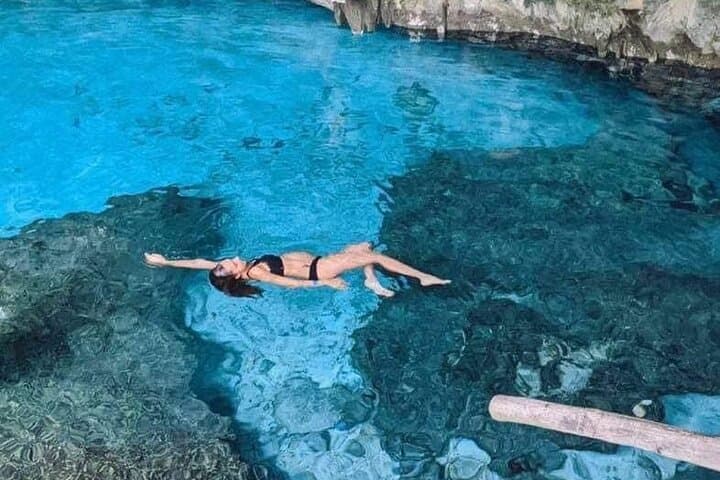
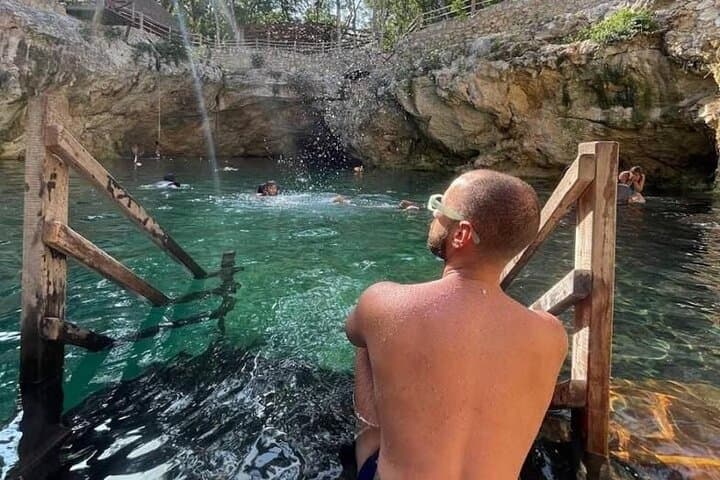
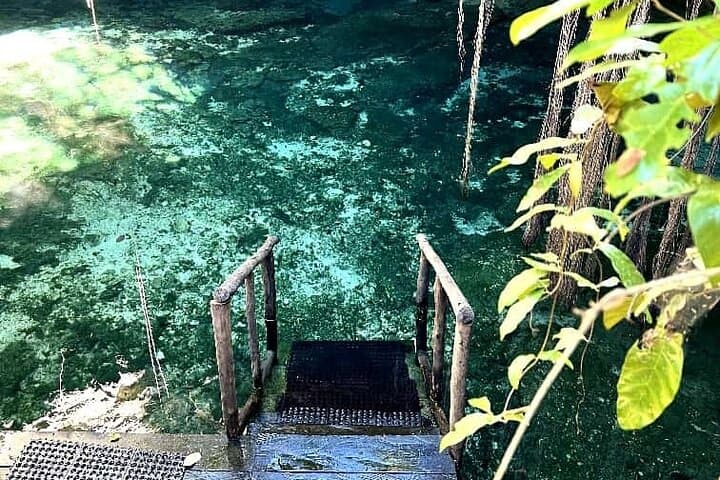
Geology anchors the rest of the day. The Yucatán is a limestone sponge; over millennia the bedrock dissolved into an interconnected karst system. Cenotes are the holes where the roof finally gave way, revealing a freshwater lens that floats over salt — a distinct halocline you can often see as a shimmering boundary. Dos Ojos—literally “Two Eyes”—is notable: two large sinkholes, each roughly 70 meters across, connected by an underwater corridor stretching almost 400 meters and plunging as deep as 118 meters in places. Gran Cenote is shallower, its sunlit caverns and ledges frequented by turtles and small fish, where light spills in and paints the water a crystalline blue.
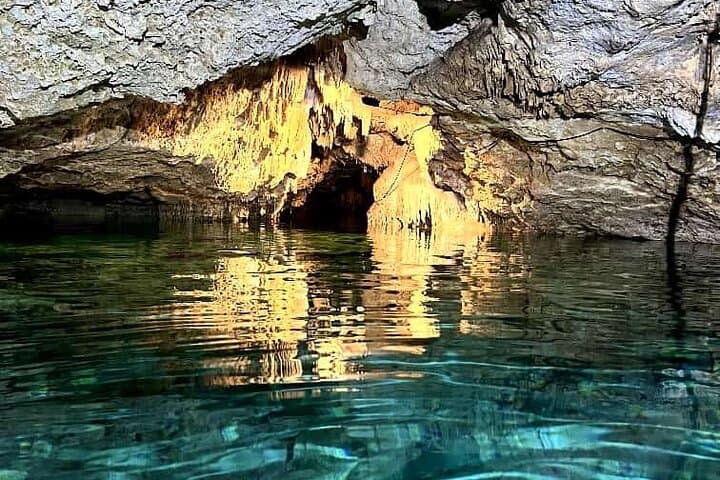
Culturally, cenotes were sacred to the Maya as sources of life and portals to the underworld; swimming here feels like touching that living geology and history at once. Local guides balance storytelling with safety: how to enter, where to snorkel, and how to avoid disturbing the fragile cave formations and resident wildlife.
Practicalities: expect an 11–12 hour day with hotel pick-up and drop-off, guide, admissions, and a buffet lunch included. Wear a swimsuit under quick-dry shorts, water shoes with good grip, and reef-safe sunscreen; bring a dry bag for electronics. If you plan to snorkel beyond the cenote rims (or dive), fins and a mask make the experience. Crowds concentrate midday—opt for an early start if you prefer quieter light in the caverns. Note health restrictions: this tour is not recommended for travelers with severe back, heart, or pregnancy concerns.
Respect the water: use biodegradable products, avoid touching stalactites, and follow guide instructions. The payoff is visceral: the cool, otherworldly calm of cenote blue, turtles weaving beneath the surface, and the slow return to sun and sea at Tulum’s cliff edge—an island of history and water in one sweep of a long day.
moderate.
11–12 hours.
Moderate fitness required — comfortable moving on uneven stairs, short swims/snorkels, and a long day on your feet.
The tour runs about 11–12 hours and includes hotel pick-up/drop-off, guide, admissions to Tulum, Dos Ojos and Gran Cenote, a buffet lunch, and private transportation.
Yes—both Dos Ojos and Gran Cenote allow swimming and snorkeling; guides will advise on safe entry points and areas to avoid in the caves.
Children can join but infants must sit on laps; the tour is not recommended for pregnant travelers or those with significant back or heart problems.
Bring small cash for lockers, tips, or souvenirs — many sites accept cards but smaller vendors or lockers may be cash-only.
Basic snorkel gear is often available, but bringing your own mask and fins is recommended for fit and hygiene.
Wear a swimsuit under quick-dry clothing, water shoes, and a lightweight cover-up for sun protection between sites.
Tulum is one of the few Maya sites built along the coast; it prospered as a port and trading hub in the late Postclassic period (c. 1200–1521 CE).
Cenotes are vulnerable to contamination and overcrowding — follow guide rules, use biodegradable products, and avoid touching cave formations to help preserve them.
Conoce Lo Tuyo - Know Thy World operates guided outdoor trips and adventures with an emphasis on safety, stewardship, and memorable experiences.
You step off the minibus as the Caribbean light slices across a low stone wall. The wind smells faintly of salt and jungle; behind you, the ruins of Tulum sit on a cliff like an old harbor watchman, white buildings facing turquoise sea. For a full day you travel this thin seam where Mayan history meets the Yucatán’s underworld of freshwater caverns: first the sun-baked terraces and sea-facing temples of Tulum, then the cool, subterranean blue of Dos Ojos and Gran Cenote.
You step off the minibus as the Caribbean light slices across a low stone wall. The wind smells faintly of salt and jungle; behind you, the ruins of Tulum sit on a cliff like an old harbor watchman, white buildings facing turquoise sea. For a full day you travel this thin seam where Mayan history meets the Yucatán’s underworld of freshwater caverns: first the sun-baked terraces and sea-facing temples of Tulum, then the cool, subterranean blue of Dos Ojos and Gran Cenote.
The Tulum site is late-postclassic Maya—small, fortified, a trading post and lighthouse for seafaring merchants. Guides on the tour lay out its role as a coastal node for goods moving between inland cities and the Caribbean trade routes, and point out the Castillo, perched above a narrow beach where waves insistently remake the coastline.
Geology anchors the rest of the day. The Yucatán is a limestone sponge; over millennia the bedrock dissolved into an interconnected karst system. Cenotes are the holes where the roof finally gave way, revealing a freshwater lens that floats over salt — a distinct halocline you can often see as a shimmering boundary. Dos Ojos—literally “Two Eyes”—is notable: two large sinkholes, each roughly 70 meters across, connected by an underwater corridor stretching almost 400 meters and plunging as deep as 118 meters in places. Gran Cenote is shallower, its sunlit caverns and ledges frequented by turtles and small fish, where light spills in and paints the water a crystalline blue.
Culturally, cenotes were sacred to the Maya as sources of life and portals to the underworld; swimming here feels like touching that living geology and history at once. Local guides balance storytelling with safety: how to enter, where to snorkel, and how to avoid disturbing the fragile cave formations and resident wildlife.
Practicalities: expect an 11–12 hour day with hotel pick-up and drop-off, guide, admissions, and a buffet lunch included. Wear a swimsuit under quick-dry shorts, water shoes with good grip, and reef-safe sunscreen; bring a dry bag for electronics. If you plan to snorkel beyond the cenote rims (or dive), fins and a mask make the experience. Crowds concentrate midday—opt for an early start if you prefer quieter light in the caverns. Note health restrictions: this tour is not recommended for travelers with severe back, heart, or pregnancy concerns.
Respect the water: use biodegradable products, avoid touching stalactites, and follow guide instructions. The payoff is visceral: the cool, otherworldly calm of cenote blue, turtles weaving beneath the surface, and the slow return to sun and sea at Tulum’s cliff edge—an island of history and water in one sweep of a long day.