THE ADVENTURE COLLECTIVE® · Independent discovery and booking for outdoor travel

Spend a full day exploring Kaan Luum Lagoon plus two distinct cenotes near Tulum — swim turquoise waters, photograph a deep central sinkhole, and learn local geology and Maya connections. This guided tour combines photo stops, two cavern pools, and a lagoon with free time to swim.
Spend a full day exploring Kaan Luum Lagoon plus two distinct cenotes near Tulum — swim turquoise waters, photograph a deep central sinkhole, and learn local geology and Maya connections. This guided tour combines photo stops, two cavern pools, and a lagoon with free time to swim.
Morning light fractures through the palms as the van slips off the highway and into humid Mayan lowland air — you step out to a bridge that looks over a blue-green bowl, Kaan Luum daring you to jump. The tour moves with a steady rhythm: a quick photo stop at the Tulum letters, then a slow, restorative drift through cenotes whose waters feel colder the deeper you go.
Verified experiences and guided adventures in the surrounding area.
Operated by Holbox and Bacalar Tour · Tulum, Quintana Roo
Morning light fractures through the palms as the van slips off the highway and into humid Mayan lowland air — you step out to a bridge that looks over a blue-green bowl, Kaan Luum daring you to jump. The tour moves with a steady rhythm: a quick photo stop at the Tulum letters, then a slow, restorative drift through cenotes whose waters feel colder the deeper you go.
This coastline is limestone country. Over tens of thousands of years fresh water dissolved the bedrock, creating caverns and sinkholes that collapse into cenotes — the region’s freshwater wells and a cornerstone of Maya life. Kaan Luum is famous for a deep central cenote (reported around 80 meters) that sits inside a shallow lagoon, producing striking color shifts as sunlight hits suspended sediments. Zacil-Ha and Kuxtal are smaller but dramatic: high-walled pools where jungle sound and dripping calcite give the place a hushed intensity.
Culturally, cenotes were sacred to the Maya as sources of life and ritual; today they’re also treasured swim spots with simple facilities and local guides who share safety and lore.
Practical guidance: arrive with reef-safe sunscreen and a dry bag, bring water and a change of clothes, and expect a full day (roughly 13–15 hours including transfers). Wear sturdy sandals that can get wet; ladder entries and short swims into caverns are common. Respect roped areas and follow guide instructions — currents in large cenotes can be deceptively strong. Timing your visit for morning or late afternoon gives softer light for photography and cooler temperatures. Pack lightly, charge your camera, and be ready to trade city heat for cool, mineral-rich water.
easy.
13–15 hours.
Suitable for most fitness levels; requires ability to climb short ladders and swim short distances.
Expect a full-day outing (about 13–15 hours) with hotel pickup, entrance fees for Kaan Luum, Zacil-Ha, and Kuxtal, a box breakfast, and a buffet lunch included.
Yes — most stops have shallow edges and platforms; non-swimmers can enjoy views, take photos, or float with a life vest if available.
Facilities vary by cenote; smaller sites may not have lockers, so bring a dry bag or leave valuables at the hotel.
Many operators allow children but infants must sit on an adult’s lap during transport; check with your operator for age limits and life vest availability.
Cenotes were essential water sources and spiritual sites for the Maya; many nearby ruins and place names reflect this long connection to freshwater holes.
Use reef-safe products, avoid touching calcite formations, and follow local rules — visitor behavior directly affects water clarity and delicate cave formations.
Holbox and Bacalar Tour operates guided outdoor trips and adventures with an emphasis on safety, stewardship, and memorable experiences.
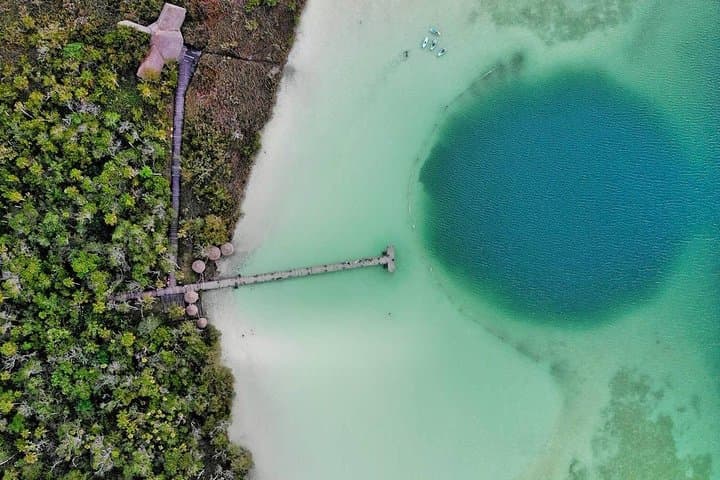


Morning light fractures through the palms as the van slips off the highway and into humid Mayan lowland air — you step out to a bridge that looks over a blue-green bowl, Kaan Luum daring you to jump. The tour moves with a steady rhythm: a quick photo stop at the Tulum letters, then a slow, restorative drift through cenotes whose waters feel colder the deeper you go.
Morning light fractures through the palms as the van slips off the highway and into humid Mayan lowland air — you step out to a bridge that looks over a blue-green bowl, Kaan Luum daring you to jump. The tour moves with a steady rhythm: a quick photo stop at the Tulum letters, then a slow, restorative drift through cenotes whose waters feel colder the deeper you go.
This coastline is limestone country. Over tens of thousands of years fresh water dissolved the bedrock, creating caverns and sinkholes that collapse into cenotes — the region’s freshwater wells and a cornerstone of Maya life. Kaan Luum is famous for a deep central cenote (reported around 80 meters) that sits inside a shallow lagoon, producing striking color shifts as sunlight hits suspended sediments. Zacil-Ha and Kuxtal are smaller but dramatic: high-walled pools where jungle sound and dripping calcite give the place a hushed intensity.
Culturally, cenotes were sacred to the Maya as sources of life and ritual; today they’re also treasured swim spots with simple facilities and local guides who share safety and lore.
Practical guidance: arrive with reef-safe sunscreen and a dry bag, bring water and a change of clothes, and expect a full day (roughly 13–15 hours including transfers). Wear sturdy sandals that can get wet; ladder entries and short swims into caverns are common. Respect roped areas and follow guide instructions — currents in large cenotes can be deceptively strong. Timing your visit for morning or late afternoon gives softer light for photography and cooler temperatures. Pack lightly, charge your camera, and be ready to trade city heat for cool, mineral-rich water.