THE ADVENTURE COLLECTIVE® · Independent discovery and booking for outdoor travel

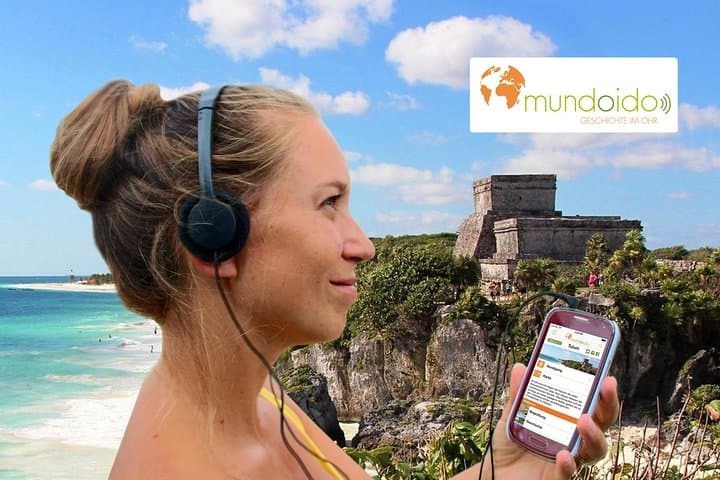
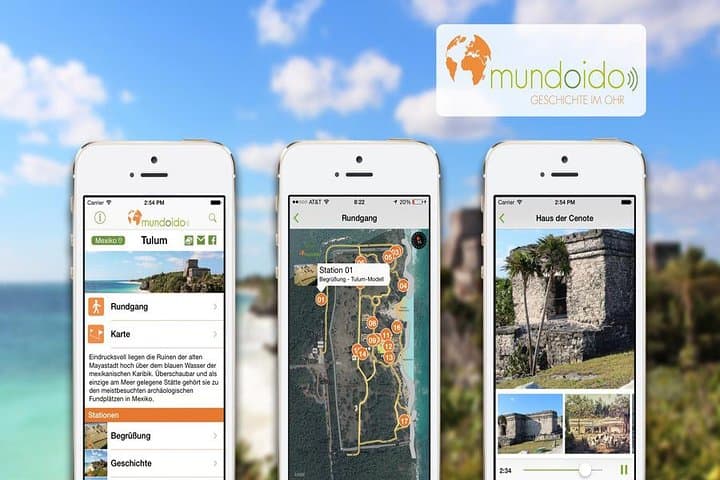
Turn your phone into a personal archaeologist with a GPS-guided audio tour of Tulum’s cliff-top ruins. Download once, go at your pace, and listen through 17 stations that explain the site’s history, architecture and connection to the sea.
Turn your phone into a personal archaeologist with a GPS-guided audio tour of Tulum’s cliff-top ruins. Download once, go at your pace, and listen through 17 stations that explain the site’s history, architecture and connection to the sea.
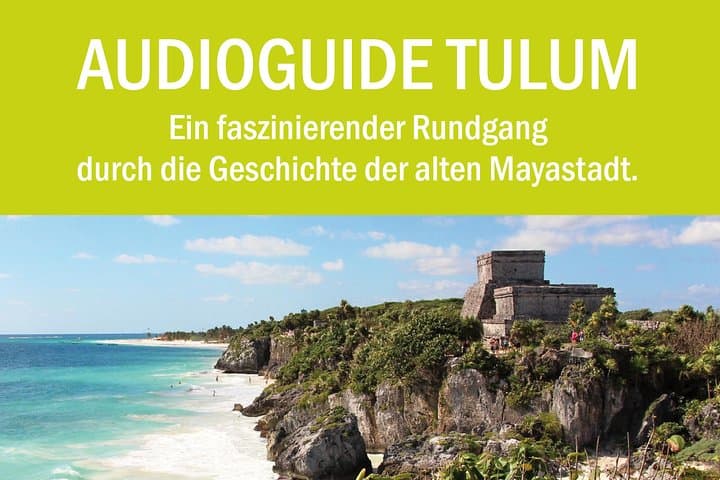
Stand on the low cliff above the Caribbean and the city of Tulum unfolds like a map: white sand below, a stone town above, and the sea pushing at the shoreline. The audio guide places you there—at your pace—letting the wind and waves be part of the narration while archaeologists’ voices explain what the stones mean.
Verified experiences and guided adventures in the surrounding area.
Operated by Mundoido Audioguide-Verlag UG · Tulum, Quintana Roo
Stand on the low cliff above the Caribbean and the city of Tulum unfolds like a map: white sand below, a stone town above, and the sea pushing at the shoreline. The audio guide places you there—at your pace—letting the wind and waves be part of the narration while archaeologists’ voices explain what the stones mean.
Tulum was a Late Postclassic Maya port and a coastal stronghold whose cliff-top Castillo watched trade routes and tides. Geologically the site sits on uplifted limestone and karst that feeds nearby cenotes; the stone buildings show both functional design and ritual orientation to sea and sun. The app’s 17 GPS-controlled listening stations walk you through the Castillo, Temple of the Frescoes, Temple of the Descending God and the former harbor, mixing chronology, Mayan cosmology and colonial-era rediscovery.
Practical and local notes: the app runs offline once downloaded, plays about 62 minutes of content, and is currently available in German through the listed app stores (the vendor also issues a free download code after booking). The experience is wheelchair- and stroller-accessible in many areas, though expect short stairs and uneven patches nearby the cliff.
Plan for sun, battery life and timing: arrive early to avoid midday crowds and heat, use headphones to preserve the site’s calm, and carry water. The audio-guide model lets you linger at frescoes or the beach without a fixed schedule—ideal for travelers who want guided context without a group pace.
easy.
1–1.5 hours.
Minimal fitness required—expect walking on paved and compacted limestone paths, short stairs, and some uneven surfaces.
No—download the app and audio files over Wi‑Fi before your visit and the GPS-guided audio will play offline.
No—the audio guide provides commentary only; park admission or archaeological site tickets are not included.
This vendor’s version is provided in German; check the app store listing for available languages before downloading.
Many areas and surfaces are wheelchair- and stroller-accessible, but expect some short steps and uneven sections near cliff edges.
Tulum rose as a Late Postclassic Maya trading port, oriented toward maritime routes; its coastal position made it an important ceremonial and commercial node into the 16th century.
The site balances heavy visitation with conservation measures—stay on marked paths, avoid touching carvings, and use reusable water bottles to limit plastic waste.
Mundoido Audioguide-Verlag UG operates guided outdoor trips and adventures with an emphasis on safety, stewardship, and memorable experiences.

Stand on the low cliff above the Caribbean and the city of Tulum unfolds like a map: white sand below, a stone town above, and the sea pushing at the shoreline. The audio guide places you there—at your pace—letting the wind and waves be part of the narration while archaeologists’ voices explain what the stones mean.
Stand on the low cliff above the Caribbean and the city of Tulum unfolds like a map: white sand below, a stone town above, and the sea pushing at the shoreline. The audio guide places you there—at your pace—letting the wind and waves be part of the narration while archaeologists’ voices explain what the stones mean.
Tulum was a Late Postclassic Maya port and a coastal stronghold whose cliff-top Castillo watched trade routes and tides. Geologically the site sits on uplifted limestone and karst that feeds nearby cenotes; the stone buildings show both functional design and ritual orientation to sea and sun. The app’s 17 GPS-controlled listening stations walk you through the Castillo, Temple of the Frescoes, Temple of the Descending God and the former harbor, mixing chronology, Mayan cosmology and colonial-era rediscovery.
Practical and local notes: the app runs offline once downloaded, plays about 62 minutes of content, and is currently available in German through the listed app stores (the vendor also issues a free download code after booking). The experience is wheelchair- and stroller-accessible in many areas, though expect short stairs and uneven patches nearby the cliff.
Plan for sun, battery life and timing: arrive early to avoid midday crowds and heat, use headphones to preserve the site’s calm, and carry water. The audio-guide model lets you linger at frescoes or the beach without a fixed schedule—ideal for travelers who want guided context without a group pace.