THE ADVENTURE COLLECTIVE® · Independent discovery and booking for outdoor travel

Walk cliff-top Maya ruins that face the turquoise Caribbean, then trade sand and sun for the hush of a cenote cavern. This half-day pairing blends archaeology, geology, and a refreshing swim in clear underground waters.
Walk cliff-top Maya ruins that face the turquoise Caribbean, then trade sand and sun for the hush of a cenote cavern. This half-day pairing blends archaeology, geology, and a refreshing swim in clear underground waters.
You arrive at the rim of the Tulum ruins with salt wind on your face and the Caribbean spread like a bright promise below—waves pushing at the cliff’s feet, gulls cutting the air. The stone path threads past low, weathered temples where the ocean horizon frames the ruins’ faded stucco and the Temple of the Frescoes stares toward the sunrise.
Verified experiences and guided adventures in the surrounding area.
Operated by Ocean Tours Mexico · Tulum, Quintana Roo
You arrive at the rim of the Tulum ruins with salt wind on your face and the Caribbean spread like a bright promise below—waves pushing at the cliff’s feet, gulls cutting the air. The stone path threads past low, weathered temples where the ocean horizon frames the ruins’ faded stucco and the Temple of the Frescoes stares toward the sunrise.
Tulum was a Late Postclassic Maya port, a compact fortress-city that traded goods and ideas across the Caribbean. The cliffs here are fractured limestone; the same porous bedrock that forms the Yucatán’s cenotes has been hollowed by groundwater for millennia. When the roof collapses, a sunlit sinkhole opens—an underground world of clear, cool water, stalactites reaching like fingers and light pockets that make the water glow.
Culturally, the site sits near small Mayan communities and protected jungle corridors such as Parque Jaguar, where preservation and tourism meet. Your guide will point out the art on the frescoes, explain sacrificial platforms, and translate the geology as you move from archaeological terraces to a freshwater cavern.
Practically: expect about 4–5 hours roundtrip with moderate walking on uneven stone and boardwalks, short swims and snorkeling in the cenote, and a few stairs. Bring cash for the park fee, a biodegradable sunscreen applied before arrival, water in a reusable bottle, and water shoes for cavern entry. Morning departures dodge the heat and give clearer water for snorkeling. The trip balances history, geology, and a brisk dip into an underground river—ready for active travelers who want culture followed by cool water.
moderate.
4–5 hours.
Basic aerobic fitness and comfort with short swims and uneven walking; stair climbing required
Yes—swimming and snorkeling are permitted in the guided cenote portion; life vests are typically provided for safety.
The park fee is approximately USD 20 per person and is usually paid in cash to the guide on the day of the tour.
This offering commonly departs from Playa del Carmen or nearby hotels; confirm your pickup point when booking.
Children can join with supervision, but the ruins and cenote include stairs and uneven paths; it’s not ideal for travelers with severe mobility limitations.
Tulum served as a strategic Maya port and coastal stronghold in the Late Postclassic period, notable for its sea-facing temples and trade significance.
Visitor fees and local guides support site conservation; use biodegradable sunscreen and avoid touching ruins or formations to reduce impact.
Ocean Tours Mexico operates guided outdoor trips and adventures with an emphasis on safety, stewardship, and memorable experiences.
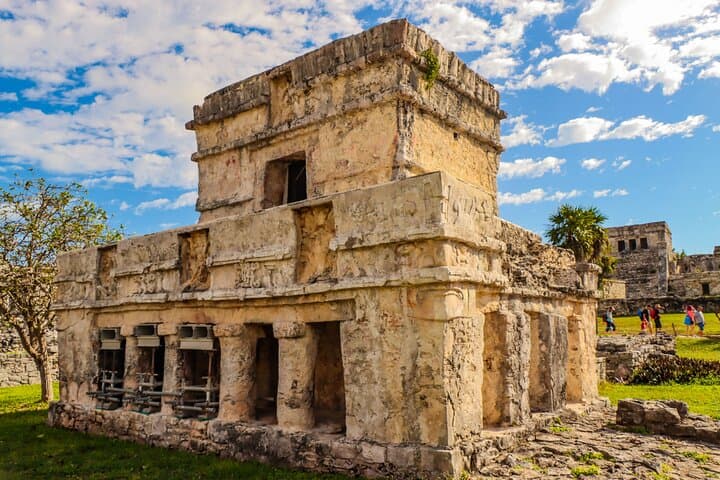
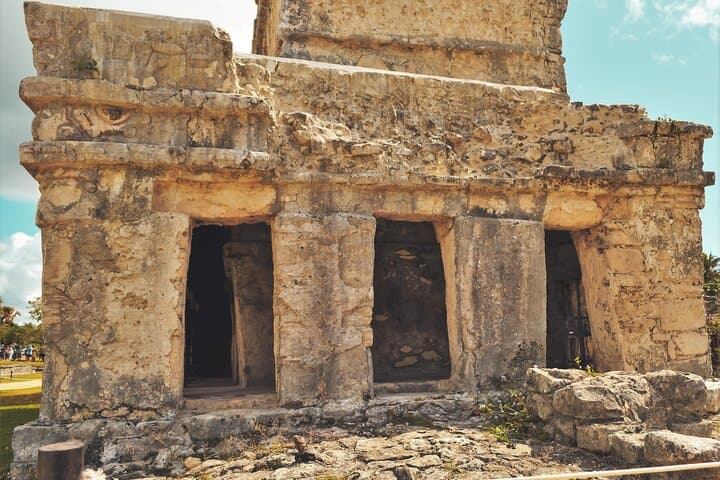
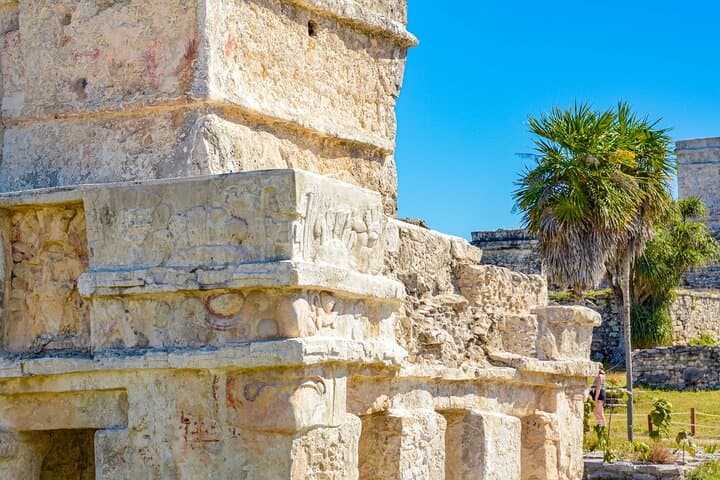
You arrive at the rim of the Tulum ruins with salt wind on your face and the Caribbean spread like a bright promise below—waves pushing at the cliff’s feet, gulls cutting the air. The stone path threads past low, weathered temples where the ocean horizon frames the ruins’ faded stucco and the Temple of the Frescoes stares toward the sunrise.
You arrive at the rim of the Tulum ruins with salt wind on your face and the Caribbean spread like a bright promise below—waves pushing at the cliff’s feet, gulls cutting the air. The stone path threads past low, weathered temples where the ocean horizon frames the ruins’ faded stucco and the Temple of the Frescoes stares toward the sunrise.
Tulum was a Late Postclassic Maya port, a compact fortress-city that traded goods and ideas across the Caribbean. The cliffs here are fractured limestone; the same porous bedrock that forms the Yucatán’s cenotes has been hollowed by groundwater for millennia. When the roof collapses, a sunlit sinkhole opens—an underground world of clear, cool water, stalactites reaching like fingers and light pockets that make the water glow.
Culturally, the site sits near small Mayan communities and protected jungle corridors such as Parque Jaguar, where preservation and tourism meet. Your guide will point out the art on the frescoes, explain sacrificial platforms, and translate the geology as you move from archaeological terraces to a freshwater cavern.
Practically: expect about 4–5 hours roundtrip with moderate walking on uneven stone and boardwalks, short swims and snorkeling in the cenote, and a few stairs. Bring cash for the park fee, a biodegradable sunscreen applied before arrival, water in a reusable bottle, and water shoes for cavern entry. Morning departures dodge the heat and give clearer water for snorkeling. The trip balances history, geology, and a brisk dip into an underground river—ready for active travelers who want culture followed by cool water.