THE ADVENTURE COLLECTIVE® · Independent discovery and booking for outdoor travel

A compact day tour that pairs Tukad Cepung’s hidden canyon waterfall with Penglipuran village and the monumental Besakih Temple. Perfect for travelers who want both a short scramble to a unique falls and a deep cultural stop in one day.
A compact day tour that pairs Tukad Cepung’s hidden canyon waterfall with Penglipuran village and the monumental Besakih Temple. Perfect for travelers who want both a short scramble to a unique falls and a deep cultural stop in one day.
You step out of the minivan into a pocket of cool air and the canyon seems to hold its breath. Light threads down between limestone ribs and the river—Tukad Cepung—pushes forward, riffling over moss and rock before collapsing into a sheer curtain of water. The visit begins here, descending stone steps and scrambling across wet basalt to stand under a waterfall that hides behind a rocky amphitheater.
Verified experiences and guided adventures in the surrounding area.
Operated by Padi Bali Driver · Bangli, Bali
You step out of the minivan into a pocket of cool air and the canyon seems to hold its breath. Light threads down between limestone ribs and the river—Tukad Cepung—pushes forward, riffling over moss and rock before collapsing into a sheer curtain of water. The visit begins here, descending stone steps and scrambling across wet basalt to stand under a waterfall that hides behind a rocky amphitheater.
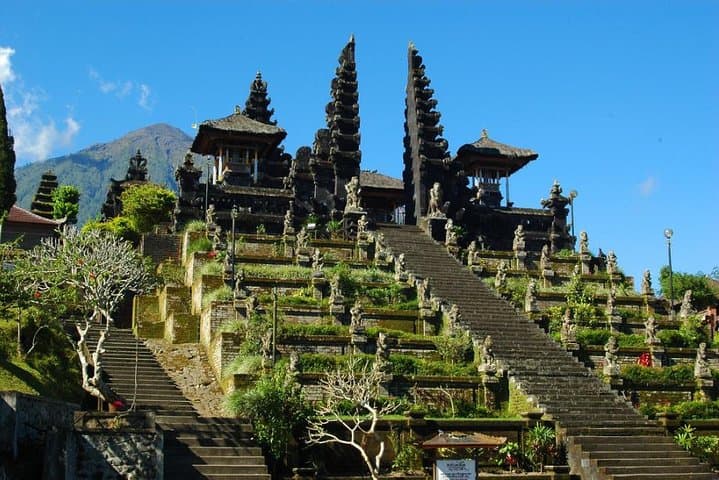
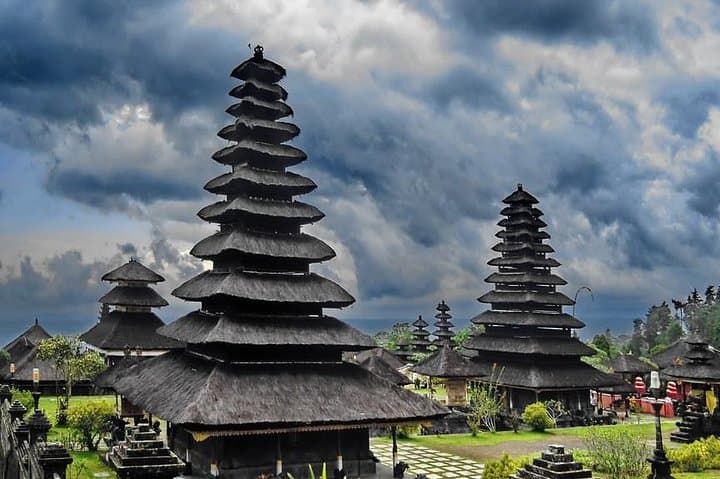
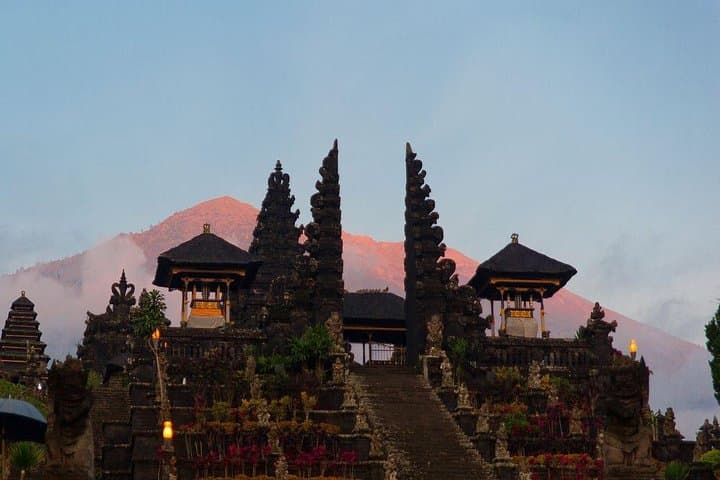
This route links two very different layers of Bali. Tukad Cepung’s gorge was carved by volcanic flows and river erosion; its bowl-like chamber is a product of softer rock giving way under persistent water. Later the tour moves through Penglipuran, a living Bangli-era village that preserves traditional architecture and clan layouts dating to the 18th century, before climbing the slopes of Mount Agung to Besakih, Bali’s largest and most complex temple compound. Besakih comprises dozens of shrines and terraces, sited where volcanic soil, agriculture, and cosmology have met for centuries.
Expect a mix of easy walking, some stairs and slippery rock near the falls, and respectful silence at temples. Bring sturdy closed shoes, waterproof layers, and modest clothing for temple entry (sarong often required). Plan for a full day—about nine hours including transfers—and travel light: bottled water, sun protection, and a small towel will cover most needs.
Timings are best early for the falls to avoid crowds and late afternoon for softer light at Besakih. Guides handle tickets and logistics; travelers should carry ID and be prepared for sudden rain during the wet months.
easy.
9 hours.
Suitable for travelers in average fitness—short stair descent to the falls and moderate walking at temples.
The tour is approximately 9 hours and typically includes hotel pickup/drop-off, an air-conditioned vehicle, entrance fees, bottled water, and a guide.
Access requires descending uneven stone steps and walking over slick rock near the pool; it is manageable for most people but not suitable for those with serious mobility issues.
Many operators provide sarongs at Besakih, but bringing your own ensures convenience and sanitary comfort.
Tours often run in light rain but may be canceled for heavy rain or unsafe conditions; check cancellation terms and local forecasts.
Penglipuran preserves village planning from the Bangli kingdom era and Besakih has served as a major ritual center on Mount Agung for centuries.
These sites are sensitive to foot traffic and litter; stick to paths, avoid removing stones or plants, and use locally provided trash disposal where available.
Padi Bali Driver operates guided outdoor trips and adventures with an emphasis on safety, stewardship, and memorable experiences.
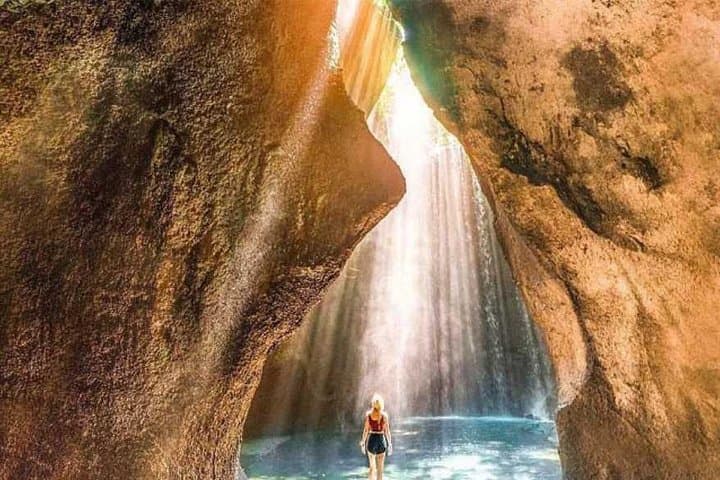
You step out of the minivan into a pocket of cool air and the canyon seems to hold its breath. Light threads down between limestone ribs and the river—Tukad Cepung—pushes forward, riffling over moss and rock before collapsing into a sheer curtain of water. The visit begins here, descending stone steps and scrambling across wet basalt to stand under a waterfall that hides behind a rocky amphitheater.
You step out of the minivan into a pocket of cool air and the canyon seems to hold its breath. Light threads down between limestone ribs and the river—Tukad Cepung—pushes forward, riffling over moss and rock before collapsing into a sheer curtain of water. The visit begins here, descending stone steps and scrambling across wet basalt to stand under a waterfall that hides behind a rocky amphitheater.
This route links two very different layers of Bali. Tukad Cepung’s gorge was carved by volcanic flows and river erosion; its bowl-like chamber is a product of softer rock giving way under persistent water. Later the tour moves through Penglipuran, a living Bangli-era village that preserves traditional architecture and clan layouts dating to the 18th century, before climbing the slopes of Mount Agung to Besakih, Bali’s largest and most complex temple compound. Besakih comprises dozens of shrines and terraces, sited where volcanic soil, agriculture, and cosmology have met for centuries.
Expect a mix of easy walking, some stairs and slippery rock near the falls, and respectful silence at temples. Bring sturdy closed shoes, waterproof layers, and modest clothing for temple entry (sarong often required). Plan for a full day—about nine hours including transfers—and travel light: bottled water, sun protection, and a small towel will cover most needs.
Timings are best early for the falls to avoid crowds and late afternoon for softer light at Besakih. Guides handle tickets and logistics; travelers should carry ID and be prepared for sudden rain during the wet months.