THE ADVENTURE COLLECTIVE® · Independent discovery and booking for outdoor travel

Spend a night under the Amphitheatre after a 14 km hike to Tugela Falls — one of the world’s tallest multi‑step waterfalls. This two‑day wild camping route balances exposed scrambling with sweeping escarpment views; bring layered gear and a readiness for chain ladders.
Spend a night under the Amphitheatre after a 14 km hike to Tugela Falls — one of the world’s tallest multi‑step waterfalls. This two‑day wild camping route balances exposed scrambling with sweeping escarpment views; bring layered gear and a readiness for chain ladders.
You crest a final ridge and the amphitheatre drops away — a vertical wall of basalt, wind rifling across grass slopes, and the Tugela River daring you toward the edge. Spray throws rainbows across the bowl; at night the escarpment hushes into a deep silence broken only by river and the faint scrape of tents.
Verified experiences and guided adventures in the surrounding area.
Operated by Soul Adventures · Winterton, KwaZulu-Natal
You crest a final ridge and the amphitheatre drops away — a vertical wall of basalt, wind rifling across grass slopes, and the Tugela River daring you toward the edge. Spray throws rainbows across the bowl; at night the escarpment hushes into a deep silence broken only by river and the faint scrape of tents.
The route follows a classic Drakensberg line: mixed grassland and shale paths carved by thousands of feet. Geologically, the Amphitheatre is a dramatic basalt cliff over high sandstone, an eroded edge of the Lesotho highlands where the escarpment falls nearly a kilometre. Tugela Falls, with a total multi-step drop around 938 m, plummets in seasonal flow and is one of the world’s tallest cascades.
Culturally the area sits in KwaZulu‑Natal country with a strong Zulu heritage; local guides often share place names and stories passed down through generations. Expect the landscape to act — gusts that push, cairns that point the way — and to move at a mountain pace.
Practical guidance: the two‑day, roughly 14 km itinerary includes steep scrambles and optional chain ladders or an exposed gully. Overnight wild camping (or cave shelter where available) uses four‑season tents, sleeping bags and mats provided. Bring layered clothing, sturdy boots, water purification, and a headlamp. Start early to avoid afternoon weather; the Tugela River is tempting but cold and swift. Transport from Johannesburg is commonly included; fitness at a moderate to fit level and comfort with basic scrambling make this a safer, more enjoyable trip.
challenging.
2 days (approx. 14 km total).
Moderate to fit—comfortable with sustained uphill, uneven terrain, and a loaded overnight pack.
The ladders are exposed but fixed; they require steady footing and no fear of heights. Guides offer alternatives via a more technical gully route for confident scramblers.
Yes—4‑season tents, sleeping mats and bags are included, though you should confirm bag warmth rating if you sleep cold.
You can cool off after hiking, but water is cold and currents can be strong; only enter if conditions are calm and you’re a confident swimmer.
Many operators include return transport from Johannesburg; confirm pickup point and expected travel time (typically several hours) when booking.
The Drakensberg escarpment marks the ancient contact between high plateau and lowland—the cliffs were shaped by volcanic basalt flows and long erosion; the area has long been part of Zulu and Sotho landscapes.
Stick to marked campsites and carry out all waste; the highland grasslands are sensitive and recovery can be slow after trampling and fires.
Soul Adventures operates guided outdoor trips and adventures with an emphasis on safety, stewardship, and memorable experiences.
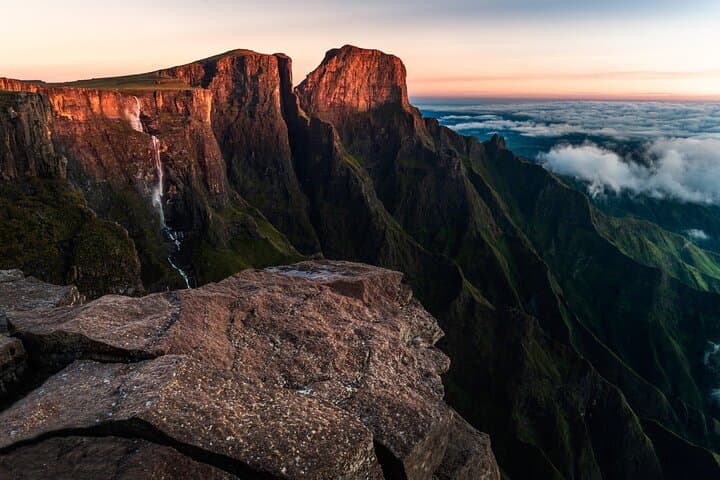
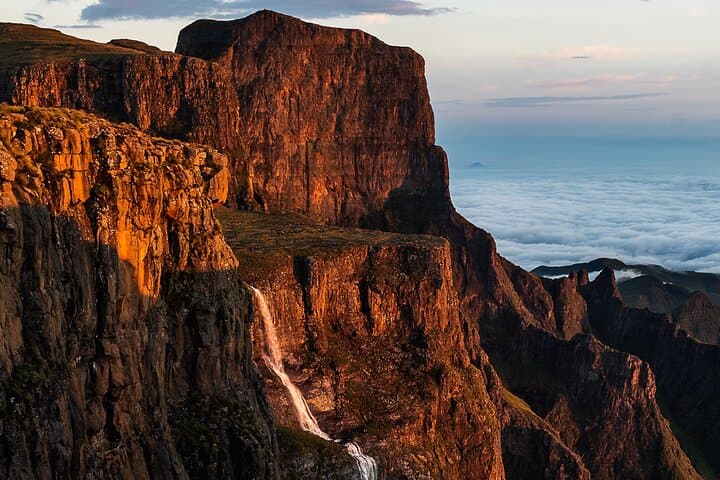
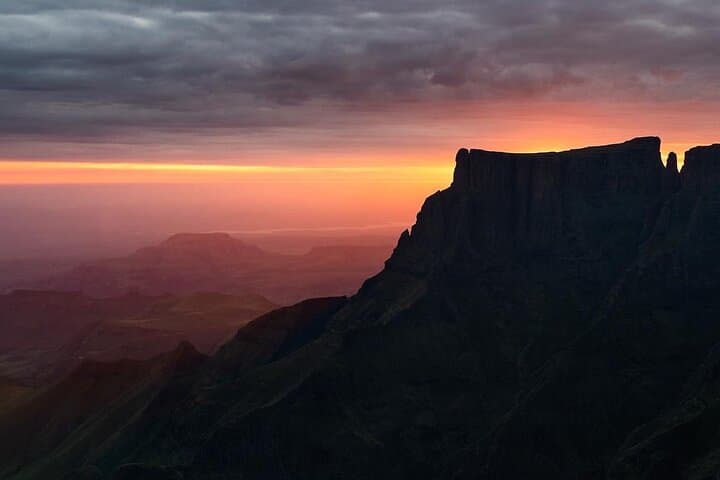
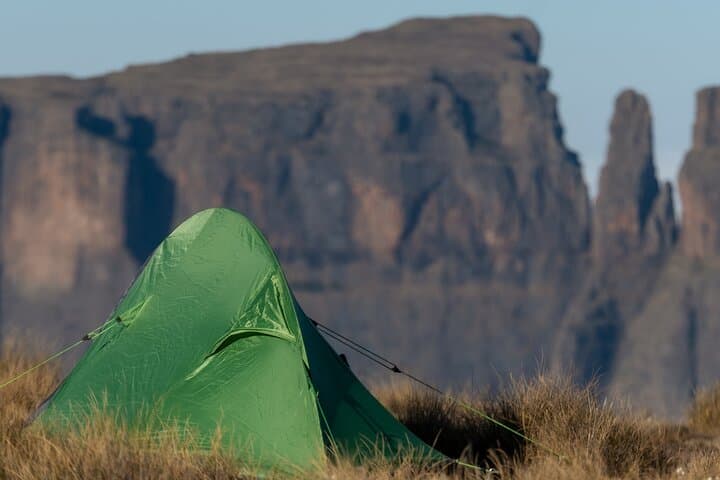
You crest a final ridge and the amphitheatre drops away — a vertical wall of basalt, wind rifling across grass slopes, and the Tugela River daring you toward the edge. Spray throws rainbows across the bowl; at night the escarpment hushes into a deep silence broken only by river and the faint scrape of tents.
You crest a final ridge and the amphitheatre drops away — a vertical wall of basalt, wind rifling across grass slopes, and the Tugela River daring you toward the edge. Spray throws rainbows across the bowl; at night the escarpment hushes into a deep silence broken only by river and the faint scrape of tents.
The route follows a classic Drakensberg line: mixed grassland and shale paths carved by thousands of feet. Geologically, the Amphitheatre is a dramatic basalt cliff over high sandstone, an eroded edge of the Lesotho highlands where the escarpment falls nearly a kilometre. Tugela Falls, with a total multi-step drop around 938 m, plummets in seasonal flow and is one of the world’s tallest cascades.
Culturally the area sits in KwaZulu‑Natal country with a strong Zulu heritage; local guides often share place names and stories passed down through generations. Expect the landscape to act — gusts that push, cairns that point the way — and to move at a mountain pace.
Practical guidance: the two‑day, roughly 14 km itinerary includes steep scrambles and optional chain ladders or an exposed gully. Overnight wild camping (or cave shelter where available) uses four‑season tents, sleeping bags and mats provided. Bring layered clothing, sturdy boots, water purification, and a headlamp. Start early to avoid afternoon weather; the Tugela River is tempting but cold and swift. Transport from Johannesburg is commonly included; fitness at a moderate to fit level and comfort with basic scrambling make this a safer, more enjoyable trip.