THE ADVENTURE COLLECTIVE® · Independent discovery and booking for outdoor travel

Swap the city for pine-scented ridgelines on a half-day rock climbing or canyoneering trip on the slopes of Mount Lemmon. Guides supply gear, instruction, and transportation to short approaches and technical routes ideal for beginners and intermediates.
Swap the city for pine-scented ridgelines on a half-day rock climbing or canyoneering trip on the slopes of Mount Lemmon. Guides supply gear, instruction, and transportation to short approaches and technical routes ideal for beginners and intermediates.
The van eases off the Mount Lemmon Highway and the scrub of the Sonoran Desert folds into pines and oaks. Your guide unloads ropes and pads while wind tugs at a band of cloud spilling over the ridge; below, Tucson flattens into a hazy grid. For four hours you trade city heat for vertical edges—single-pitch climbs on textured volcanic and granite faces, or a rope-down through a narrow canyon that ends with the pulse of falling water.
Verified experiences and guided adventures in the surrounding area.
Operated by Arizona Climbing Guides · Tucson, Arizona
The van eases off the Mount Lemmon Highway and the scrub of the Sonoran Desert folds into pines and oaks. Your guide unloads ropes and pads while wind tugs at a band of cloud spilling over the ridge; below, Tucson flattens into a hazy grid. For four hours you trade city heat for vertical edges—single-pitch climbs on textured volcanic and granite faces, or a rope-down through a narrow canyon that ends with the pulse of falling water.
This corridor of the Santa Catalina Mountains has been a working landscape for millennia. Indigenous Tohono O'odham and Sobaipuri peoples moved seasonally through these ranges; 19th- and 20th-century miners later cut access roads that climbers use today. Geologically, the Catalinas are a sky island: uplifted metamorphic and igneous rocks rise sharply from the desert floor, producing steep walls perfect for short technical routes and canyon amphitheaters where water still dares to run in monsoon season.
Culture here mixes outdoor devotion with local coffee shops and a stubborn love of the outdoors—guides often double as naturalists, pointing out mountain mahogany, juniper, and the hard-packed trails that reveal the area's mining scars. You'll hear route names that reference miners and ranchers, and you may pass old adits and stacked stonework that hint at earlier uses of the landscape.
The experience itself is pragmatic and kinetic. Routes typically range from 30–150 feet; approaches are short—10–40 minutes on rocky, uneven trail—so expect a total vertical change during the outing in the order of a few hundred feet. Guides supply helmets, harnesses, ropes, and instruction: beginners learn belaying, proper footwork, and a controlled rappel; intermediate climbers hone technique or try multi-pitch transitions on easier terrain.
Practical edge: start early in summer to avoid heat and monsoon storms; bring 1–2 liters of water, grippy shoes, and a small daypack. Wear layers—the temperature can drop substantially in the pines—and sunscreen for the exposed faces. Guides provide transportation from Le Buzz Coffee along Mount Lemmon Highway, so you can leave the driving to someone who knows the switchbacks.
Safety notes are straightforward: weather cancels in heavy rain (flash floods make canyoneering unsafe), and participants should have at least a moderate fitness level—stable ankles, comfort on steep terrain, and no serious heart conditions. For photographers, the most dramatic frames come from the top of a rappel looking down the canyon or from a ledge that captures Tucson spread below.
In short: this half-day flip from desert to mountain delivers hands-on climbing, a rope-through-water descent when conditions allow, and clear, practical instruction—an efficient, high-reward way to add vertical excitement to a Tucson visit.
moderate.
4 hours.
Moderate fitness: able to hike short, rocky approaches and manage repeated climbs or rappels over a half day
No—these trips are beginner friendly. Guides teach belaying, knotwork, and rappelling; experienced climbers can still push technique on harder routes.
Meet at Le Buzz Coffee on Mount Lemmon Highway; transportation from the meeting point to the activity site is included.
Specific limits can apply for safety; check booking questions. Generally participants should be older children (teens) and within standard harness weight limits—disclose weight during booking.
Trips are canceled or rescheduled for heavy rain or lightning; canyoneering is particularly weather-sensitive due to flash flood risk.
Guides provide inspected climbing and canyoneering equipment; you may bring personal shoes, helmet, or gloves if you prefer.
This activity is not recommended for pregnant travelers or people with serious cardiovascular conditions due to physical strain and exposure.
The Santa Catalina Mountains served as seasonal grounds for Indigenous groups and later hosted miners and ranchers; many route names reference that working history.
This is a fragile sky-island ecosystem—stay on durable surfaces, pack out trash, and follow Leave No Trace to protect cryptobiotic soils and riparian canyons.
Arizona Climbing Guides operates guided outdoor trips and adventures with an emphasis on safety, stewardship, and memorable experiences.
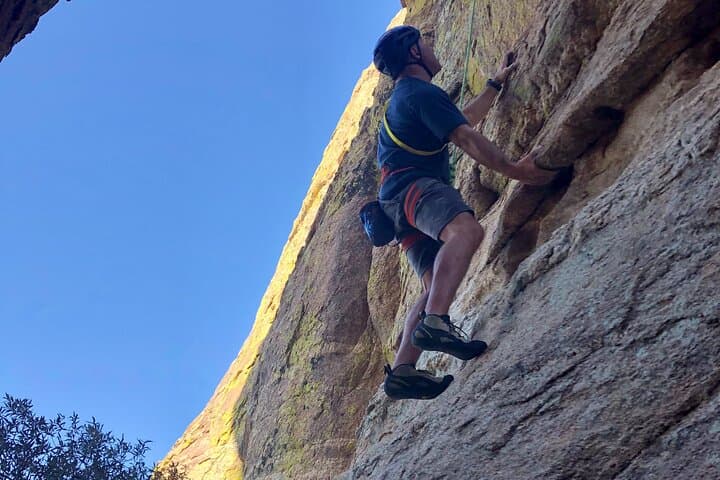
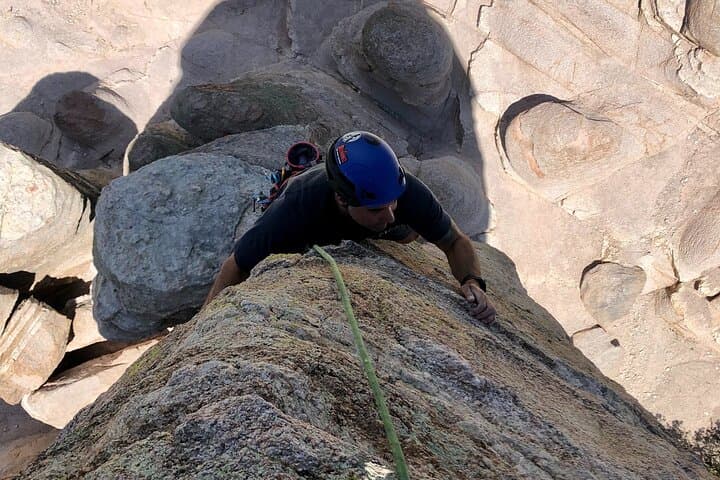
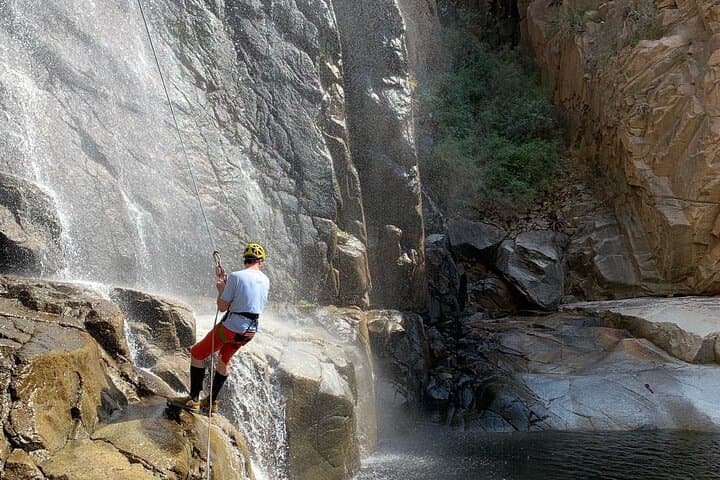
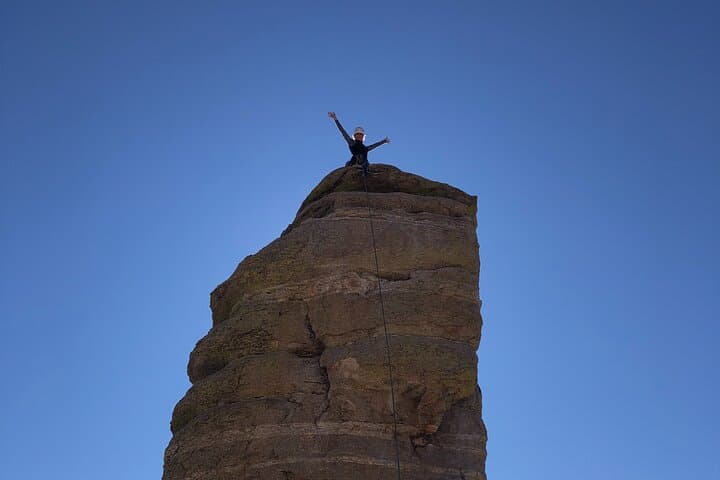
The van eases off the Mount Lemmon Highway and the scrub of the Sonoran Desert folds into pines and oaks. Your guide unloads ropes and pads while wind tugs at a band of cloud spilling over the ridge; below, Tucson flattens into a hazy grid. For four hours you trade city heat for vertical edges—single-pitch climbs on textured volcanic and granite faces, or a rope-down through a narrow canyon that ends with the pulse of falling water.
The van eases off the Mount Lemmon Highway and the scrub of the Sonoran Desert folds into pines and oaks. Your guide unloads ropes and pads while wind tugs at a band of cloud spilling over the ridge; below, Tucson flattens into a hazy grid. For four hours you trade city heat for vertical edges—single-pitch climbs on textured volcanic and granite faces, or a rope-down through a narrow canyon that ends with the pulse of falling water.
This corridor of the Santa Catalina Mountains has been a working landscape for millennia. Indigenous Tohono O'odham and Sobaipuri peoples moved seasonally through these ranges; 19th- and 20th-century miners later cut access roads that climbers use today. Geologically, the Catalinas are a sky island: uplifted metamorphic and igneous rocks rise sharply from the desert floor, producing steep walls perfect for short technical routes and canyon amphitheaters where water still dares to run in monsoon season.
Culture here mixes outdoor devotion with local coffee shops and a stubborn love of the outdoors—guides often double as naturalists, pointing out mountain mahogany, juniper, and the hard-packed trails that reveal the area's mining scars. You'll hear route names that reference miners and ranchers, and you may pass old adits and stacked stonework that hint at earlier uses of the landscape.
The experience itself is pragmatic and kinetic. Routes typically range from 30–150 feet; approaches are short—10–40 minutes on rocky, uneven trail—so expect a total vertical change during the outing in the order of a few hundred feet. Guides supply helmets, harnesses, ropes, and instruction: beginners learn belaying, proper footwork, and a controlled rappel; intermediate climbers hone technique or try multi-pitch transitions on easier terrain.
Practical edge: start early in summer to avoid heat and monsoon storms; bring 1–2 liters of water, grippy shoes, and a small daypack. Wear layers—the temperature can drop substantially in the pines—and sunscreen for the exposed faces. Guides provide transportation from Le Buzz Coffee along Mount Lemmon Highway, so you can leave the driving to someone who knows the switchbacks.
Safety notes are straightforward: weather cancels in heavy rain (flash floods make canyoneering unsafe), and participants should have at least a moderate fitness level—stable ankles, comfort on steep terrain, and no serious heart conditions. For photographers, the most dramatic frames come from the top of a rappel looking down the canyon or from a ledge that captures Tucson spread below.
In short: this half-day flip from desert to mountain delivers hands-on climbing, a rope-through-water descent when conditions allow, and clear, practical instruction—an efficient, high-reward way to add vertical excitement to a Tucson visit.