THE ADVENTURE COLLECTIVE® · Independent discovery and booking for outdoor travel

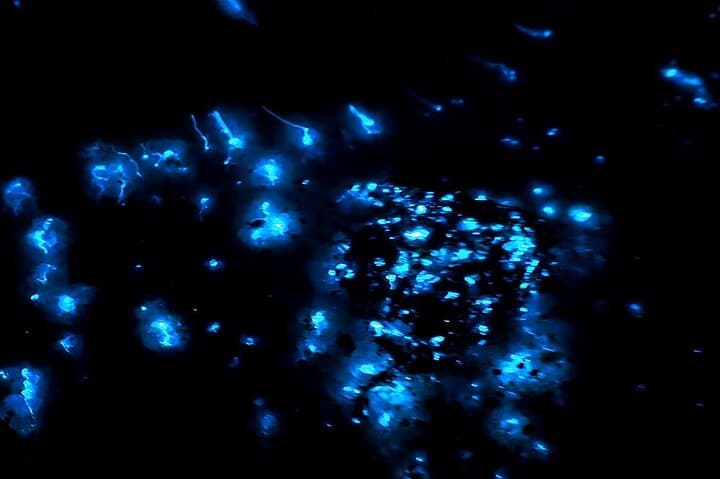
Board a river boat at dusk and follow the Tuaran/Mankabong estuary through mangrove tunnels toward the blue-tear bioluminescence and a firefly-lit night. This 6–7 hour cruise pairs local culture—Bajau houses and oyster farms—with sunset views of Mount Kinabalu.
Board a river boat at dusk and follow the Tuaran/Mankabong estuary through mangrove tunnels toward the blue-tear bioluminescence and a firefly-lit night. This 6–7 hour cruise pairs local culture—Bajau houses and oyster farms—with sunset views of Mount Kinabalu.
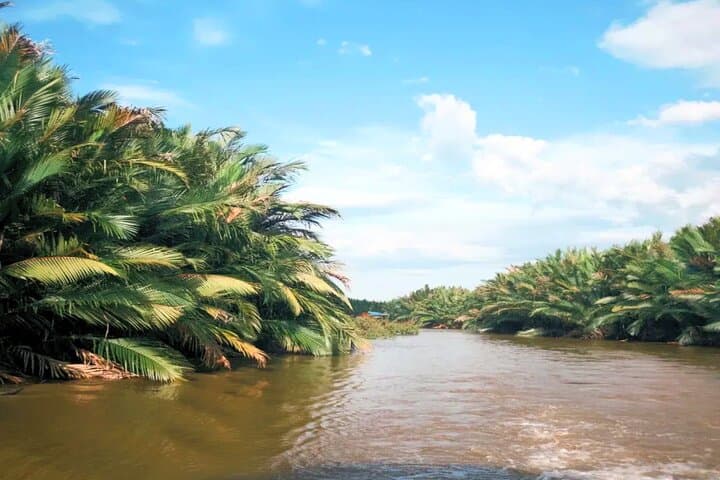
Dusk falls and the shoreline simplifies into silhouettes: stilt houses, oyster racks, and the distant bulk of Mount Kinabalu press the sky. At the Tuaran/Mankabong river mouth the boat slips away from the jetty and the mangrove closes in, a living corridor of roots and incoming tide that funnels the day’s last light into a broad orange ribbon.
Verified experiences and guided adventures in the surrounding area.
Operated by Wadi Rum Fire Camp · Kota Kinabalu, Sabah
Dusk falls and the shoreline simplifies into silhouettes: stilt houses, oyster racks, and the distant bulk of Mount Kinabalu press the sky. At the Tuaran/Mankabong river mouth the boat slips away from the jetty and the mangrove closes in, a living corridor of roots and incoming tide that funnels the day’s last light into a broad orange ribbon.
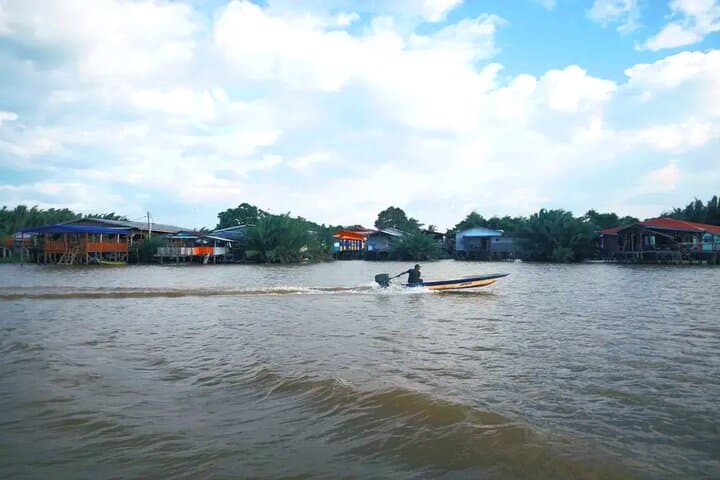
The river is older than the nearby town—sediment from the Crocker Range has built estuarine flats where mangroves thrive, feeding oyster racks that local families tend. The Bajau communities along these waterways have lived by sea and river for generations; tonight’s route threads cultural stops—the pink mosque’s modern façade, a traditional Bajau house, then out to Rasa Ria for sunset—before returning to the mangrove for the main event.
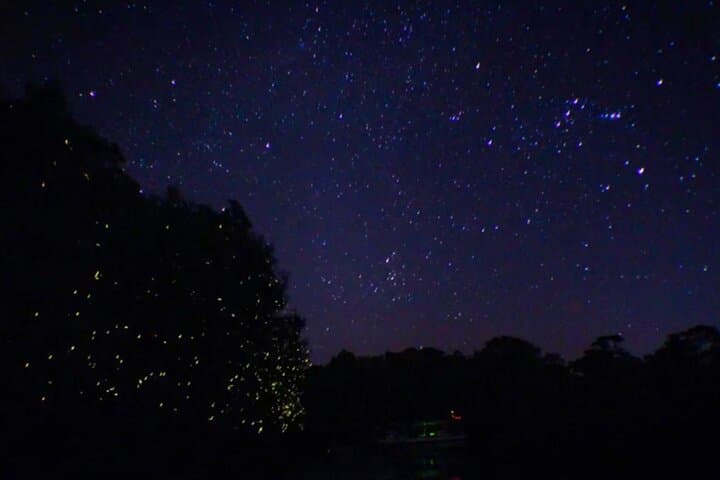
Expect a paced evening: safety briefing and high tea at the jetty, a gentle cruise past oyster farms, sunset views of Kinabalu on clear nights, then the blue-tear phytoplankton glow in still water and, after dark, the firefly choreography that makes the mangrove shimmer. Wildlife sightings—mudflat birds, fireflies, occasionally a saltwater crocodile—are possible but never guaranteed.
Practical notes: bring insect repellent, a headlamp with a red filter, a light waterproof layer, and a camera capable of long exposures or high-ISO shots. Respect local homes and wildlife—avoid bright lights and loud noises—and be prepared for uneven boarding and wet shoes. The trip runs about 6–7 hours and is suitable for most fitness levels; it’s an easy, sensory-rich evening on the water that combines natural phenomena with coastal culture.
easy.
6–7 hours.
Suitable for most fitness levels; requires easy standing and short steps when boarding boats
Most bookings include hotel pickup within Kota Kinabalu city; you’ll be assigned a pickup point or given instructions when you confirm details.
No—both are natural phenomena dependent on water conditions, tide, moonlight and weather; operators choose times to maximize chances but sightings cannot be guaranteed.
Guides follow local safety protocols and keep distance from wildlife; sightings are rare and boats do not approach or disturb animals.
Light, quick-dry clothing, closed-toe shoes for boarding, insect repellent, a small dry bag, and a headlamp with a red filter; bring any personal medications and waterproof protection for electronics.
The Tuaran and Mankabong waterways have supported Bajau and coastal communities for generations; oyster farming and small-scale fishing remain central to local livelihoods.
Mangroves are sensitive to light and pollution—minimize noise, avoid bright lights, and follow guides’ instructions to reduce disturbance to fireflies and shorebirds.
Wadi Rum Fire Camp operates guided outdoor trips and adventures with an emphasis on safety, stewardship, and memorable experiences.
Dusk falls and the shoreline simplifies into silhouettes: stilt houses, oyster racks, and the distant bulk of Mount Kinabalu press the sky. At the Tuaran/Mankabong river mouth the boat slips away from the jetty and the mangrove closes in, a living corridor of roots and incoming tide that funnels the day’s last light into a broad orange ribbon.
Dusk falls and the shoreline simplifies into silhouettes: stilt houses, oyster racks, and the distant bulk of Mount Kinabalu press the sky. At the Tuaran/Mankabong river mouth the boat slips away from the jetty and the mangrove closes in, a living corridor of roots and incoming tide that funnels the day’s last light into a broad orange ribbon.
The river is older than the nearby town—sediment from the Crocker Range has built estuarine flats where mangroves thrive, feeding oyster racks that local families tend. The Bajau communities along these waterways have lived by sea and river for generations; tonight’s route threads cultural stops—the pink mosque’s modern façade, a traditional Bajau house, then out to Rasa Ria for sunset—before returning to the mangrove for the main event.
Expect a paced evening: safety briefing and high tea at the jetty, a gentle cruise past oyster farms, sunset views of Kinabalu on clear nights, then the blue-tear phytoplankton glow in still water and, after dark, the firefly choreography that makes the mangrove shimmer. Wildlife sightings—mudflat birds, fireflies, occasionally a saltwater crocodile—are possible but never guaranteed.
Practical notes: bring insect repellent, a headlamp with a red filter, a light waterproof layer, and a camera capable of long exposures or high-ISO shots. Respect local homes and wildlife—avoid bright lights and loud noises—and be prepared for uneven boarding and wet shoes. The trip runs about 6–7 hours and is suitable for most fitness levels; it’s an easy, sensory-rich evening on the water that combines natural phenomena with coastal culture.