THE ADVENTURE COLLECTIVE® · Independent discovery and booking for outdoor travel

Remote Tibetan culture, high-valley trails and traditional homestays define this 18-day Tsum Valley trek. Expect long walking days, rugged terrain, and close encounters with Tsombo villages—ideal for experienced trekkers seeking solitude.
Remote Tibetan culture, high-valley trails and traditional homestays define this 18-day Tsum Valley trek. Expect long walking days, rugged terrain, and close encounters with Tsombo villages—ideal for experienced trekkers seeking solitude.
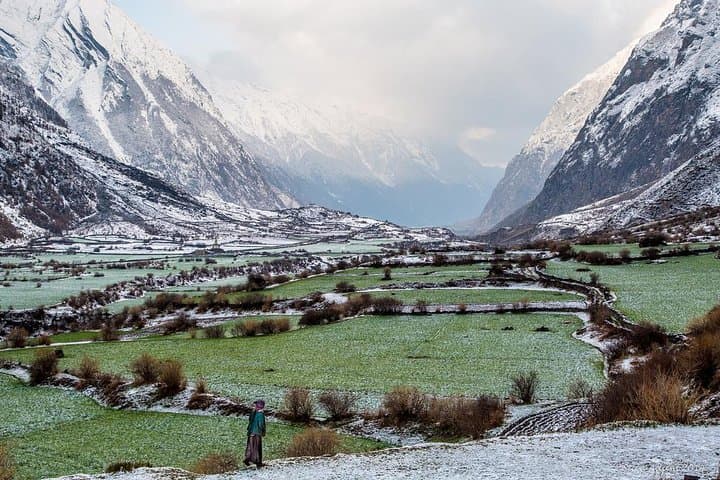
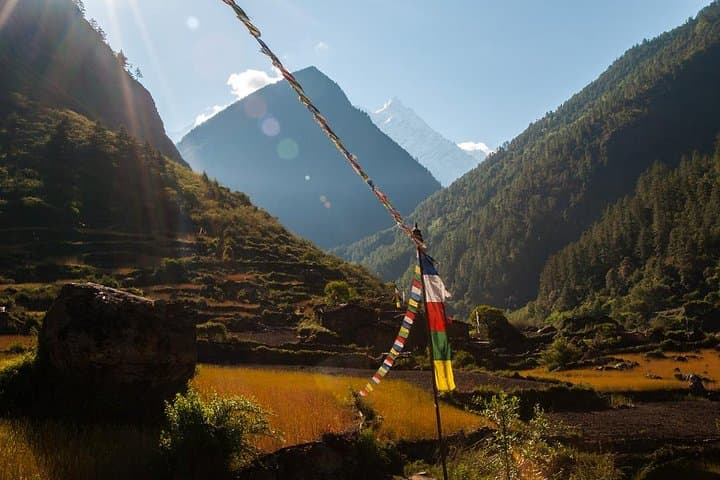
A thin Himalayan wind slices across a stone courtyard as you step from a homestay into a valley that still feels measured in generations rather than minutes. Low-slung mani walls, fluttering prayer flags and terraces carved into steep slopes lead you up toward glacial shoulders; the Budhi Gandaki below dares you to keep pace.
Verified experiences and guided adventures in the surrounding area.
Operated by Osho world Adventure · Gorkha, Gandaki Province
A thin Himalayan wind slices across a stone courtyard as you step from a homestay into a valley that still feels measured in generations rather than minutes. Low-slung mani walls, fluttering prayer flags and terraces carved into steep slopes lead you up toward glacial shoulders; the Budhi Gandaki below dares you to keep pace.
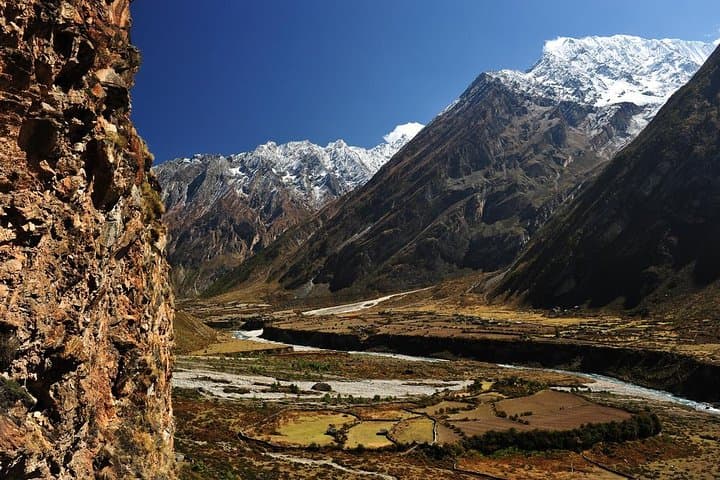
Tsum Valley sits in northern Gorkha, a culturally Tibetan enclave that opened to trekkers only in recent decades. Geology here is raw—steep river gorges, moraine-locked side valleys and peaks folded from the collision of Indian and Eurasian plates. Villages like Chumling and Mu preserve Tsombo customs: butter tea, sky burials in oral histories, and small gompas that watch over long approaches.
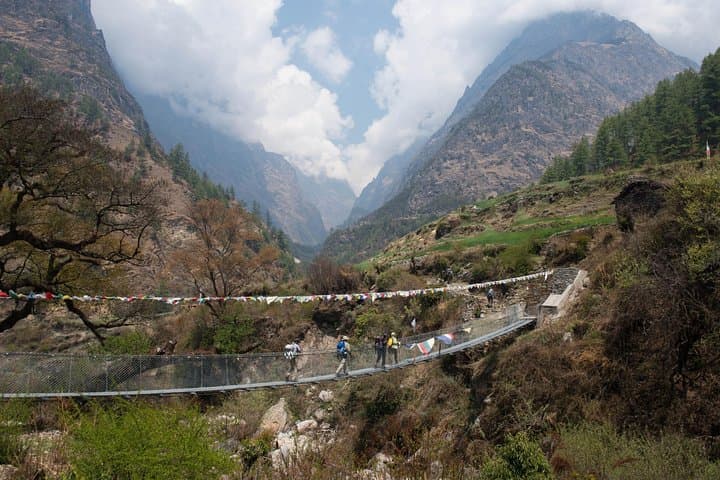
Expect 18 days of compact days in the 2,300–3,700 m range with long walking sections on rocky trails, suspension bridges and occasional grassy camps. Day-to-day terrain alternates river flats, rhododendron forests and exposed alpine slopes; elevation gain is gradual but persistent, with several multi-hour pushes between villages.
Practical guidance: train for repeated 4–7 hour hiking days carrying a daypack, bring layered clothing for high diurnal swings, and plan acclimatization to avoid altitude illness. Cash and local SIMs are limited; guides and permits are required and support local conservation. Water is available but treat it; footwear with firm ankles and a reliable sleeping bag rated to -10°C are good investments. Travel in spring or autumn for best weather; winter is harsh and summer brings monsoon-related trail damage.
This is a trek of people and place—quiet, challenging, and richly human—where small courtyards and high ridgelines both demand your attention.
challenging.
18 days.
Good aerobic fitness; able to hike 4–7 hours per day with sustained uphill sections
Yes—special permits (Tsum Valley Restricted Area Permit and Manaslu Conservation Area Permit depending on route) and TIMS are required and arranged through your operator or guide.
Spring (March–May) and autumn (September–November) offer the most stable weather, clearer views, and warmer daytime temperatures.
Combination of basic homestays in villages and camping—homestays are mostly twin-share and offer simple local meals.
Tsum Valley treks typically range to about 3,500–3,700 m; altitude sickness is possible—gradual ascent, hydration and rest days are important.
Tsum was historically connected to trans-Himalayan trade and preserves strong Tibetan cultural ties; many villages follow Bon and Tibetan Buddhist practices.
The valley's fragile alpine ecosystems require low-impact travel; permits and local fees fund conservation and community development—pack out waste and minimize campfire impact.
Osho world Adventure operates guided outdoor trips and adventures with an emphasis on safety, stewardship, and memorable experiences.
A thin Himalayan wind slices across a stone courtyard as you step from a homestay into a valley that still feels measured in generations rather than minutes. Low-slung mani walls, fluttering prayer flags and terraces carved into steep slopes lead you up toward glacial shoulders; the Budhi Gandaki below dares you to keep pace.
A thin Himalayan wind slices across a stone courtyard as you step from a homestay into a valley that still feels measured in generations rather than minutes. Low-slung mani walls, fluttering prayer flags and terraces carved into steep slopes lead you up toward glacial shoulders; the Budhi Gandaki below dares you to keep pace.
Tsum Valley sits in northern Gorkha, a culturally Tibetan enclave that opened to trekkers only in recent decades. Geology here is raw—steep river gorges, moraine-locked side valleys and peaks folded from the collision of Indian and Eurasian plates. Villages like Chumling and Mu preserve Tsombo customs: butter tea, sky burials in oral histories, and small gompas that watch over long approaches.
Expect 18 days of compact days in the 2,300–3,700 m range with long walking sections on rocky trails, suspension bridges and occasional grassy camps. Day-to-day terrain alternates river flats, rhododendron forests and exposed alpine slopes; elevation gain is gradual but persistent, with several multi-hour pushes between villages.
Practical guidance: train for repeated 4–7 hour hiking days carrying a daypack, bring layered clothing for high diurnal swings, and plan acclimatization to avoid altitude illness. Cash and local SIMs are limited; guides and permits are required and support local conservation. Water is available but treat it; footwear with firm ankles and a reliable sleeping bag rated to -10°C are good investments. Travel in spring or autumn for best weather; winter is harsh and summer brings monsoon-related trail damage.
This is a trek of people and place—quiet, challenging, and richly human—where small courtyards and high ridgelines both demand your attention.