THE ADVENTURE COLLECTIVE® · Independent discovery and booking for outdoor travel

A compact, four-day circuit from Morondava to Bekopaka that pairs the iconic Avenue of the Baobabs with a full-day hike through the sharp limestone pinnacles of Tsingy de Bemaraha. Expect bumpy roads, close wildlife encounters, and karst landscapes unlike anywhere else.
A compact, four-day circuit from Morondava to Bekopaka that pairs the iconic Avenue of the Baobabs with a full-day hike through the sharp limestone pinnacles of Tsingy de Bemaraha. Expect bumpy roads, close wildlife encounters, and karst landscapes unlike anywhere else.
You arrive in Morondava as the light thins and the Avenue of the Baobabs throws long, skeletal shadows across the red earth. The first evening is cinematic: dusty road, giant trunks standing like age-old guardians, and a sky that cools fast after the heat. Over four days the trip moves north across rivers and villages to Bekopaka, the village gateway where the limestone needles of the Great Tsingy rise abruptly from scrubland.
Verified experiences and guided adventures in the surrounding area.
Operated by TSINGY TOURS · Morondava, Menabe
You arrive in Morondava as the light thins and the Avenue of the Baobabs throws long, skeletal shadows across the red earth. The first evening is cinematic: dusty road, giant trunks standing like age-old guardians, and a sky that cools fast after the heat. Over four days the trip moves north across rivers and villages to Bekopaka, the village gateway where the limestone needles of the Great Tsingy rise abruptly from scrubland.
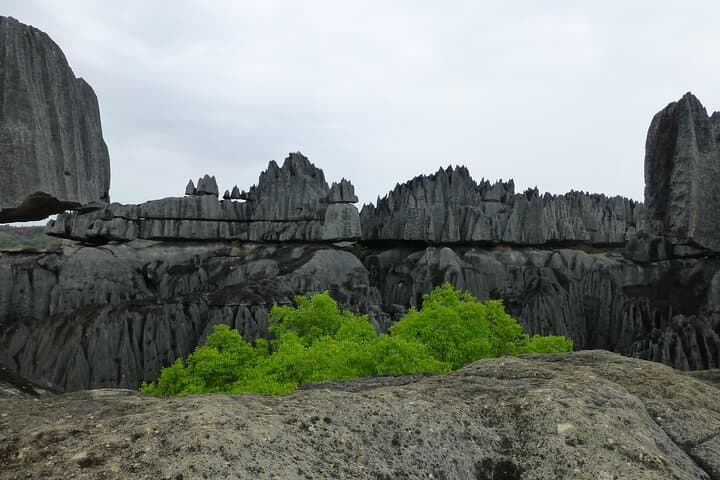
Geology here is raw. The Tsingy are karst pinnacles carved by ancient seas and rainwater—sharp ridges, hidden caves and narrow chimneys that force you to choose your footwork. The region’s cultural layer is equally present: Sakalava communities, riverside canoes, and the Avenue of the Baobabs—a local landmark long used for navigation and ceremonies. Kirindy Forest on the route offers a contrasting dry deciduous landscape where nocturnal lemurs, chameleons and the elusive fossa come alive in guided walks.
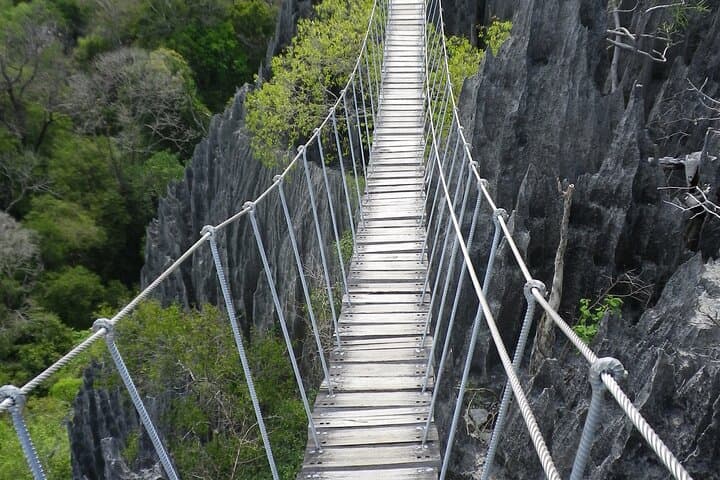
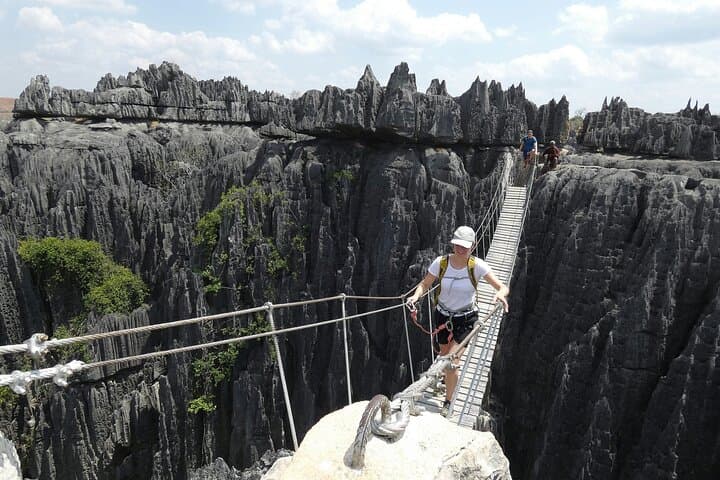
Practically, expect long, bumpy drives on unpaved roads, a full day of guided hiking on uneven limestone with short ladders and suspension bridges, and an optional canoe trip on the Manambolo River through gorge walls. Accommodations and most fees are included, but bring Madagascar Ariary for small purchases and tips. Footwear with sticky rubber soles, sun protection, a refillable water bottle and a steady headlamp will make the difference.
Plan for variable weather and limited cell service; the best windows are the drier months when the track to Bekopaka is passable. Move deliberately on the stony paths, respect fragile karst formations, and you’ll come away with rare landscapes and memorable wildlife encounters.
moderate.
4 days.
Moderate fitness required—daily hikes over uneven karst, short climbs and ladder sections; able to walk 5–8 km in a day.
Yes—this tour lists accommodations for three nights and all fees and taxes as included in the price.
Expect moderate exertion: uneven karst terrain, ladders and short exposed sections. Participants should be steady on their feet and comfortable with heights.
The dry season (roughly May–October) is best for road access and safer hiking; the rainy season can make tracks impassable.
Yes—Kirindy and areas around Bekopaka are known for lemur species and occasional fossa sightings, especially with guided day and night walks.
Tsingy de Bemaraha is a UNESCO World Heritage Site noted for its dramatic karst formations and unique endemic species; the Avenue of the Baobabs has served as a landmark and ceremonial site for local Sakalava communities.
The karst ecosystems are fragile and erosion-prone; follow marked trails, use local guides to limit impact, and support community-based tourism to aid conservation efforts.
TSINGY TOURS operates guided outdoor trips and adventures with an emphasis on safety, stewardship, and memorable experiences.
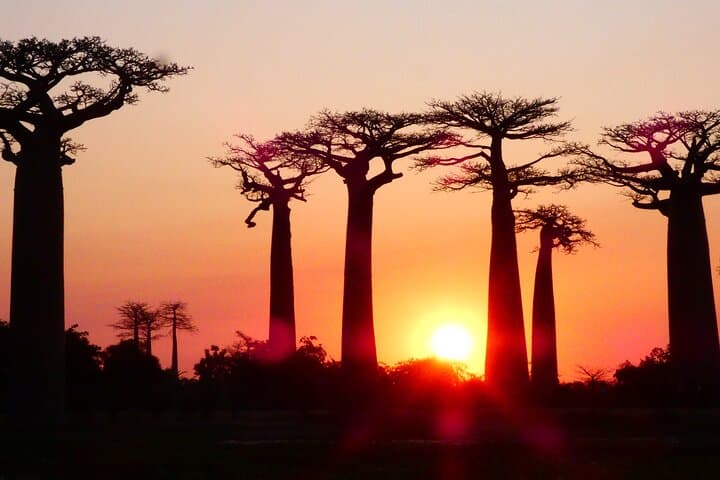
You arrive in Morondava as the light thins and the Avenue of the Baobabs throws long, skeletal shadows across the red earth. The first evening is cinematic: dusty road, giant trunks standing like age-old guardians, and a sky that cools fast after the heat. Over four days the trip moves north across rivers and villages to Bekopaka, the village gateway where the limestone needles of the Great Tsingy rise abruptly from scrubland.
You arrive in Morondava as the light thins and the Avenue of the Baobabs throws long, skeletal shadows across the red earth. The first evening is cinematic: dusty road, giant trunks standing like age-old guardians, and a sky that cools fast after the heat. Over four days the trip moves north across rivers and villages to Bekopaka, the village gateway where the limestone needles of the Great Tsingy rise abruptly from scrubland.
Geology here is raw. The Tsingy are karst pinnacles carved by ancient seas and rainwater—sharp ridges, hidden caves and narrow chimneys that force you to choose your footwork. The region’s cultural layer is equally present: Sakalava communities, riverside canoes, and the Avenue of the Baobabs—a local landmark long used for navigation and ceremonies. Kirindy Forest on the route offers a contrasting dry deciduous landscape where nocturnal lemurs, chameleons and the elusive fossa come alive in guided walks.
Practically, expect long, bumpy drives on unpaved roads, a full day of guided hiking on uneven limestone with short ladders and suspension bridges, and an optional canoe trip on the Manambolo River through gorge walls. Accommodations and most fees are included, but bring Madagascar Ariary for small purchases and tips. Footwear with sticky rubber soles, sun protection, a refillable water bottle and a steady headlamp will make the difference.
Plan for variable weather and limited cell service; the best windows are the drier months when the track to Bekopaka is passable. Move deliberately on the stony paths, respect fragile karst formations, and you’ll come away with rare landscapes and memorable wildlife encounters.