THE ADVENTURE COLLECTIVE® · Independent discovery and booking for outdoor travel

Three days of open-roof game drives through Tsavo East and West, lodge nights, and a stop at Mzima Springs to watch hippos and clear aquifers. Expect red-dusted elephants, leopard-prone rocky ridges, and guided wildlife viewing timed for dawn and dusk.
Three days of open-roof game drives through Tsavo East and West, lodge nights, and a stop at Mzima Springs to watch hippos and clear aquifers. Expect red-dusted elephants, leopard-prone rocky ridges, and guided wildlife viewing timed for dawn and dusk.
Dust floats in the early light as a safari minivan eases through acacia and open scrub toward a horizon where elephants stain themselves the color of the earth. The vehicle’s pop-up roof gives an unbroken view; birds fret in the trees and distant hooves drum the plain. This is Tsavo — a place where animals command attention and the land feels older than the road that splits it.
Verified experiences and guided adventures in the surrounding area.
Operated by Pathway Safaris · Voi, Taita-Taveta County
Dust floats in the early light as a safari minivan eases through acacia and open scrub toward a horizon where elephants stain themselves the color of the earth. The vehicle’s pop-up roof gives an unbroken view; birds fret in the trees and distant hooves drum the plain. This is Tsavo — a place where animals command attention and the land feels older than the road that splits it.
Tsavo National Park, roughly the size of Belgium and divided into East and West by the Nairobi-Mombasa highway, mixes lava-formed ridges, riverine thickets and wide, sun-baked plains. The West’s rocky kopjes and springs favor leopards and rhino sanctuary sightings; the East’s open plains and waterholes draw the famous “red” elephants that get their hue from local dust. Local communities around Voi and the coastal towns have long ties to reserve management and guide traditions, blending modern conservation with decades of ranger work.
Practically: expect three days of guided game drives with an open-roof safari vehicle, lodge stays at Voi Wildlife Lodge and Ngulia Safari Lodge, and a visit to Mzima Springs to see hippos and clear aquifers. Wildlife is most active early morning and late afternoon; midday is for lodge lunches and rest. Bring sun protection, a good camera with telephoto, layered light clothing for cool mornings, and plenty of water. Respect park rules, keep distance, and let the guides handle wildlife encounters—the landscape rewards patience with close views and memorable photography.
moderate.
3 days.
Moderate fitness is sufficient for multiple hours in and out of a vehicle with short walks at sites; able-bodied travelers who can embark and disembark from a safari minivan are fine.
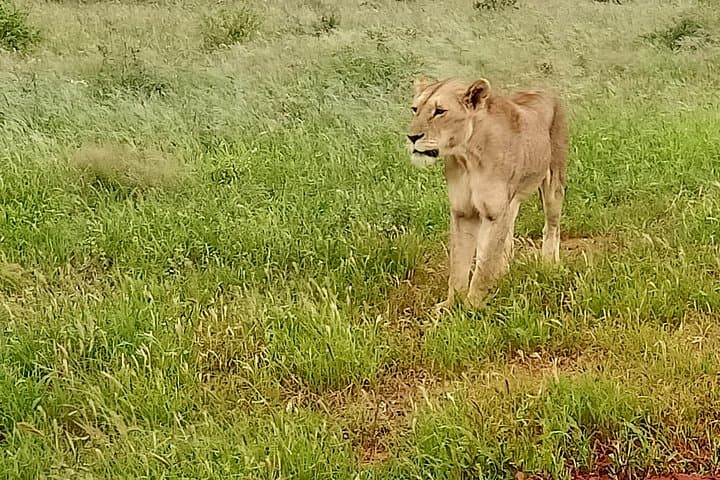
Expect elephants, lions, buffalo, giraffes, zebras and frequently leopards in rocky areas; Tsavo West is better for rhino sightings and Mzima Springs is good for hippos and crocodiles.
Drives typically run several hours each morning and late afternoon/evening, with lodge lunches and rest during mid-day; the itinerary spreads viewing across three days.
Yes—accommodation based on double occupancy is included, with lodges such as Voi Wildlife Lodge and Ngulia Safari Lodge listed on the itinerary.
Wheelchair-accessible transport is noted, but travelers should be able to embark/disembark a safari vehicle; the trip is not recommended for pregnant travelers or those with serious spinal or heart conditions.
Tsavo is one of Kenya’s largest protected areas, established in the 20th century to conserve vast plains and diverse habitats divided today into East and West by the coastal highway.
Rhino sanctuaries, anti-poaching patrols, and community-based initiatives operate here—tourism revenue supports habitat protection and local livelihoods.
Pathway Safaris operates guided outdoor trips and adventures with an emphasis on safety, stewardship, and memorable experiences.


Dust floats in the early light as a safari minivan eases through acacia and open scrub toward a horizon where elephants stain themselves the color of the earth. The vehicle’s pop-up roof gives an unbroken view; birds fret in the trees and distant hooves drum the plain. This is Tsavo — a place where animals command attention and the land feels older than the road that splits it.
Dust floats in the early light as a safari minivan eases through acacia and open scrub toward a horizon where elephants stain themselves the color of the earth. The vehicle’s pop-up roof gives an unbroken view; birds fret in the trees and distant hooves drum the plain. This is Tsavo — a place where animals command attention and the land feels older than the road that splits it.
Tsavo National Park, roughly the size of Belgium and divided into East and West by the Nairobi-Mombasa highway, mixes lava-formed ridges, riverine thickets and wide, sun-baked plains. The West’s rocky kopjes and springs favor leopards and rhino sanctuary sightings; the East’s open plains and waterholes draw the famous “red” elephants that get their hue from local dust. Local communities around Voi and the coastal towns have long ties to reserve management and guide traditions, blending modern conservation with decades of ranger work.
Practically: expect three days of guided game drives with an open-roof safari vehicle, lodge stays at Voi Wildlife Lodge and Ngulia Safari Lodge, and a visit to Mzima Springs to see hippos and clear aquifers. Wildlife is most active early morning and late afternoon; midday is for lodge lunches and rest. Bring sun protection, a good camera with telephoto, layered light clothing for cool mornings, and plenty of water. Respect park rules, keep distance, and let the guides handle wildlife encounters—the landscape rewards patience with close views and memorable photography.