THE ADVENTURE COLLECTIVE® · Independent discovery and booking for outdoor travel

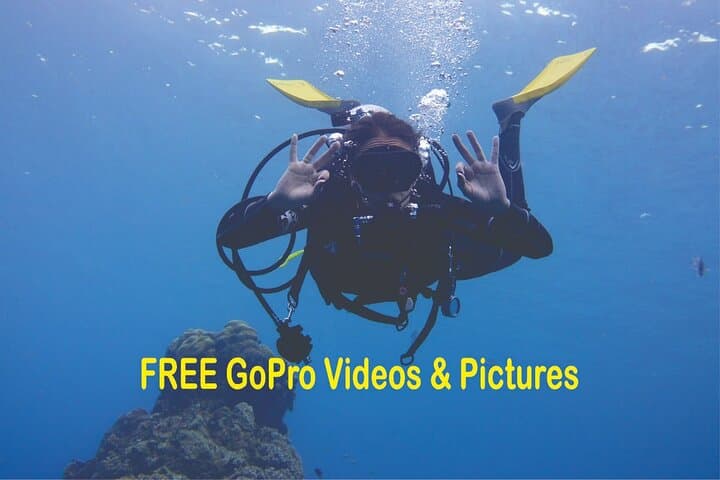
Learn to breathe underwater at St. Andrews State Park jetties with a PADI instructor. This two-hour shore dive is tailored for complete beginners and includes all gear plus GoPro photos and video.
Learn to breathe underwater at St. Andrews State Park jetties with a PADI instructor. This two-hour shore dive is tailored for complete beginners and includes all gear plus GoPro photos and video.
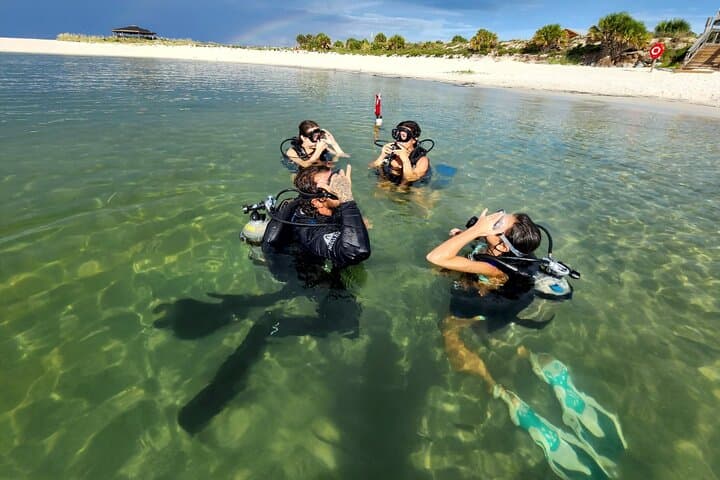
You stand on the pale sand where the Gulf pushes and pulls, the surf nudging at your ankles as instructors unpack tanks under the public pavilions. The jetties cut into the water like a hand guiding you offshore; beyond them the seabed drops and the reef life becomes a moving mosaic. Within minutes a safety briefing clarifies signals, air checks and the shallow-entry routine — the dive begins in waist-deep water to build confidence before moving out.
Verified experiences and guided adventures in the surrounding area.
Operated by Try Diving Fun · Panama City Beach, Florida
You stand on the pale sand where the Gulf pushes and pulls, the surf nudging at your ankles as instructors unpack tanks under the public pavilions. The jetties cut into the water like a hand guiding you offshore; beyond them the seabed drops and the reef life becomes a moving mosaic. Within minutes a safety briefing clarifies signals, air checks and the shallow-entry routine — the dive begins in waist-deep water to build confidence before moving out.
St. Andrews and Panama City Beach have long been working coasts: fishermen, recreational boaters and park stewards have shaped shoreline access here. Geologically the area is young sand and shell, reshaped seasonally by currents that sculpt bars and small reef features. Culturally, the park is a local weekend hub; instructors often point out how human and marine histories overlap in the boats, jetties and submerged structures.
Practical guidance: the session runs about two hours and is designed for complete beginners (minimum age 10). Expect shallow skill drills (around 1 m/3 ft) followed by a short guided dive depending on comfort and air consumption. Wear swimwear and a rash guard, leave heavy makeup or sunscreen off your face, and bring a towel and cash for tips. If you have asthma, heart, or spinal concerns, check the pre-dive health form and consult your doctor; flying within 12 hours after diving is not recommended.
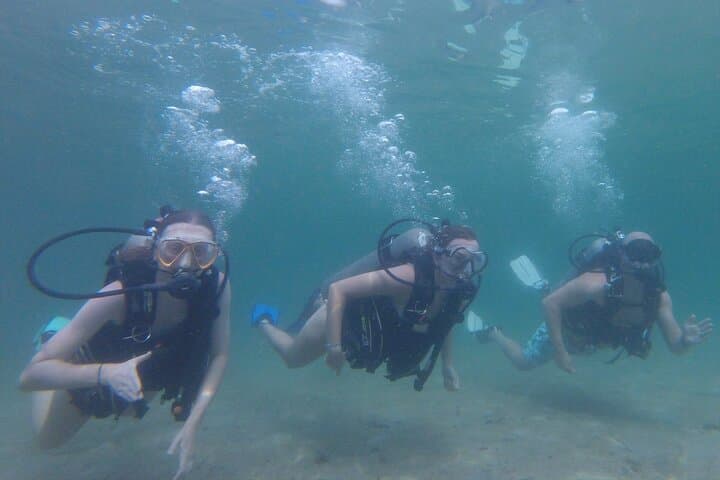
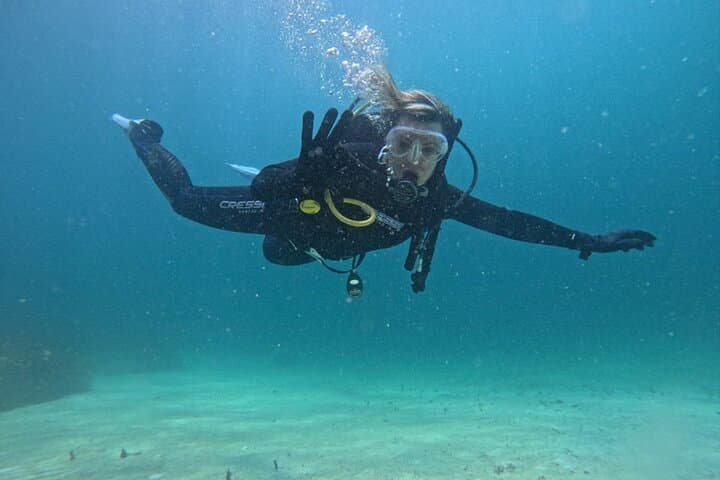
On the water you’ll move slowly, let the current set the pace, and watch for small rays, juvenile fish, and the occasional sea turtle cruising like a quiet ship through the blue.
easy.
2 hours.
Suitable for people in reasonable general health and basic mobility; no prior swimming skills required but must be comfortable in shallow water.
No formal swim skills are required; the program begins in shallow water and instructors support non-swimmers who are comfortable standing and learning breath control.
Participants must be at least 10 years old; minors typically need a guardian to sign necessary forms.
You will complete a health questionnaire; conditions like recent surgery, heart disease, severe asthma or spinal problems may disqualify you—consult the operator and your physician.
Flying within 12 hours after diving is not recommended; follow instructor guidance and standard dive medicine recommendations.
St. Andrews State Park sits at the mouth of St. Andrews Bay and has long supported recreational fishing and coastal access; the jetties help maintain the inlet and popular dive sites.
Practice neutral buoyancy, avoid touching the bottom or marine life, and use reef-safe sunscreen to reduce chemical impact; small group sizes and instructor oversight limit habitat disturbance.
Try Diving Fun operates guided outdoor trips and adventures with an emphasis on safety, stewardship, and memorable experiences.
You stand on the pale sand where the Gulf pushes and pulls, the surf nudging at your ankles as instructors unpack tanks under the public pavilions. The jetties cut into the water like a hand guiding you offshore; beyond them the seabed drops and the reef life becomes a moving mosaic. Within minutes a safety briefing clarifies signals, air checks and the shallow-entry routine — the dive begins in waist-deep water to build confidence before moving out.
You stand on the pale sand where the Gulf pushes and pulls, the surf nudging at your ankles as instructors unpack tanks under the public pavilions. The jetties cut into the water like a hand guiding you offshore; beyond them the seabed drops and the reef life becomes a moving mosaic. Within minutes a safety briefing clarifies signals, air checks and the shallow-entry routine — the dive begins in waist-deep water to build confidence before moving out.
St. Andrews and Panama City Beach have long been working coasts: fishermen, recreational boaters and park stewards have shaped shoreline access here. Geologically the area is young sand and shell, reshaped seasonally by currents that sculpt bars and small reef features. Culturally, the park is a local weekend hub; instructors often point out how human and marine histories overlap in the boats, jetties and submerged structures.
Practical guidance: the session runs about two hours and is designed for complete beginners (minimum age 10). Expect shallow skill drills (around 1 m/3 ft) followed by a short guided dive depending on comfort and air consumption. Wear swimwear and a rash guard, leave heavy makeup or sunscreen off your face, and bring a towel and cash for tips. If you have asthma, heart, or spinal concerns, check the pre-dive health form and consult your doctor; flying within 12 hours after diving is not recommended.
On the water you’ll move slowly, let the current set the pace, and watch for small rays, juvenile fish, and the occasional sea turtle cruising like a quiet ship through the blue.