THE ADVENTURE COLLECTIVE® · Independent discovery and booking for outdoor travel

Spend a half-day learning basic scuba skills in protected waters off Heraklion. Ideal for families and first-timers, this guided introduction pairs patient instructors with clear Aegean conditions.
Spend a half-day learning basic scuba skills in protected waters off Heraklion. Ideal for families and first-timers, this guided introduction pairs patient instructors with clear Aegean conditions.
Salt spray on your face, the harbor light cutting the sea into silver; instructors check equipment with calm precision while the Aegean dares you to look deeper. This introductory scuba session out of Heraklion places first-time divers in shallow, protected waters where visibility often exceeds 15–20 meters and currents are minimal.
Verified experiences and guided adventures in the surrounding area.
Operated by Horizon Diving · Heraklion, Crete
Salt spray on your face, the harbor light cutting the sea into silver; instructors check equipment with calm precision while the Aegean dares you to look deeper. This introductory scuba session out of Heraklion places first-time divers in shallow, protected waters where visibility often exceeds 15–20 meters and currents are minimal.
Crete sits at the crossroads of Mediterranean history — Minoan sailors once threaded these same routes — and the seabed reflects that long story: rocky outcrops, sand channels, and pockets of Posidonia meadows that shelter fish and invertebrates. The island’s limestone geology creates small caverns and ledges ideal for a beginner’s exploration, while coastal villages nearby keep a strong fishing and seafaring culture that shapes local dive sites and etiquette.
Expect a short theory session covering equipment, buoyancy basics, and equalization, followed by skills practice in shallow water and a guided dip to a comfort depth adapted to each participant. Equipment and bottled water are provided; groups cap at eight divers and minimum age is eight years. Hazards are low but medical restrictions apply for cardiovascular conditions and pregnancy.
Practical notes: arrive with swimwear and a light snack, plan for about 4–5 hours from pickup to return, and budget for sunscreen and sun protection between dives. Listen to instructors, take your time equalizing, and avoid touching the seafloor or marine life — Crete’s underwater habitats recover slowly if disturbed. For a first dive, this experience balances safety, close supervision, and a vivid introduction to Mediterranean marine life.
easy.
4–5 hours.
Suitable for people in general good health and comfortable with basic water exposure; no prior experience required
No; this is an introductory program designed for beginners and does not result in certification, though you learn fundamental skills for future courses.
Minimum age is 8 years old; instructors will adapt depth and exercises to the child’s comfort and safety.
Depth is shallow and tailored to your confidence—typically in the 2–8 meter range for initial skills and exploration.
The operator cancels for bad weather and offers a full refund if canceled at least 24 hours prior, or reschedules when possible.
Crete’s coastline has been a maritime corridor since Minoan times; local dive sites lie over limestone shelves formed by ancient sea-level changes.
Posidonia seagrass meadows are protected in many areas—avoid anchoring on meadows, don’t collect marine life, and use reef-safe products.
Horizon Diving operates guided outdoor trips and adventures with an emphasis on safety, stewardship, and memorable experiences.
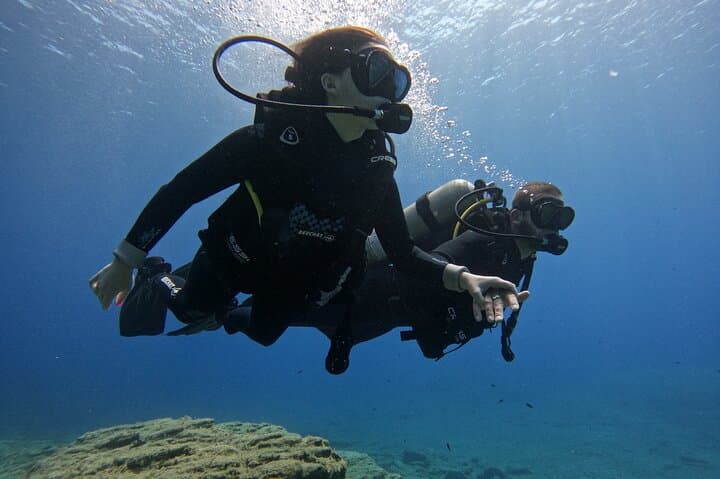
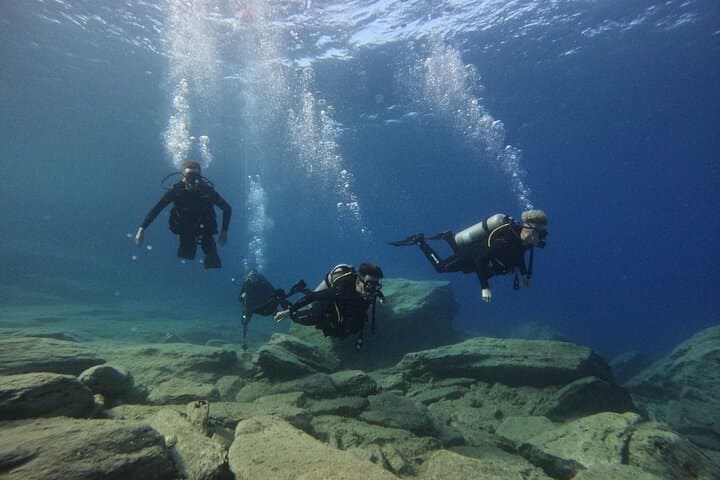
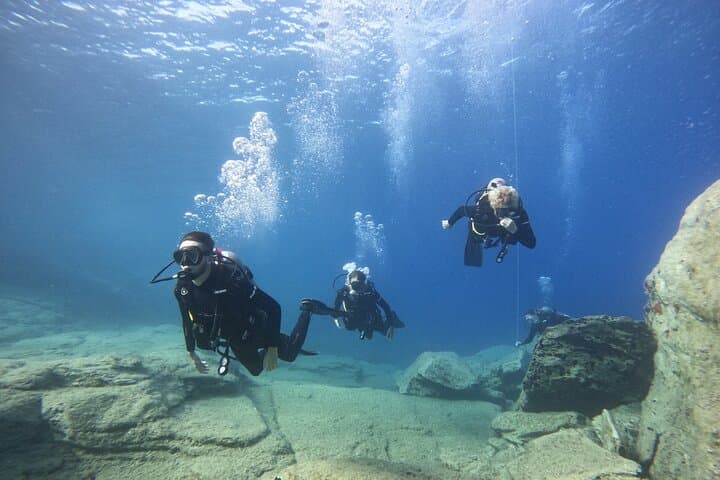
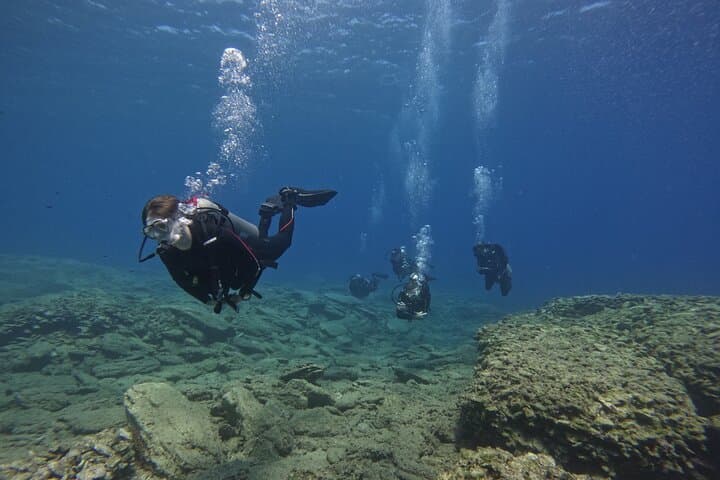
Salt spray on your face, the harbor light cutting the sea into silver; instructors check equipment with calm precision while the Aegean dares you to look deeper. This introductory scuba session out of Heraklion places first-time divers in shallow, protected waters where visibility often exceeds 15–20 meters and currents are minimal.
Salt spray on your face, the harbor light cutting the sea into silver; instructors check equipment with calm precision while the Aegean dares you to look deeper. This introductory scuba session out of Heraklion places first-time divers in shallow, protected waters where visibility often exceeds 15–20 meters and currents are minimal.
Crete sits at the crossroads of Mediterranean history — Minoan sailors once threaded these same routes — and the seabed reflects that long story: rocky outcrops, sand channels, and pockets of Posidonia meadows that shelter fish and invertebrates. The island’s limestone geology creates small caverns and ledges ideal for a beginner’s exploration, while coastal villages nearby keep a strong fishing and seafaring culture that shapes local dive sites and etiquette.
Expect a short theory session covering equipment, buoyancy basics, and equalization, followed by skills practice in shallow water and a guided dip to a comfort depth adapted to each participant. Equipment and bottled water are provided; groups cap at eight divers and minimum age is eight years. Hazards are low but medical restrictions apply for cardiovascular conditions and pregnancy.
Practical notes: arrive with swimwear and a light snack, plan for about 4–5 hours from pickup to return, and budget for sunscreen and sun protection between dives. Listen to instructors, take your time equalizing, and avoid touching the seafloor or marine life — Crete’s underwater habitats recover slowly if disturbed. For a first dive, this experience balances safety, close supervision, and a vivid introduction to Mediterranean marine life.