THE ADVENTURE COLLECTIVE® · Independent discovery and booking for outdoor travel

Float into a sunlit mangrove channel and breathe through a regulator for the first time — Casa Cenote offers a calm, guided try-dive that introduces you to the Yucatán’s karst waters. This half-day experience includes instruction, equipment, snacks and an option to upgrade to a reef dive.
Float into a sunlit mangrove channel and breathe through a regulator for the first time — Casa Cenote offers a calm, guided try-dive that introduces you to the Yucatán’s karst waters. This half-day experience includes instruction, equipment, snacks and an option to upgrade to a reef dive.
You step off the shaded walkway and the mangroves part like a curtain. Light fractures through leaves and hits a pool of water so clear it looks lit from within. The surface is calm, but beneath there are caverns and root channels that the locals have watched for generations. Your instructor checks your mask, offers a quick nod, and the nervous mix of salt and thrill in your chest eases as you breathe slowly through the regulator for the first time.
Verified experiences and guided adventures in the surrounding area.
Operated by TAE Tulum Area Experiences · Tulum, Quintana Roo
You step off the shaded walkway and the mangroves part like a curtain. Light fractures through leaves and hits a pool of water so clear it looks lit from within. The surface is calm, but beneath there are caverns and root channels that the locals have watched for generations. Your instructor checks your mask, offers a quick nod, and the nervous mix of salt and thrill in your chest eases as you breathe slowly through the regulator for the first time.
Casa Cenote is not a closed cave but an open-to-the-ocean lagoon where freshwater from underground rivers meets the Caribbean — a place defined by limestone, subterranean channels and a thin veil known as the halocline. For the Maya, cenotes were life sources and ritual sites; today they’re geological windows into the Yucatán’s karst network and living classrooms for first-time divers.
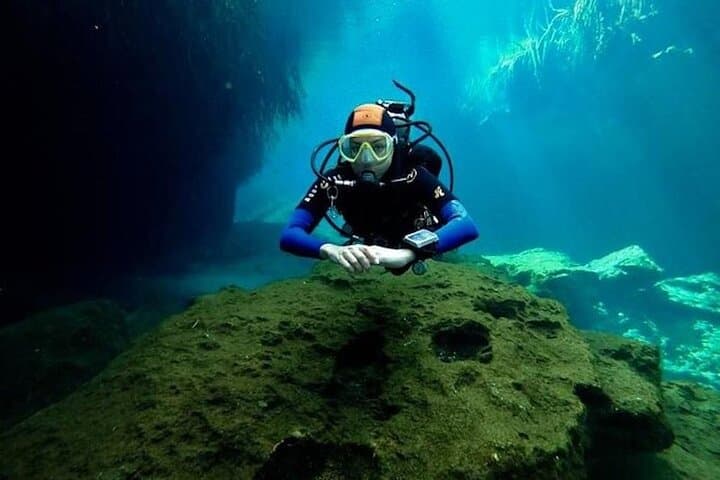
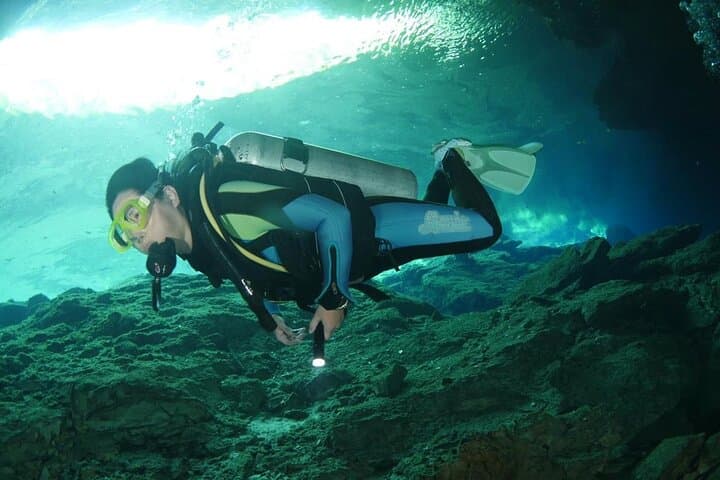
The cenote’s edges are mangrove roots and the channel opens toward the reef, so visibility often feels cinematic — beams of light cutting through tannin-stained water, fish weaving among prop roots. Expect to see snapper, juvenile barracuda, small rays and a scatter of reef fish that come to feed and shelter in the roots. The water temperature is steady year-round, slightly cooler below the surface where freshwater meets salt.
Practical realities matter here: this is an introductory, supervised experience designed for people with no certification. A 15-minute theory lesson and a short surface practice set the pace before a 30–40 minute guided dive in relatively calm water. The operator provides full scuba kit and bottled water and snacks afterward; an optional second dive on the ocean reef is available for an extra fee. Meeting and pickup logistics are straightforward from central Tulum.
What makes this half-day trip work is planning. Hydrate well before you arrive; avoid alcohol the night before. Wear a swimsuit under quick-dry clothes, bring reef-safe sunscreen, and have a towel and light footwear for the ladder and dock. Be honest on the medical form — this activity is not recommended for pregnant travelers or those with serious heart or spinal conditions. If you’re anxious about breathing underwater, your instructor will coach you through buoyancy and comfort techniques before you descend.
Timing matters: early mornings deliver softer light and fewer people; late afternoons can be warm and luminous. Bring a small waterproof camera or a phone in a reliable case if you want underwater shots, but check with the guide about handling and safety. Whether you’re here to cross “open-water diving” off a list or to see a side of the Yucatán carved by water and time, a try dive at Casa Cenote is an efficient, sensory way to meet the region’s hidden currents and rich underwater life.
easy.
4–5 hours.
You should be comfortable in water and able to climb a ladder; no advanced fitness required but basic mobility and the ability to follow safety directions are important.
No — this is an introductory supervised try-dive designed for non-certified participants with a short lesson and surface practice.
Yes — the program states you don’t need to be able to swim, but you must be comfortable in water and able to follow the instructor’s guidance.
The guided dive lasts about 30–40 minutes after a 15-minute theory session and 15 minutes of surface practice.
Not recommended for pregnant travelers or people with significant heart or spinal conditions; the operator will ask health questions during booking.
Yes — there’s an optional second dive on the ocean reef available for an additional fee; ask the operator to book it in advance.
Yes — expect small reef fish, occasional rays, and mangrove-associated species; visibility and sightings vary with conditions.
Cenotes are collapsed limestone sinkholes that formed when the Yucatán’s freshwater table dropped; for the Maya they were vital water sources and held spiritual importance.
Cenote ecosystems are fragile — operators encourage no-touch policies, reef-safe sunscreen, and limiting sunscreen reapplication in the water to protect aquatic life.
TAE Tulum Area Experiences operates guided outdoor trips and adventures with an emphasis on safety, stewardship, and memorable experiences.
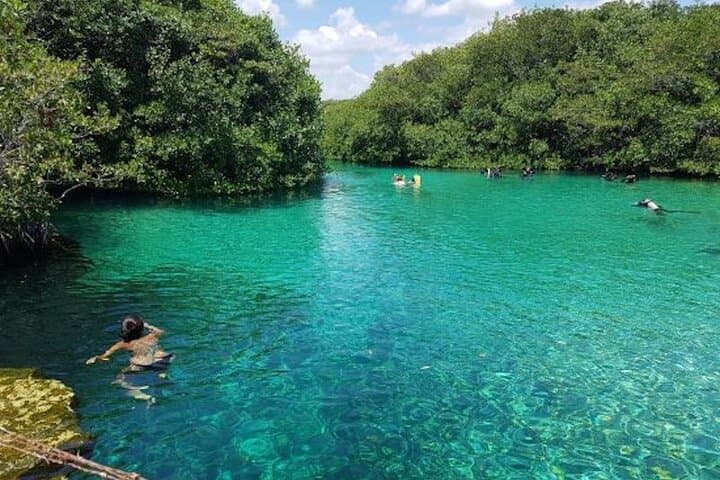
You step off the shaded walkway and the mangroves part like a curtain. Light fractures through leaves and hits a pool of water so clear it looks lit from within. The surface is calm, but beneath there are caverns and root channels that the locals have watched for generations. Your instructor checks your mask, offers a quick nod, and the nervous mix of salt and thrill in your chest eases as you breathe slowly through the regulator for the first time.
You step off the shaded walkway and the mangroves part like a curtain. Light fractures through leaves and hits a pool of water so clear it looks lit from within. The surface is calm, but beneath there are caverns and root channels that the locals have watched for generations. Your instructor checks your mask, offers a quick nod, and the nervous mix of salt and thrill in your chest eases as you breathe slowly through the regulator for the first time.
Casa Cenote is not a closed cave but an open-to-the-ocean lagoon where freshwater from underground rivers meets the Caribbean — a place defined by limestone, subterranean channels and a thin veil known as the halocline. For the Maya, cenotes were life sources and ritual sites; today they’re geological windows into the Yucatán’s karst network and living classrooms for first-time divers.
The cenote’s edges are mangrove roots and the channel opens toward the reef, so visibility often feels cinematic — beams of light cutting through tannin-stained water, fish weaving among prop roots. Expect to see snapper, juvenile barracuda, small rays and a scatter of reef fish that come to feed and shelter in the roots. The water temperature is steady year-round, slightly cooler below the surface where freshwater meets salt.
Practical realities matter here: this is an introductory, supervised experience designed for people with no certification. A 15-minute theory lesson and a short surface practice set the pace before a 30–40 minute guided dive in relatively calm water. The operator provides full scuba kit and bottled water and snacks afterward; an optional second dive on the ocean reef is available for an extra fee. Meeting and pickup logistics are straightforward from central Tulum.
What makes this half-day trip work is planning. Hydrate well before you arrive; avoid alcohol the night before. Wear a swimsuit under quick-dry clothes, bring reef-safe sunscreen, and have a towel and light footwear for the ladder and dock. Be honest on the medical form — this activity is not recommended for pregnant travelers or those with serious heart or spinal conditions. If you’re anxious about breathing underwater, your instructor will coach you through buoyancy and comfort techniques before you descend.
Timing matters: early mornings deliver softer light and fewer people; late afternoons can be warm and luminous. Bring a small waterproof camera or a phone in a reliable case if you want underwater shots, but check with the guide about handling and safety. Whether you’re here to cross “open-water diving” off a list or to see a side of the Yucatán carved by water and time, a try dive at Casa Cenote is an efficient, sensory way to meet the region’s hidden currents and rich underwater life.