THE ADVENTURE COLLECTIVE® · Independent discovery and booking for outdoor travel

Get your first breath underwater among the sculptures of MUSA — a safe, guided introductory scuba program with pool training, two short boat dives (max 10 m), and abundant reef life. Perfect for beginners looking to experience art and conservation beneath the Caribbean surface.
Get your first breath underwater among the sculptures of MUSA — a safe, guided introductory scuba program with pool training, two short boat dives (max 10 m), and abundant reef life. Perfect for beginners looking to experience art and conservation beneath the Caribbean surface.
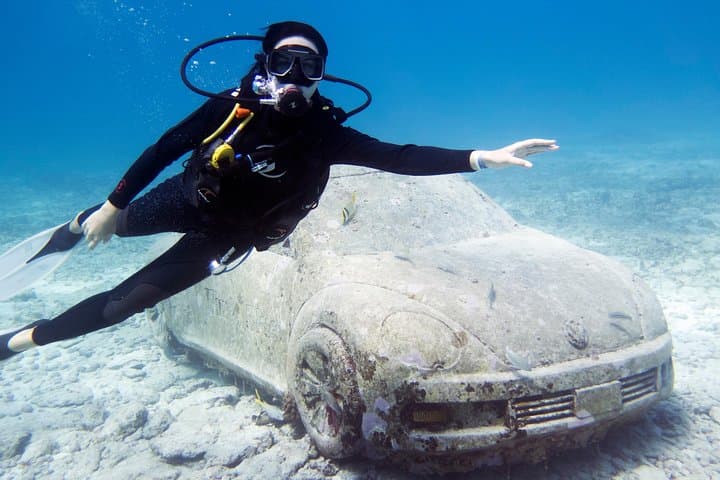
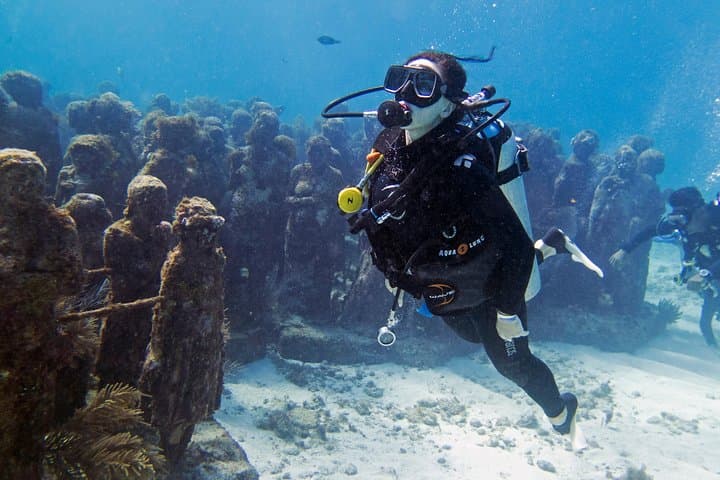
You climb into a shallow training pool at a small dive base in Cancún as the morning light cuts across the marina. Salty air and engine hum give way to the quiet below: a 20‑minute boat ride later you peer over the rail and the sculptures of the Museo Subacuático de Arte (MUSA) come into view, grey figures resting on the sand like an invitation to a different world.
Verified experiences and guided adventures in the surrounding area.
Operated by Dive Guru · Cancún, Quintana Roo
You climb into a shallow training pool at a small dive base in Cancún as the morning light cuts across the marina. Salty air and engine hum give way to the quiet below: a 20‑minute boat ride later you peer over the rail and the sculptures of the Museo Subacuático de Arte (MUSA) come into view, grey figures resting on the sand like an invitation to a different world.
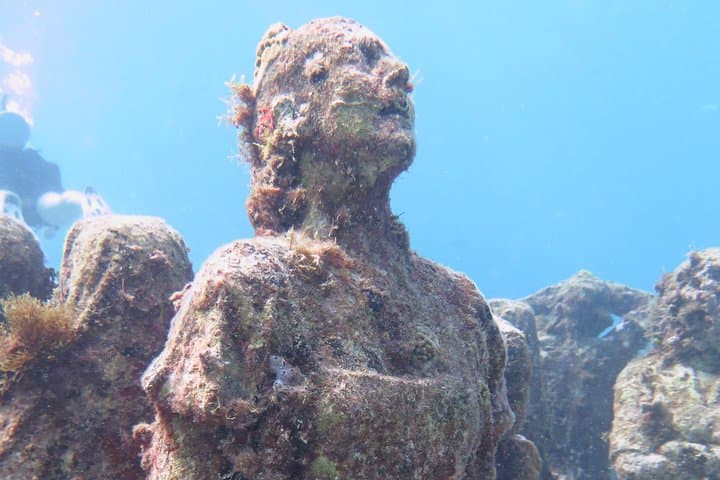
Opened in 2009 and designed as an artificial reef, MUSA was placed on the seabed near Punta Nizuc to protect nearby natural coral by attracting snorkelers and divers. The sculptures are cast from pH-neutral materials to encourage coral and algae colonization; geology here is shallow carbonate shelf and white sand, so visibility is typically high and currents are generally mild.
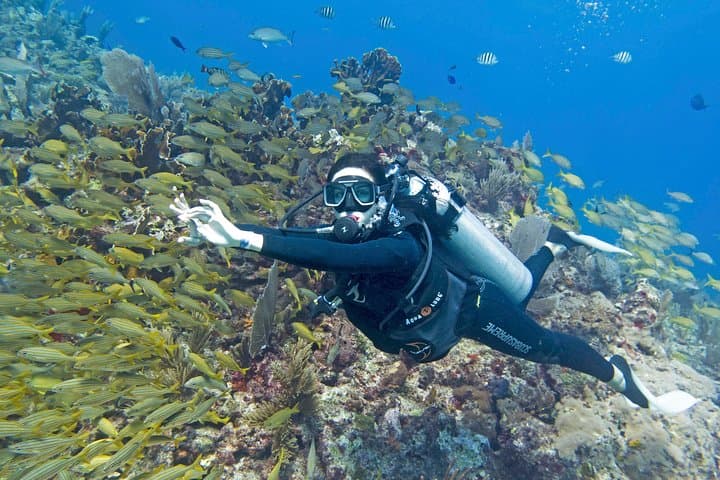
For first‑time divers this program balances instruction and exploration: a pool session to learn breathing, buoyancy and basic hand signals, then two guided dives — one among the sculptures and a second on a nearby natural reef. Expect two 30–40 minute bottom times, max depth ~10 m (30 ft), and small group sizes (usually one instructor per four guests). Marine life often seen includes sea turtles, rays, moray eels and dense schools of tropical fish.
Practical notes: wear reef‑safe sunscreen, bring swimwear and a towel, and disclose any medical conditions — pregnancy, serious heart or spinal issues are contraindications. Boats return to shore in the afternoon; follow the 18‑hour no‑fly recommendation after diving. Early mornings tend to mean calmer seas and clearer light for underwater photography.
moderate.
6–7 hours.
Suitable for people with basic swimming ability and no major health issues; expect moderate exertion during entry, surface swims, and repeated dives.
No — this is a discover‑scuba/try‑dive program that includes pool training and guided shallow dives, so no prior certification is required.
Both dives are shallow: maximum depth about 10 m (30 ft). Each bottom time is typically 30–40 minutes depending on air and comfort.
Minimum age and health rules vary by operator; generally participants must be comfortable in water, not pregnant, and free from serious heart or spinal conditions — disclose diabetes and other relevant conditions when booking.
Plan to wait at least 18 hours after your last dive before flying to reduce the risk of decompression sickness; some agencies recommend 24 hours for multiple dives.
MUSA opened in 2009 to create a tourist attraction that would relieve pressure on fragile natural reefs; many sculptures were installed to act as substrates for coral growth.
The museum is part art and part restoration: sculptures are designed to host coral and encourage divers to visit artificial sites instead of vulnerable natural reef; avoid touching and follow buoyancy guidance to limit impact.
Dive Guru operates guided outdoor trips and adventures with an emphasis on safety, stewardship, and memorable experiences.
You climb into a shallow training pool at a small dive base in Cancún as the morning light cuts across the marina. Salty air and engine hum give way to the quiet below: a 20‑minute boat ride later you peer over the rail and the sculptures of the Museo Subacuático de Arte (MUSA) come into view, grey figures resting on the sand like an invitation to a different world.
You climb into a shallow training pool at a small dive base in Cancún as the morning light cuts across the marina. Salty air and engine hum give way to the quiet below: a 20‑minute boat ride later you peer over the rail and the sculptures of the Museo Subacuático de Arte (MUSA) come into view, grey figures resting on the sand like an invitation to a different world.
Opened in 2009 and designed as an artificial reef, MUSA was placed on the seabed near Punta Nizuc to protect nearby natural coral by attracting snorkelers and divers. The sculptures are cast from pH-neutral materials to encourage coral and algae colonization; geology here is shallow carbonate shelf and white sand, so visibility is typically high and currents are generally mild.
For first‑time divers this program balances instruction and exploration: a pool session to learn breathing, buoyancy and basic hand signals, then two guided dives — one among the sculptures and a second on a nearby natural reef. Expect two 30–40 minute bottom times, max depth ~10 m (30 ft), and small group sizes (usually one instructor per four guests). Marine life often seen includes sea turtles, rays, moray eels and dense schools of tropical fish.
Practical notes: wear reef‑safe sunscreen, bring swimwear and a towel, and disclose any medical conditions — pregnancy, serious heart or spinal issues are contraindications. Boats return to shore in the afternoon; follow the 18‑hour no‑fly recommendation after diving. Early mornings tend to mean calmer seas and clearer light for underwater photography.