THE ADVENTURE COLLECTIVE® · Independent discovery and booking for outdoor travel

Explore Trujillo’s major pre-Columbian highlights in one day: the Sun & Moon pyramids, the sprawling adobe city of Chan Chan and the fishing village of Huanchaco. This full-day tour pairs archaeology with coastal culture and practical walking routes.
Explore Trujillo’s major pre-Columbian highlights in one day: the Sun & Moon pyramids, the sprawling adobe city of Chan Chan and the fishing village of Huanchaco. This full-day tour pairs archaeology with coastal culture and practical walking routes.
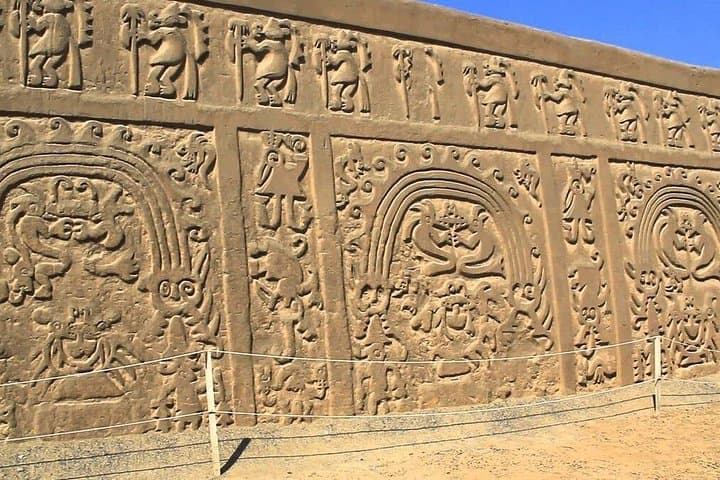
You step out of an air-conditioned van into a wind that has been moving sand and stories along Peru’s northern coast for millennia. The Sun and Moon pyramids rise from the dry earth ahead, their carved adobe faces catching light as if to pose for a photograph. Nearby the surf at Huanchaco pulls against the shore, reed boats bobbing like small, stubborn memories of an older way of life.
Verified experiences and guided adventures in the surrounding area.
Operated by Norte Expedition · Trujillo, La Libertad
You step out of an air-conditioned van into a wind that has been moving sand and stories along Peru’s northern coast for millennia. The Sun and Moon pyramids rise from the dry earth ahead, their carved adobe faces catching light as if to pose for a photograph. Nearby the surf at Huanchaco pulls against the shore, reed boats bobbing like small, stubborn memories of an older way of life.
This route threads together two major pre-Columbian cultures: the Moche masters behind the Huacas del Sol y de la Luna, centuries-old sites with polychrome reliefs and ritual contexts, and the later Chimú capital at Chan Chan, an immense adobe palace complex of walls, plazas and intricate friezes. Geologically it’s a coastal desert plain shaped by seasonal river and ocean currents, sedimentary soils and long-term aridity that preserved mud-brick architecture but also leaves it vulnerable to erosion.
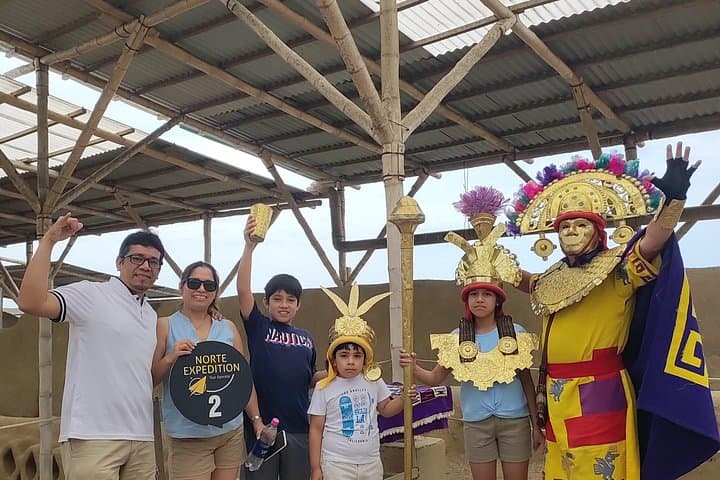
Culturally, Huanchaco still echoes with fishermen using totora reed caballitos de totora and a food scene centered on ceviche and grilled fish. Local guides interpret iconography, ritual use and conservation challenges while offering practical context for photos and walking routes.
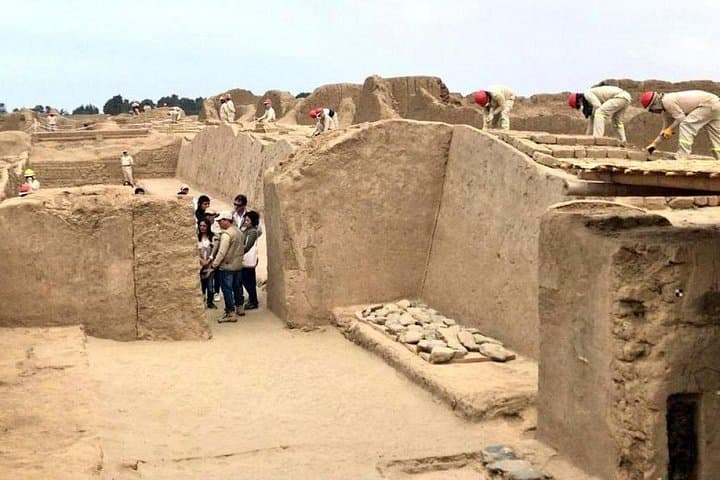
Practical guidance: plan for a 5–7 hour day with periods of flat walking, short stairs and sandy tracks. Start early for cooler light and smaller crowds, carry sun protection, and wear sturdy closed shoes to walk through adobe courtyards. Bring small bills for local vendors and expect museum time for the Moche ceramics. Respect roped-off areas—these fragile structures survive because visitors follow simple rules.
easy.
5–7 hours.
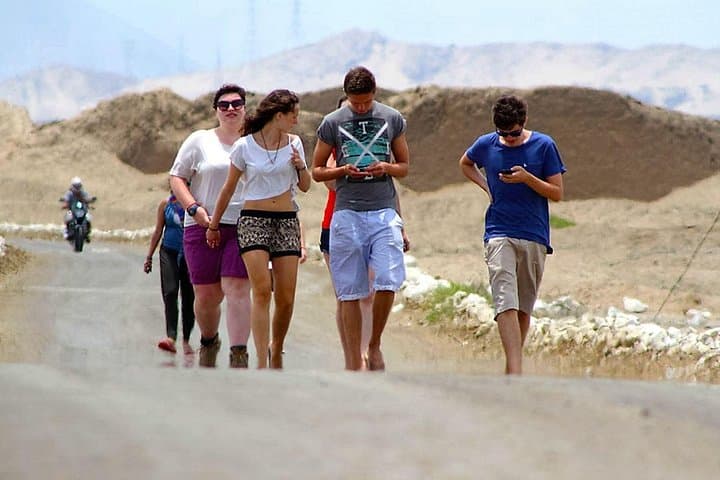
Suitable for travelers in average physical condition; involves mainly flat walking with short stairs and sandy patches.
Expect 5–7 hours including transfers, museum time, site walks and a beachfront lunch in Huanchaco.
The itinerary notes admission included for main sites; confirm at booking if museum or palace fees are covered for shared vs private options.
Major sites have uneven surfaces and steps; full accessibility is limited—contact the operator to discuss specific mobility needs.
Lunch at Huanchaco is included as described, with local seafood and regional dishes; bottled water is provided throughout the day.
The route links the Moche civilization’s ritual centers (Huacas del Sol y de la Luna) with the Chimú capital of Chan Chan, illustrating northern Peru’s sociopolitical evolution before the Inca.
Adobe structures are vulnerable to erosion and humidity; visitors help preservation by staying on marked paths and following guide instructions.
Norte Expedition operates guided outdoor trips and adventures with an emphasis on safety, stewardship, and memorable experiences.
You step out of an air-conditioned van into a wind that has been moving sand and stories along Peru’s northern coast for millennia. The Sun and Moon pyramids rise from the dry earth ahead, their carved adobe faces catching light as if to pose for a photograph. Nearby the surf at Huanchaco pulls against the shore, reed boats bobbing like small, stubborn memories of an older way of life.
You step out of an air-conditioned van into a wind that has been moving sand and stories along Peru’s northern coast for millennia. The Sun and Moon pyramids rise from the dry earth ahead, their carved adobe faces catching light as if to pose for a photograph. Nearby the surf at Huanchaco pulls against the shore, reed boats bobbing like small, stubborn memories of an older way of life.
This route threads together two major pre-Columbian cultures: the Moche masters behind the Huacas del Sol y de la Luna, centuries-old sites with polychrome reliefs and ritual contexts, and the later Chimú capital at Chan Chan, an immense adobe palace complex of walls, plazas and intricate friezes. Geologically it’s a coastal desert plain shaped by seasonal river and ocean currents, sedimentary soils and long-term aridity that preserved mud-brick architecture but also leaves it vulnerable to erosion.
Culturally, Huanchaco still echoes with fishermen using totora reed caballitos de totora and a food scene centered on ceviche and grilled fish. Local guides interpret iconography, ritual use and conservation challenges while offering practical context for photos and walking routes.
Practical guidance: plan for a 5–7 hour day with periods of flat walking, short stairs and sandy tracks. Start early for cooler light and smaller crowds, carry sun protection, and wear sturdy closed shoes to walk through adobe courtyards. Bring small bills for local vendors and expect museum time for the Moche ceramics. Respect roped-off areas—these fragile structures survive because visitors follow simple rules.