THE ADVENTURE COLLECTIVE® · Independent discovery and booking for outdoor travel

Explore pre-Columbian pyramids, the sprawling adobe city of Chan Chan, and the seaside culture of Huanchaco in a single half-day tour. This guided route pairs archaeological insight with practical advice for touring fragile sites.
Explore pre-Columbian pyramids, the sprawling adobe city of Chan Chan, and the seaside culture of Huanchaco in a single half-day tour. This guided route pairs archaeological insight with practical advice for touring fragile sites.
A morning breeze off the Pacific carries salt and the dry dust of adobe as a minivan leaves Trujillo’s colonial grid and heads for the fluted walls of ancient pyramids. On arrival the Huaca de la Luna rises in ochres and reds, its painted friezes still catching the light; a guided walkthrough places you before reliefs and stairways that once staged ritual life.
Verified experiences and guided adventures in the surrounding area.
Operated by Trujillo Turístico · Trujillo, La Libertad
A morning breeze off the Pacific carries salt and the dry dust of adobe as a minivan leaves Trujillo’s colonial grid and heads for the fluted walls of ancient pyramids. On arrival the Huaca de la Luna rises in ochres and reds, its painted friezes still catching the light; a guided walkthrough places you before reliefs and stairways that once staged ritual life.
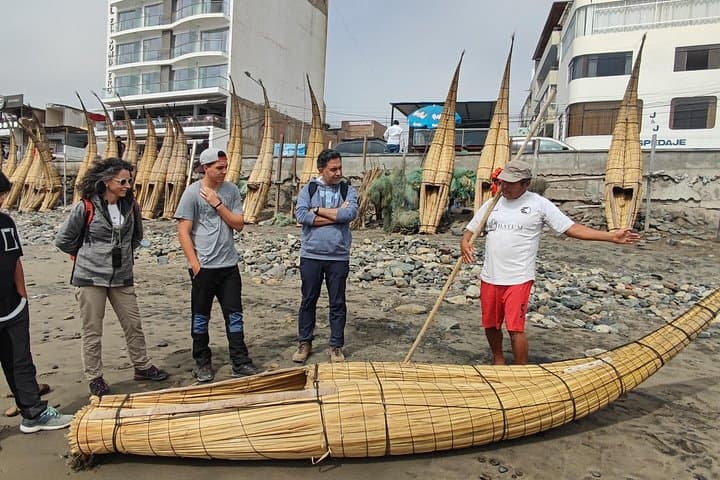
This route threads three eras: Moche ceremonial centers of roughly 1–700 AD, Chimú urban engineering at Chan Chan (11th–15th century AD), and living coastal culture in Huanchaco where totora reed boats still glide. Geologically the valley is a ribbon of alluvial plain cut by seasonal rivers, the dry coastal desert giving way to irrigated fields that supported these societies. Culturally the tour highlights indigenous craftsmanship and colonial-era mansions in Trujillo’s Plaza de Armas, so expect a mix of archaeology, architecture, and seafaring tradition.
Practical guidance: wear sturdy, ventilated walking shoes for uneven adobe and sandy paths; bring sun protection and at least 1–2 liters of water—shade is limited at the sites. Expect 4–5 hours with short walks at each stop and a chance for seafood in Huanchaco; entrances and local transport are included. Photography is allowed but respect conservation areas and follow your guide’s instructions near fragile murals.
Timing matters: morning light reveals colors at Huaca de la Luna and keeps temperatures cooler. Move deliberately between photo stops and use local explanations to connect motifs with construction techniques—this tour is both fieldwork and cultural storytelling, designed for travelers who want context with their views.
easy.
4–5 hours.
Suitable for most fitness levels; requires short walks on uneven ground and standing during site explanations
The tour lasts about 4–5 hours, covering Huaca de la Luna, Chan Chan, Trujillo’s historic center, and Huanchaco.
Yes; admission fees to listed archaeological sites and local transportation are included in the booking.
The tour is classified as physically easy but involves uneven ground and steps; strollers may be usable in some areas, and assistance for limited-mobility visitors depends on site access.
There is typically time for lunch in Huanchaco; menu options depend on arrival time and group schedule, so inform the guide of dietary needs in advance.
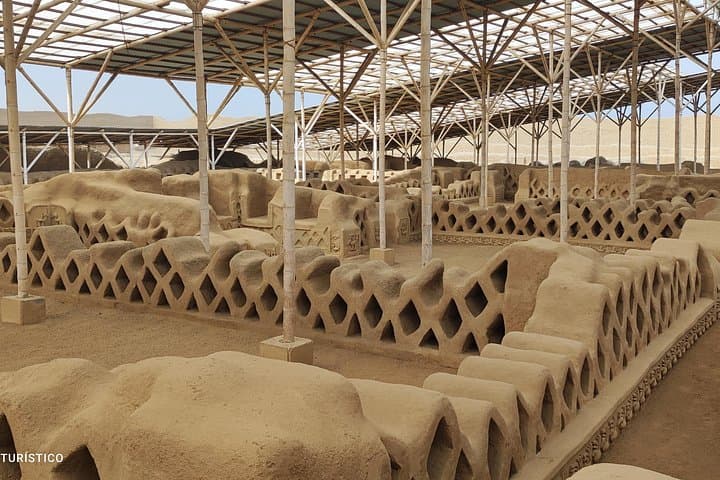
The Moche built monumental adobe temples for ceremonial and funerary purposes; the Chimú later expanded urban planning at Chan Chan into one of the largest pre-Hispanic cities in South America.
Chan Chan and the huacas are vulnerable to erosion and moisture; visitors should avoid touching surfaces and follow guided paths to reduce wear on fragile adobe art.
Trujillo Turístico operates guided outdoor trips and adventures with an emphasis on safety, stewardship, and memorable experiences.
A morning breeze off the Pacific carries salt and the dry dust of adobe as a minivan leaves Trujillo’s colonial grid and heads for the fluted walls of ancient pyramids. On arrival the Huaca de la Luna rises in ochres and reds, its painted friezes still catching the light; a guided walkthrough places you before reliefs and stairways that once staged ritual life.
A morning breeze off the Pacific carries salt and the dry dust of adobe as a minivan leaves Trujillo’s colonial grid and heads for the fluted walls of ancient pyramids. On arrival the Huaca de la Luna rises in ochres and reds, its painted friezes still catching the light; a guided walkthrough places you before reliefs and stairways that once staged ritual life.
This route threads three eras: Moche ceremonial centers of roughly 1–700 AD, Chimú urban engineering at Chan Chan (11th–15th century AD), and living coastal culture in Huanchaco where totora reed boats still glide. Geologically the valley is a ribbon of alluvial plain cut by seasonal rivers, the dry coastal desert giving way to irrigated fields that supported these societies. Culturally the tour highlights indigenous craftsmanship and colonial-era mansions in Trujillo’s Plaza de Armas, so expect a mix of archaeology, architecture, and seafaring tradition.
Practical guidance: wear sturdy, ventilated walking shoes for uneven adobe and sandy paths; bring sun protection and at least 1–2 liters of water—shade is limited at the sites. Expect 4–5 hours with short walks at each stop and a chance for seafood in Huanchaco; entrances and local transport are included. Photography is allowed but respect conservation areas and follow your guide’s instructions near fragile murals.
Timing matters: morning light reveals colors at Huaca de la Luna and keeps temperatures cooler. Move deliberately between photo stops and use local explanations to connect motifs with construction techniques—this tour is both fieldwork and cultural storytelling, designed for travelers who want context with their views.