THE ADVENTURE COLLECTIVE® · Independent discovery and booking for outdoor travel

Cross the Dardanelles and spend a day walking the excavated layers of Troy. This full-day tour from Istanbul combines ferry travel, a local lunch in Eceabat and a guided visit to the famous ruins—home to the legendary Trojan Horse.
Cross the Dardanelles and spend a day walking the excavated layers of Troy. This full-day tour from Istanbul combines ferry travel, a local lunch in Eceabat and a guided visit to the famous ruins—home to the legendary Trojan Horse.
Morning light hits the Dardanelles as the ferry slips away from the European shore, the strait daring you to stand between two continents.
Verified experiences and guided adventures in the surrounding area.
Operated by Tourmania · Eceabat, Çanakkale
Morning light hits the Dardanelles as the ferry slips away from the European shore, the strait daring you to stand between two continents.
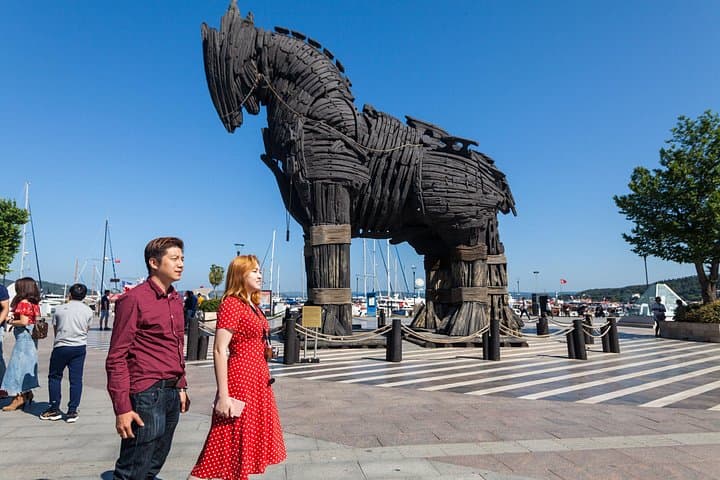
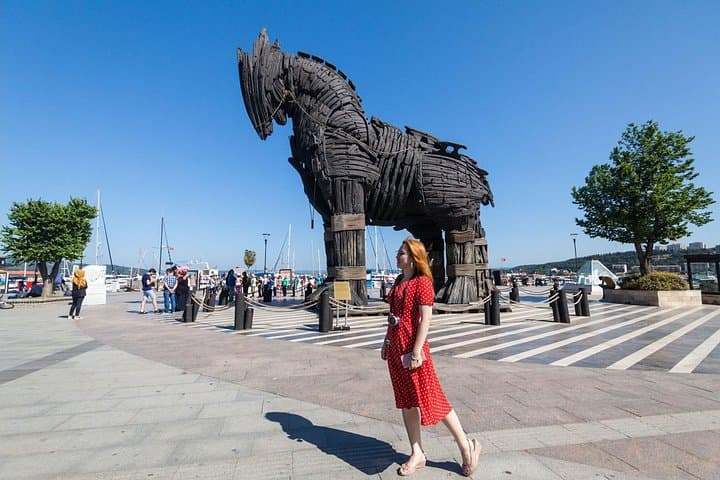
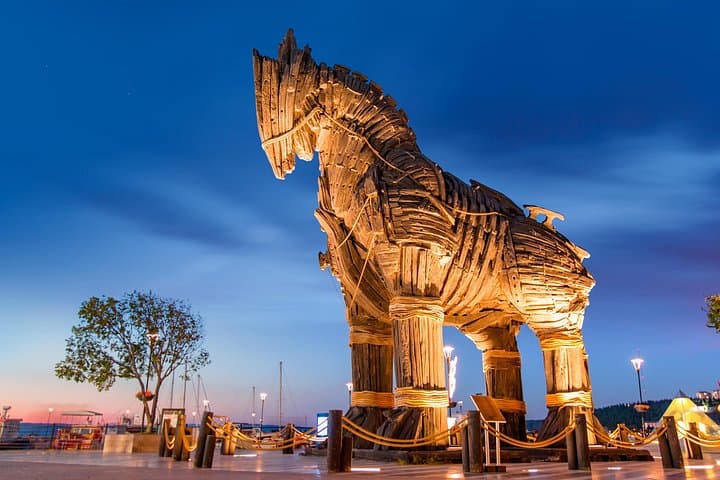
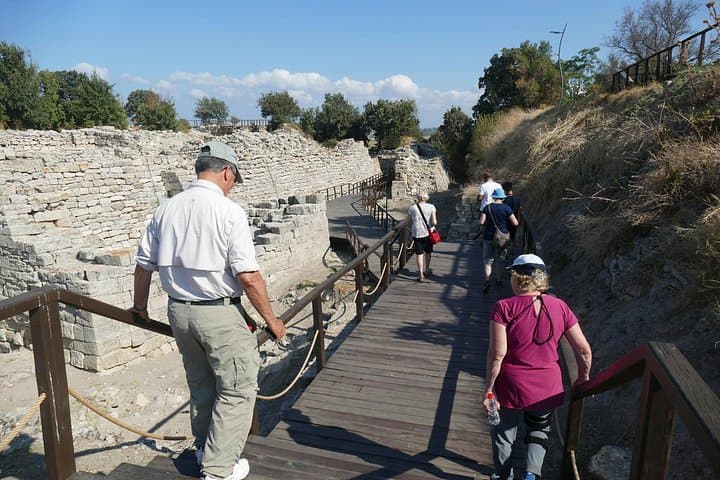
By midday you reach Eceabat, a provincial town that serves as the modern gateway to Troy, and soon the horse—an oversized replica—rises above the archaeological site like a theatrical signal. Walking the open trenches and low stone walls at Hisarlik, you feel the weight of layers: Bronze Age foundations, Hellenistic walls and 19th- to 20th-century excavation scars. The Odeon’s faint curve and the Bouleuterion’s footprint sketch how civic life once arranged itself, while the Temple of Athena’s plinth hints at the rituals that shaped the coastline’s cultural map.
Geology here is simple and revealing—river-borne alluvium built the plain, burying successive towns and creating the hill archaeologists call Hisarlik. Culture spills from the guides' retellings: Homeric myth meets Ottoman ferry culture at the pier, and local cafés in Eceabat offer red-pepper-laced dishes that taste of the Aegean shore.
Practically: this is a long, guided day—expect uneven dirt paths, open sun, and exposed trenches. Bring sturdy shoes, water, sun protection and a sense of patience for transfers and ferries; the walk through the site is low-impact but involves stairs and loose gravel. Entrance and guided explanations are included; timing leaves some shore-side breathing room before the return ferry. For travelers who want a single immersive historic day without overnighting in Çanakkale, this is an efficient, sensory route into Turkey’s layered past.
moderate.
17 hours.
Suitable for travelers with moderate fitness—able to walk 2–4 miles total on uneven ground and climb short sets of stairs.
Expect roughly 16–18 hours including round-trip transfers, the ferry crossing, lunch and on-site guided time.
Yes—this tour includes site admission and an English-speaking guide for the archaeological area.
Yes; the itinerary includes a photo stop and time to walk around the replica and main excavation areas.
The walk is moderate with some steps and uneven surfaces; it’s manageable for most but not fully wheelchair accessible.
Troy (Hisarlik) is a multi-layered archaeological mound where successive Bronze and Iron Age settlements were built and buried; the Homeric epic long associated myth with place.
The site balances ongoing excavations with visitor access; stay on marked paths to protect fragile stratigraphy and avoid touching exposed artifacts.
Tourmania operates guided outdoor trips and adventures with an emphasis on safety, stewardship, and memorable experiences.
Morning light hits the Dardanelles as the ferry slips away from the European shore, the strait daring you to stand between two continents.
Morning light hits the Dardanelles as the ferry slips away from the European shore, the strait daring you to stand between two continents.
By midday you reach Eceabat, a provincial town that serves as the modern gateway to Troy, and soon the horse—an oversized replica—rises above the archaeological site like a theatrical signal. Walking the open trenches and low stone walls at Hisarlik, you feel the weight of layers: Bronze Age foundations, Hellenistic walls and 19th- to 20th-century excavation scars. The Odeon’s faint curve and the Bouleuterion’s footprint sketch how civic life once arranged itself, while the Temple of Athena’s plinth hints at the rituals that shaped the coastline’s cultural map.
Geology here is simple and revealing—river-borne alluvium built the plain, burying successive towns and creating the hill archaeologists call Hisarlik. Culture spills from the guides' retellings: Homeric myth meets Ottoman ferry culture at the pier, and local cafés in Eceabat offer red-pepper-laced dishes that taste of the Aegean shore.
Practically: this is a long, guided day—expect uneven dirt paths, open sun, and exposed trenches. Bring sturdy shoes, water, sun protection and a sense of patience for transfers and ferries; the walk through the site is low-impact but involves stairs and loose gravel. Entrance and guided explanations are included; timing leaves some shore-side breathing room before the return ferry. For travelers who want a single immersive historic day without overnighting in Çanakkale, this is an efficient, sensory route into Turkey’s layered past.