THE ADVENTURE COLLECTIVE® · Independent discovery and booking for outdoor travel

Climb from Paphos into the pine‑and‑fir ridges of Troodos on an 8‑hour loop that visits Venetian bridges, Kykkos Monastery, mountain villages and a coastal stop at Petra tou Romiou. Expect paved mountain roads, short uneven walks and opportunities to spot mouflon and raptors.
Climb from Paphos into the pine‑and‑fir ridges of Troodos on an 8‑hour loop that visits Venetian bridges, Kykkos Monastery, mountain villages and a coastal stop at Petra tou Romiou. Expect paved mountain roads, short uneven walks and opportunities to spot mouflon and raptors.
You leave the coast and the air tightens—pine resin and cool fir scent the bus as the road angles upward into the Troodos Mountains. Lowland olive groves drop away; a second-largest dam pauses the valley’s breath, then the Diarizos river dares you down a narrow corridor of villages and terraced fields. Stone bridges appear like deliberate interruptions: the 16th-century Venetian Tselefos arches over a clear stream, its flagstones worn smooth by centuries of feet.
Verified experiences and guided adventures in the surrounding area.
Operated by MTS GLOBE CYPRUS LTD. · Paphos, Paphos District
You leave the coast and the air tightens—pine resin and cool fir scent the bus as the road angles upward into the Troodos Mountains. Lowland olive groves drop away; a second-largest dam pauses the valley’s breath, then the Diarizos river dares you down a narrow corridor of villages and terraced fields. Stone bridges appear like deliberate interruptions: the 16th-century Venetian Tselefos arches over a clear stream, its flagstones worn smooth by centuries of feet.
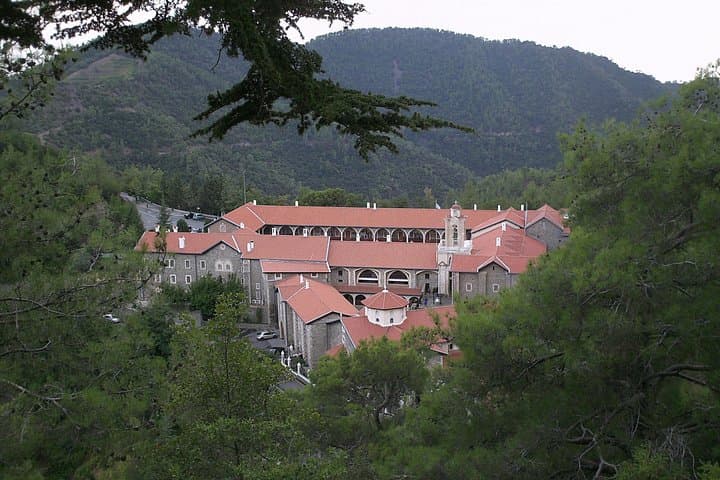
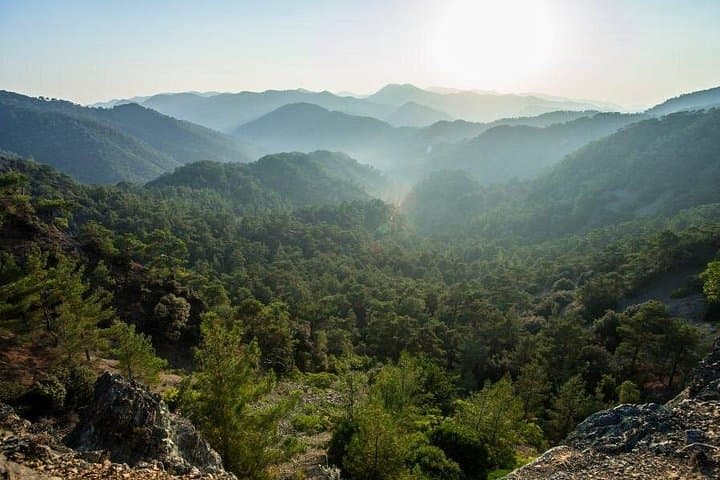
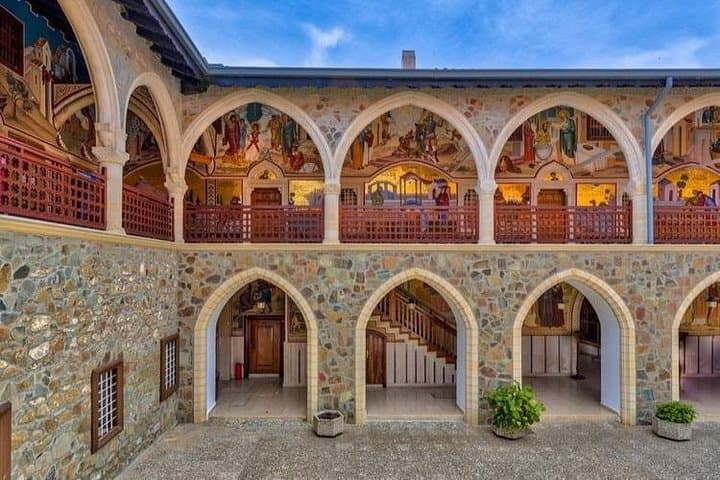
Geology here is blunt and readable: Troodos is an exposed ophiolite complex where ocean crust was uplifted, giving rounded peaks and iron-rich soils that support Cyprus fir and Aleppo pine. Culture follows the contours—highland monasteries such as Kykkos rose where solitude and access to mountain springs met. Kykkos guards a famed icon and Byzantine mosaics; Omodhos and nearby churches preserve wine presses and roof timbers recognized by UNESCO for traditional carpentry.
Practical guidance: expect an 8-hour loop that climbs from near sea level to roughly 1,200–1,400 m, mostly by paved road with short, uneven walks at viewpoints, bridges and village lanes. Wear sturdy shoes for cobbles, bring layered clothing (mountain temps drop quickly), 1–2 liters of water, sun protection and a small daypack. Timings matter—visit Kykkos earlier to avoid crowds and allow time for a winery tasting in the wine region. Wildlife sightings—especially mouflon and raptors—are possible at dawn and dusk; keep distance and avoid feeding.
The tour blends geology, religious history and coastal myth—finish at Petra tou Romiou where waves chip away at Aphrodite’s birthplace and the day’s mountain air meets the sea.
moderate.
8 hours.
Suitable for travelers with moderate fitness; involves several short walks and some steps at sights.
The tour is primarily a driving loop with several short, mostly paved or cobbled walks at viewpoints, bridges and village centers—plan on light walking rather than long hikes.
Entrance to Kykkos is typically part of the itinerary; modest dress is required and some interior areas may restrict photography.
Lunch is generally provided at a local tavern or village restaurant, but confirm at booking if dietary needs require advance notice.
Mouflon sightings are possible in quieter mountain slopes, especially at dawn or dusk, but are not guaranteed—keep binoculars handy and stay in the vehicle to observe.
Troodos preserves medieval and Venetian heritage—Kykkos Monastery holds a revered icon and 16th‑century bridges mark historic mountain trade routes; Petra tou Romiou is linked to the Aphrodite creation myth.
Mouflon and many mountain woodlands are protected; visitors should stick to paths, avoid feeding wildlife and support local wineries and guides who follow seasonal limits to reduce impact.
MTS GLOBE CYPRUS LTD. operates guided outdoor trips and adventures with an emphasis on safety, stewardship, and memorable experiences.
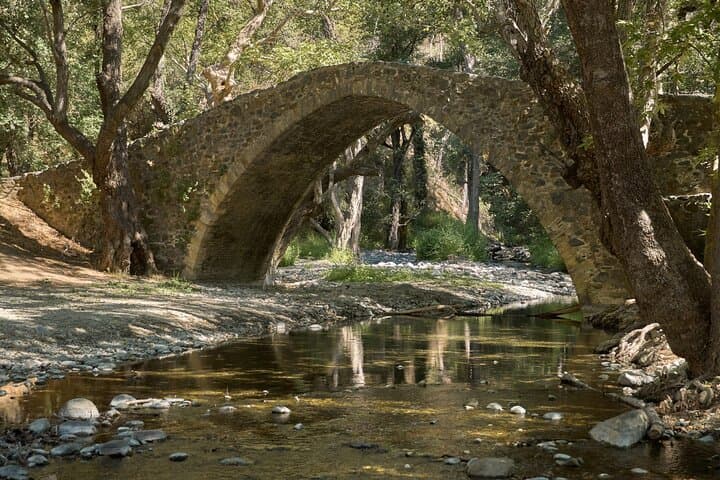
You leave the coast and the air tightens—pine resin and cool fir scent the bus as the road angles upward into the Troodos Mountains. Lowland olive groves drop away; a second-largest dam pauses the valley’s breath, then the Diarizos river dares you down a narrow corridor of villages and terraced fields. Stone bridges appear like deliberate interruptions: the 16th-century Venetian Tselefos arches over a clear stream, its flagstones worn smooth by centuries of feet.
You leave the coast and the air tightens—pine resin and cool fir scent the bus as the road angles upward into the Troodos Mountains. Lowland olive groves drop away; a second-largest dam pauses the valley’s breath, then the Diarizos river dares you down a narrow corridor of villages and terraced fields. Stone bridges appear like deliberate interruptions: the 16th-century Venetian Tselefos arches over a clear stream, its flagstones worn smooth by centuries of feet.
Geology here is blunt and readable: Troodos is an exposed ophiolite complex where ocean crust was uplifted, giving rounded peaks and iron-rich soils that support Cyprus fir and Aleppo pine. Culture follows the contours—highland monasteries such as Kykkos rose where solitude and access to mountain springs met. Kykkos guards a famed icon and Byzantine mosaics; Omodhos and nearby churches preserve wine presses and roof timbers recognized by UNESCO for traditional carpentry.
Practical guidance: expect an 8-hour loop that climbs from near sea level to roughly 1,200–1,400 m, mostly by paved road with short, uneven walks at viewpoints, bridges and village lanes. Wear sturdy shoes for cobbles, bring layered clothing (mountain temps drop quickly), 1–2 liters of water, sun protection and a small daypack. Timings matter—visit Kykkos earlier to avoid crowds and allow time for a winery tasting in the wine region. Wildlife sightings—especially mouflon and raptors—are possible at dawn and dusk; keep distance and avoid feeding.
The tour blends geology, religious history and coastal myth—finish at Petra tou Romiou where waves chip away at Aphrodite’s birthplace and the day’s mountain air meets the sea.