THE ADVENTURE COLLECTIVE® · Independent discovery and booking for outdoor travel

Walk Trogir’s medieval alleys and catch Split’s Roman silhouette across the water on this compact 90‑minute guided tour. Ideal for first‑time visitors who want a focused orientation to two UNESCO towns.
Walk Trogir’s medieval alleys and catch Split’s Roman silhouette across the water on this compact 90‑minute guided tour. Ideal for first‑time visitors who want a focused orientation to two UNESCO towns.
The morning light drops onto stone alleys and the Adriatic hisses at the quay as your guide leads the group through Trogir’s narrow streets—cobbles underfoot, centuries of commerce pressed into the facades. You arrive at the cathedral plaza where Master Radovan’s carved portal stares down like a patient raconteur; climb the bell tower and the sea frames the old town like a moving map.
Verified experiences and guided adventures in the surrounding area.
Operated by Discovery tours · Trogir, Split-Dalmatia County
The morning light drops onto stone alleys and the Adriatic hisses at the quay as your guide leads the group through Trogir’s narrow streets—cobbles underfoot, centuries of commerce pressed into the facades. You arrive at the cathedral plaza where Master Radovan’s carved portal stares down like a patient raconteur; climb the bell tower and the sea frames the old town like a moving map.
This 90-minute walk stitches together Trogir’s medieval grid, Venetian fortifications and glimpses of Split’s Roman past across the water. Trogir grew as a maritime crossroads in the Middle Ages; nearby Split preserves Diocletian’s 4th‑century palace embedded in daily life. Geologically, the coastline is limestone folded by Adriatic uplift—white rock, tight harbors, and reefs that shape the shoreline and the settlement pattern.
Culturally the towns are unapologetically Dalmatian: shops selling salted anchovies, family-run konobas, and fountains that still mark public life. Local guides point out pirate-era street designs and Cipiko family palaces with Gothic and Renaissance flourishes.
Practical notes: expect easy walking on uneven cobbles and short stair sections; wear comfortable shoes and bring a water bottle. Mornings are best for softer light and smaller crowds; the route is compact but tight in peak season, so book ahead. The tour includes an experienced guide and short stops at the cathedral, fortress walls, Cipiko Palace, and the North Gate—admissions not included. Keep a lightweight layer for coastal breezes and plan an extended visit if you want to enter Diocletian’s Palace or climb towers—the short tour gives a concentrated orientation to two UNESCO sites.
easy.
1–2 hours.
Light; suitable for most fitness levels—requires standing and walking on uneven surfaces for up to 90 minutes.
The guided itinerary runs approximately 90 minutes, covering key sights in Trogir and a view across to Split.
No—this walk includes exterior stops and commentary; entry to museums or towers is not included and can be visited afterward.
Yes—it's rated easy and designed for a broad range of abilities, but participants should be comfortable walking on uneven cobbles.
Questions about pickup points and transfer arrangements are handled during booking; the operator notes public transport options and pickup as needed.
Trogir’s old town grew under Venetian rule and flourished as a maritime and trading hub; many palaces date to the 13th–15th centuries, reflecting the town’s role between East and West.
The old‑town fabric is protected as a UNESCO site; visitors are asked to respect fragile stonework, avoid littering, and favor local businesses to support conservation.
Discovery tours operates guided outdoor trips and adventures with an emphasis on safety, stewardship, and memorable experiences.



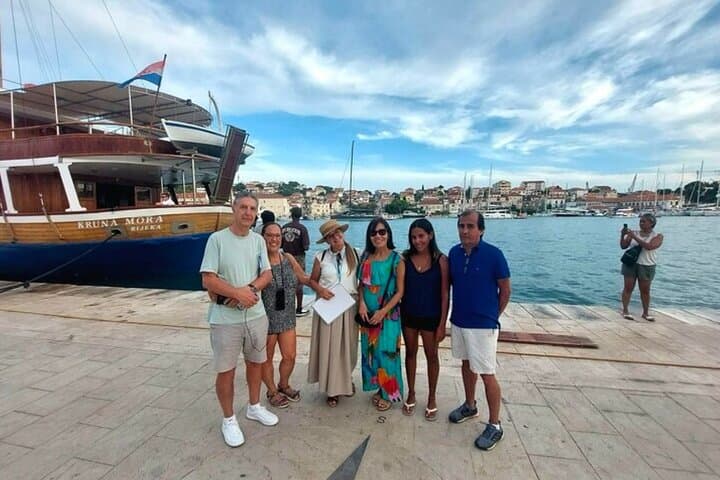
The morning light drops onto stone alleys and the Adriatic hisses at the quay as your guide leads the group through Trogir’s narrow streets—cobbles underfoot, centuries of commerce pressed into the facades. You arrive at the cathedral plaza where Master Radovan’s carved portal stares down like a patient raconteur; climb the bell tower and the sea frames the old town like a moving map.
The morning light drops onto stone alleys and the Adriatic hisses at the quay as your guide leads the group through Trogir’s narrow streets—cobbles underfoot, centuries of commerce pressed into the facades. You arrive at the cathedral plaza where Master Radovan’s carved portal stares down like a patient raconteur; climb the bell tower and the sea frames the old town like a moving map.
This 90-minute walk stitches together Trogir’s medieval grid, Venetian fortifications and glimpses of Split’s Roman past across the water. Trogir grew as a maritime crossroads in the Middle Ages; nearby Split preserves Diocletian’s 4th‑century palace embedded in daily life. Geologically, the coastline is limestone folded by Adriatic uplift—white rock, tight harbors, and reefs that shape the shoreline and the settlement pattern.
Culturally the towns are unapologetically Dalmatian: shops selling salted anchovies, family-run konobas, and fountains that still mark public life. Local guides point out pirate-era street designs and Cipiko family palaces with Gothic and Renaissance flourishes.
Practical notes: expect easy walking on uneven cobbles and short stair sections; wear comfortable shoes and bring a water bottle. Mornings are best for softer light and smaller crowds; the route is compact but tight in peak season, so book ahead. The tour includes an experienced guide and short stops at the cathedral, fortress walls, Cipiko Palace, and the North Gate—admissions not included. Keep a lightweight layer for coastal breezes and plan an extended visit if you want to enter Diocletian’s Palace or climb towers—the short tour gives a concentrated orientation to two UNESCO sites.