THE ADVENTURE COLLECTIVE® · Independent discovery and booking for outdoor travel

Take a compact, high-energy day trip from Kathmandu to tackle Trisuli River’s bouncy rapids, swimming holes and an optional cliff jump. This two-hour run mixes paddle technique with scenic river valley views and local river culture.
Take a compact, high-energy day trip from Kathmandu to tackle Trisuli River’s bouncy rapids, swimming holes and an optional cliff jump. This two-hour run mixes paddle technique with scenic river valley views and local river culture.
The Trisuli curls and hisses as the raft slides off the bank—cold Himalayan-water at first, then warmer flows as the valley widens. Paddle strokes sync quickly; the river throws playful, bouncy waves that demand timing more than brute force. For two hours the current alternates between broad, glassy pools and punchy Class II–III rapids, with a few bigger drops in high water that send white spray into your face.
Verified experiences and guided adventures in the surrounding area.
Operated by Travhill.com Pvt. Ltd. · Trisuli Bazaar, Bagmati Province
The Trisuli curls and hisses as the raft slides off the bank—cold Himalayan-water at first, then warmer flows as the valley widens. Paddle strokes sync quickly; the river throws playful, bouncy waves that demand timing more than brute force. For two hours the current alternates between broad, glassy pools and punchy Class II–III rapids, with a few bigger drops in high water that send white spray into your face.
Geology here is visible in the river’s work: rounded boulders and terraces carved from young greywacke and schist, lifted by the same tectonic forces that built the Himalaya. Historically the Trisuli corridor has been a trade and transit route between Kathmandu and western Nepal, and riverside villages still host small tea stalls and fishermen drying nets. Culture here is tactile—locals wave from terraced fields, and you’ll spot age-old stone bridges marking old trade lines.
Expect roughly an 8–12 km run that takes about two hours on the water, with easy entry points and a mix of technical rapids that reward teamwork. Guides outfit groups with helmets, lifejackets and dry containers; they’ll coach paddle commands and safety pulls before launch. Bring quick-dry layers, a secure waterproof for electronics, and a sense of humor—there’s usually time for a supervised cliff jump and a river swim at a gentler bend.
Practical tips: start hydrated, listen to guide briefings, and be ready to follow commands in rapids. The trip is accessible to most people with moderate fitness; it’s an excellent day-break from overland travel between Kathmandu and Pokhara, and one of the few Nepali rivers runnable year-round with varied but manageable white water.
moderate.
2 hours (on-river); full-day including transport 6–8 hours.
Moderate fitness—able to paddle actively for short bursts, tolerate brief swims and repeated exits/entries
The on-river section typically runs about 8–12 km and takes roughly two hours, depending on water levels.
Yes—this run is designed for people with moderate fitness; guides give instruction and manage safety throughout.
Helmets, lifejackets, paddles, a rubber raft, and waterproof containers are provided; guides carry rescue gear and first aid supplies.
Most operators include round-trip transfers in air-conditioned vehicles; pickup details are confirmed at booking.
The Trisuli corridor has long been a regional trade route connecting Kathmandu with western valleys; riverside bridges and villages still reflect that transit history.
River health is sensitive to litter and runoff—pack out plastics and follow guide instructions to avoid disturbing banks and nesting birds.
Travhill.com Pvt. Ltd. operates guided outdoor trips and adventures with an emphasis on safety, stewardship, and memorable experiences.
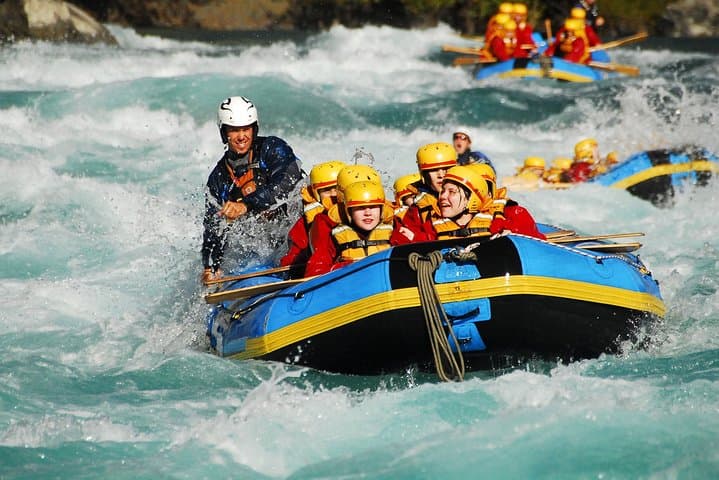
The Trisuli curls and hisses as the raft slides off the bank—cold Himalayan-water at first, then warmer flows as the valley widens. Paddle strokes sync quickly; the river throws playful, bouncy waves that demand timing more than brute force. For two hours the current alternates between broad, glassy pools and punchy Class II–III rapids, with a few bigger drops in high water that send white spray into your face.
The Trisuli curls and hisses as the raft slides off the bank—cold Himalayan-water at first, then warmer flows as the valley widens. Paddle strokes sync quickly; the river throws playful, bouncy waves that demand timing more than brute force. For two hours the current alternates between broad, glassy pools and punchy Class II–III rapids, with a few bigger drops in high water that send white spray into your face.
Geology here is visible in the river’s work: rounded boulders and terraces carved from young greywacke and schist, lifted by the same tectonic forces that built the Himalaya. Historically the Trisuli corridor has been a trade and transit route between Kathmandu and western Nepal, and riverside villages still host small tea stalls and fishermen drying nets. Culture here is tactile—locals wave from terraced fields, and you’ll spot age-old stone bridges marking old trade lines.
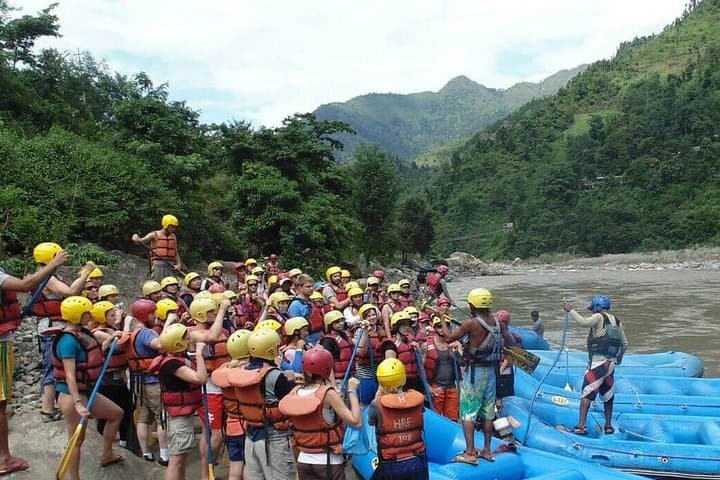
Expect roughly an 8–12 km run that takes about two hours on the water, with easy entry points and a mix of technical rapids that reward teamwork. Guides outfit groups with helmets, lifejackets and dry containers; they’ll coach paddle commands and safety pulls before launch. Bring quick-dry layers, a secure waterproof for electronics, and a sense of humor—there’s usually time for a supervised cliff jump and a river swim at a gentler bend.
Practical tips: start hydrated, listen to guide briefings, and be ready to follow commands in rapids. The trip is accessible to most people with moderate fitness; it’s an excellent day-break from overland travel between Kathmandu and Pokhara, and one of the few Nepali rivers runnable year-round with varied but manageable white water.