THE ADVENTURE COLLECTIVE® · Independent discovery and booking for outdoor travel

Paddle the Trisuli for a full-day mix of punchy rapids and calm river stretches with pickup from Kathmandu. This one-day rafting trip pairs accessible whitewater with riverside lunch and local cultural views.
Paddle the Trisuli for a full-day mix of punchy rapids and calm river stretches with pickup from Kathmandu. This one-day rafting trip pairs accessible whitewater with riverside lunch and local cultural views.
You step off the minibus where the Trisuli loosens its pace and the river immediately demands attention — currents tug at the raft, spray arcs, and guides call commands over the rush. For two to three hours of paddling split across a full-day outing, the Trisuli alternates between stern, punchy rapids and long, reflective pools where terraced fields and village roofs slide by.
Verified experiences and guided adventures in the surrounding area.
Operated by CAN Travels · Kathmandu, Bagmati Province
You step off the minibus where the Trisuli loosens its pace and the river immediately demands attention — currents tug at the raft, spray arcs, and guides call commands over the rush. For two to three hours of paddling split across a full-day outing, the Trisuli alternates between stern, punchy rapids and long, reflective pools where terraced fields and village roofs slide by.
The river takes its name from the trident of Shiva and has long been a corridor for trade and local life; cobbled river crossings and low stone bridges still mark old routes. Geologically, the Trisuli cuts through young Himalayan foothills of folded sedimentary rock, producing gravel bars, sandbanks, and the sudden drops that make the rapids exciting yet manageable.
Culturally, villages along the banks are agricultural and observant of river seasons — you’ll pass farmers tending rice terraces and children waving from the shore. Guides usually provide concise cultural context and ensure safety with modern helmets, lifejackets, and safety kayaks.
Practical edge: the day includes pickup from Kathmandu, a safety briefing, riverside lunch, and a drop-off back to the city. Plan for a long travel day (several hours each way depending on traffic), bring layered quick-dry clothing, secure footwear, sunscreen, and a dry bag for valuables. Expect Class II–III rapids suitable for beginners who can follow paddling commands; those with spinal or severe heart issues should avoid the trip. Timing your trip outside the monsoon reduces debris and raises the odds of clearer water and stable shuttle logistics.
moderate.
8–10 hours (full day, 2–3 hours on-water).
Basic fitness for paddling and quick movements in the raft; able to follow guide instructions and handle short walks on uneven riverbanks.
Rafting on the river typically lasts 2–3 hours; expect a full-day outing (8–10 hours) including round-trip transfers and brief stops.
No — the route mixes Class II–III rapids suitable for beginners; guides provide training and safety gear before launch.
Participants should be in generally good health; the operator recommends against pregnant travelers and those with serious spinal or heart conditions.
Yes — most tours include round-trip transfer from Kathmandu (and sometimes Pokhara); confirm pickup location when booking.
The Trisuli has been a local transport and trading corridor for centuries and takes its name from the trident of Shiva, reflecting the river’s cultural significance.
Operators typically follow river permits and encourage ‘leave no trace’ practices; avoid single-use plastics and respect riverside agriculture to reduce impact.
CAN Travels operates guided outdoor trips and adventures with an emphasis on safety, stewardship, and memorable experiences.
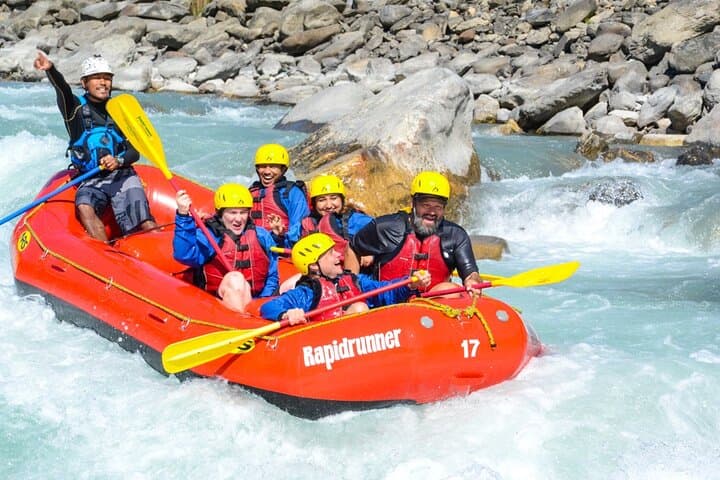
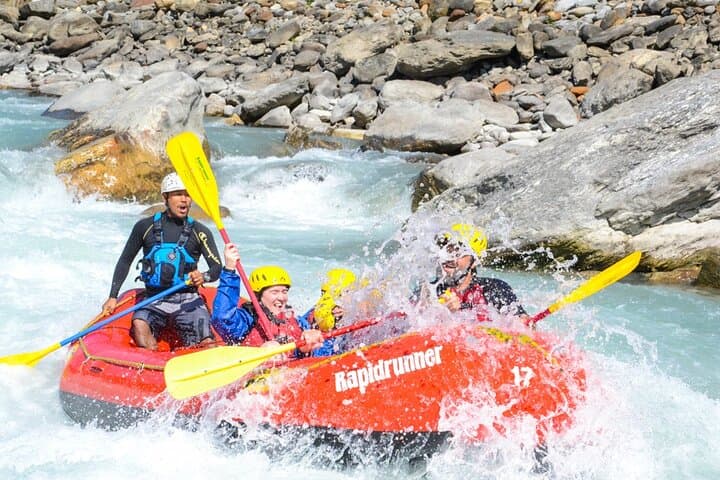
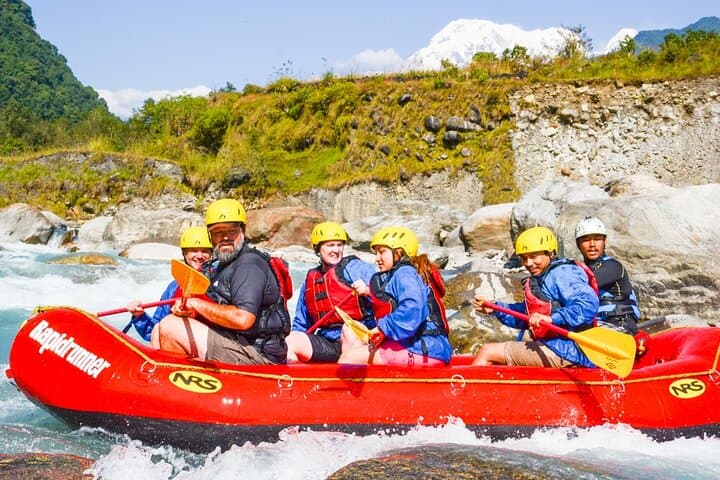
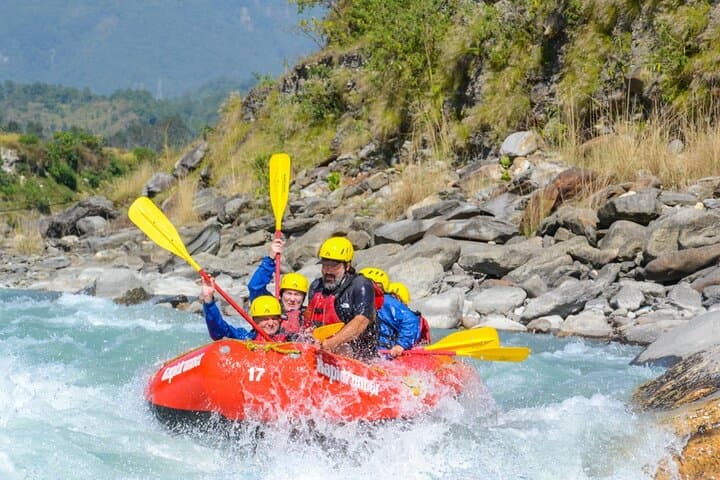
You step off the minibus where the Trisuli loosens its pace and the river immediately demands attention — currents tug at the raft, spray arcs, and guides call commands over the rush. For two to three hours of paddling split across a full-day outing, the Trisuli alternates between stern, punchy rapids and long, reflective pools where terraced fields and village roofs slide by.
You step off the minibus where the Trisuli loosens its pace and the river immediately demands attention — currents tug at the raft, spray arcs, and guides call commands over the rush. For two to three hours of paddling split across a full-day outing, the Trisuli alternates between stern, punchy rapids and long, reflective pools where terraced fields and village roofs slide by.
The river takes its name from the trident of Shiva and has long been a corridor for trade and local life; cobbled river crossings and low stone bridges still mark old routes. Geologically, the Trisuli cuts through young Himalayan foothills of folded sedimentary rock, producing gravel bars, sandbanks, and the sudden drops that make the rapids exciting yet manageable.
Culturally, villages along the banks are agricultural and observant of river seasons — you’ll pass farmers tending rice terraces and children waving from the shore. Guides usually provide concise cultural context and ensure safety with modern helmets, lifejackets, and safety kayaks.
Practical edge: the day includes pickup from Kathmandu, a safety briefing, riverside lunch, and a drop-off back to the city. Plan for a long travel day (several hours each way depending on traffic), bring layered quick-dry clothing, secure footwear, sunscreen, and a dry bag for valuables. Expect Class II–III rapids suitable for beginners who can follow paddling commands; those with spinal or severe heart issues should avoid the trip. Timing your trip outside the monsoon reduces debris and raises the odds of clearer water and stable shuttle logistics.