THE ADVENTURE COLLECTIVE® · Independent discovery and booking for outdoor travel

Hit the Trishuli River for a full-day white-water run from Kathmandu. Expect scenic gorges, terraced fields, class II–III rapids, and a guide-led rafting route that showcases Himalayan geology and village life.
Hit the Trishuli River for a full-day white-water run from Kathmandu. Expect scenic gorges, terraced fields, class II–III rapids, and a guide-led rafting route that showcases Himalayan geology and village life.
The Trishuli dares you from the first bend: cold, fast water that hits the hull and throws spray into the sun. Start in Kathmandu before dawn, slide out of the valley on a tourist bus past terraced fields and low villages, then set foot at Kurintar where the river narrows and the current begins to push. Guides brief the group, rafts skid onto riffles, and for the next few hours you move through gorges, glacial-fed rapids, and calmer pools where birds cut the sky.
Verified experiences and guided adventures in the surrounding area.
Operated by Nepal Highpoint Trekking Private Limited. · Kurintar, Bagmati Province
The Trishuli dares you from the first bend: cold, fast water that hits the hull and throws spray into the sun. Start in Kathmandu before dawn, slide out of the valley on a tourist bus past terraced fields and low villages, then set foot at Kurintar where the river narrows and the current begins to push. Guides brief the group, rafts skid onto riffles, and for the next few hours you move through gorges, glacial-fed rapids, and calmer pools where birds cut the sky.
Geologically the Trishuli drains the Langtang Himal, carving steep gorges and exposing layered metamorphic rock; culturally the river corridor links small hill communities whose rice paddies and footbridges line the banks. Rafting here grew from local outfitting in the 1980s into one of Nepal’s most accessible white-water experiences — a day trip that pairs adrenaline with scenery rather than remote expedition logistics.
Expect mostly class II–III rapids with short IV sections depending on season; a well-trained English-speaking guide is included, along with lunch. Transport to the put-in is by tourist bus; return typically involves public bus drop-off back toward Kathmandu. Not recommended for pregnant travelers or those with serious heart or spinal conditions.
Practical tips: confirm pickup a day ahead, wear quick-dry clothes and secure footwear, hydrate before and after, and stow cameras in dry cases. Timing your trip for lower shoulder-season flows will give cleaner paddling and clearer vistas. The day trip is a compact way to add high-energy Himalayan river running to a Kathmandu itinerary.
moderate.
10 hours.
Moderate fitness — able to paddle, brace, and follow quick safety commands; some mobility for boarding required
Typical on-water time is 3–5 hours depending on flow and chosen put-in; the full door-to-door experience is about 8–10 hours.
Most sections are class II–III with occasional short class IV depending on season and rainfall; guides select lines to match group ability.
Yes — a cooked lunch is included during the day trip, with vegetarian options available if requested at booking.
Yes — guided rafts accommodate beginners, though travelers should have a moderate fitness level and be comfortable following safety instructions.
The Trishuli has long been a trade and transit corridor out of the Kathmandu Valley; commercial rafting developed here in the late 20th century as guides and lodges responded to growing adventure tourism.
Seasonal flows and riverside farming affect sediment and habitat; operators and communities promote leave-no-trace practices and local waste management to protect the river.
Nepal Highpoint Trekking Private Limited. operates guided outdoor trips and adventures with an emphasis on safety, stewardship, and memorable experiences.
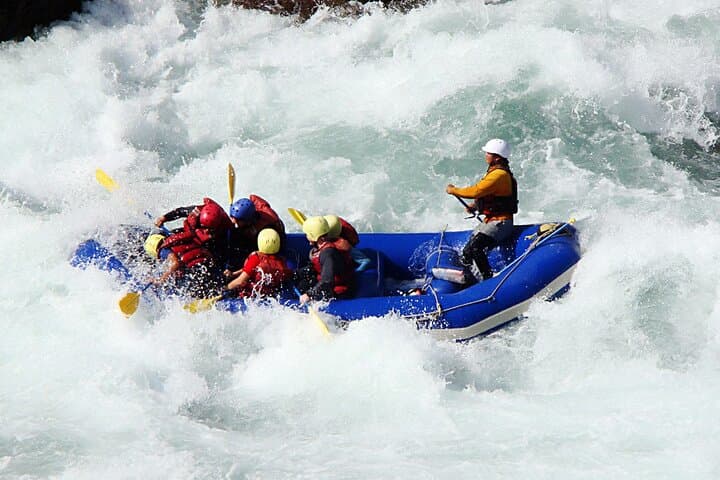
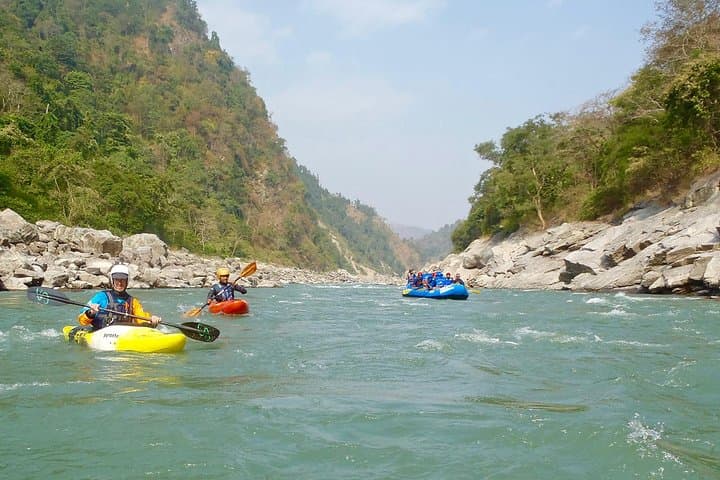
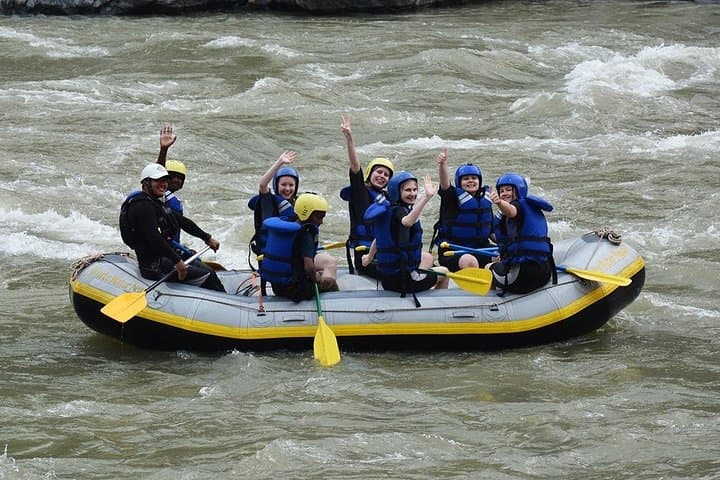
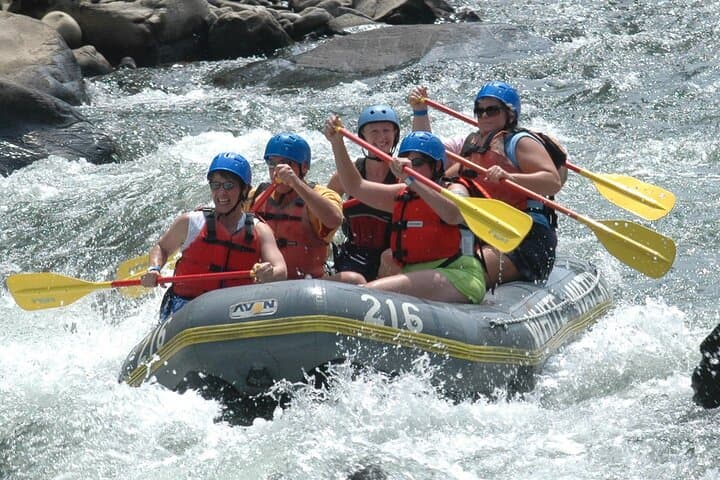
The Trishuli dares you from the first bend: cold, fast water that hits the hull and throws spray into the sun. Start in Kathmandu before dawn, slide out of the valley on a tourist bus past terraced fields and low villages, then set foot at Kurintar where the river narrows and the current begins to push. Guides brief the group, rafts skid onto riffles, and for the next few hours you move through gorges, glacial-fed rapids, and calmer pools where birds cut the sky.
The Trishuli dares you from the first bend: cold, fast water that hits the hull and throws spray into the sun. Start in Kathmandu before dawn, slide out of the valley on a tourist bus past terraced fields and low villages, then set foot at Kurintar where the river narrows and the current begins to push. Guides brief the group, rafts skid onto riffles, and for the next few hours you move through gorges, glacial-fed rapids, and calmer pools where birds cut the sky.
Geologically the Trishuli drains the Langtang Himal, carving steep gorges and exposing layered metamorphic rock; culturally the river corridor links small hill communities whose rice paddies and footbridges line the banks. Rafting here grew from local outfitting in the 1980s into one of Nepal’s most accessible white-water experiences — a day trip that pairs adrenaline with scenery rather than remote expedition logistics.
Expect mostly class II–III rapids with short IV sections depending on season; a well-trained English-speaking guide is included, along with lunch. Transport to the put-in is by tourist bus; return typically involves public bus drop-off back toward Kathmandu. Not recommended for pregnant travelers or those with serious heart or spinal conditions.
Practical tips: confirm pickup a day ahead, wear quick-dry clothes and secure footwear, hydrate before and after, and stow cameras in dry cases. Timing your trip for lower shoulder-season flows will give cleaner paddling and clearer vistas. The day trip is a compact way to add high-energy Himalayan river running to a Kathmandu itinerary.