THE ADVENTURE COLLECTIVE® · Independent discovery and booking for outdoor travel

Slide into the current of the Trishuli for a full-day rafting trip that pairs steady Class III+ rapids with sweeping valley views and roadside village life. Choose a 22 km or 46 km run and expect roughly 6–8 hours including transport and lunch.
Slide into the current of the Trishuli for a full-day rafting trip that pairs steady Class III+ rapids with sweeping valley views and roadside village life. Choose a 22 km or 46 km run and expect roughly 6–8 hours including transport and lunch.
A morning mist lifts off the Trishuli as the raft slides into the current; the river immediately takes charge, nudging paddles and attention toward the next rapid. Trees lean close along the banks and limestone gorges appear and recede, giving way to wide pools where the crew catches its breath and the guide points out a narrow chute ahead.
Verified experiences and guided adventures in the surrounding area.
Operated by Alpine Club of Himalaya · Charaudi, Bagmati Province
A morning mist lifts off the Trishuli as the raft slides into the current; the river immediately takes charge, nudging paddles and attention toward the next rapid. Trees lean close along the banks and limestone gorges appear and recede, giving way to wide pools where the crew catches its breath and the guide points out a narrow chute ahead.
Trishuli has long been threaded through local trade routes and myth—its name evokes the trident (trishula) associated with Shiva in Nepali folklore—and the river's character reflects the young geology of the Himalaya: steep-sided valleys carved by fast water and seasonal snowmelt. Villages of terraced fields and roadside tea stalls pass in sequence, offering a cultural cross-section of central Nepal on a single day trip.
Expect sustained Class III+ water with technical sections that reward coordinated paddling, plus quieter stretches for floating and wildlife spotting. Typical itineraries run 22 km for a shorter day or a full 46 km option, with roughly four hours on the main whitewater portion within a 6–8 hour door-to-door experience when transport and lunch are included.
Practical guidance: wear secure footwear and quick-dry layers, carry a small dry bag for essentials, and listen to the safety brief—guides supply helmets, lifejackets and a safety kayak. Hydrate before departure; the intensity comes in waves and timing your energy for the bigger rapids improves comfort and control. For first-time rafters, the Trishuli is an ideal introduction to Himalayan whitewater that balances adrenaline with scenic context.
moderate.
6–8 hours.
Moderate fitness; participants should be comfortable swimming and able to follow paddling instructions during intermittent strenuous bursts.
No—this trip is suitable for beginners; guides provide a safety briefing and a safety kayak accompanies groups through more technical sections.
Typical inclusions are transport to and from Charaudi, helmets and lifejackets, a safety kayak, bottled water, buffet lunch at River Fun Beach Resort, and photo/video of the run.
The main whitewater portion lasts about four hours on the standard run; total trip time including transport and breaks is around 6–8 hours depending on pick-up location.
Swimming ability is recommended in case of capsize, but guides and safety kayaks are present to assist and recover rafters quickly.
The Trishuli corridor historically linked hill communities and lowland trade; local legends reference the river’s name as linked to Shiva’s trident and nearby settlements evolved around ferry and bridge crossings.
Seasonal flows and hydropower pressure affect sediment and habitat; stick to marked shorelines, avoid leaving plastics, and support operators that practice leave-no-trace and safe waste disposal.
Alpine Club of Himalaya operates guided outdoor trips and adventures with an emphasis on safety, stewardship, and memorable experiences.
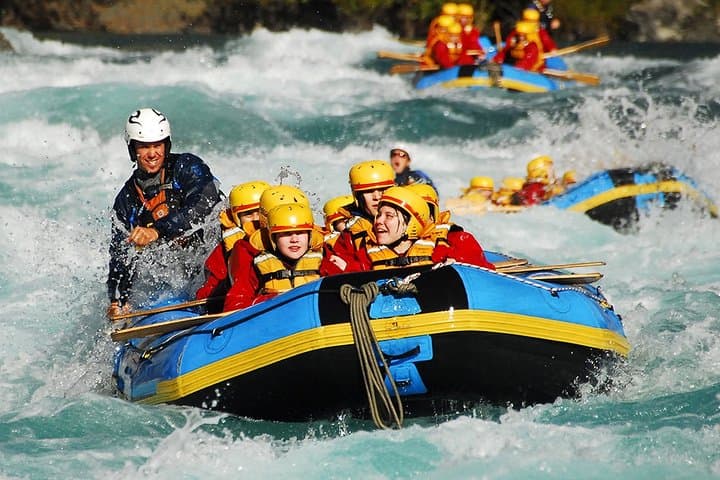
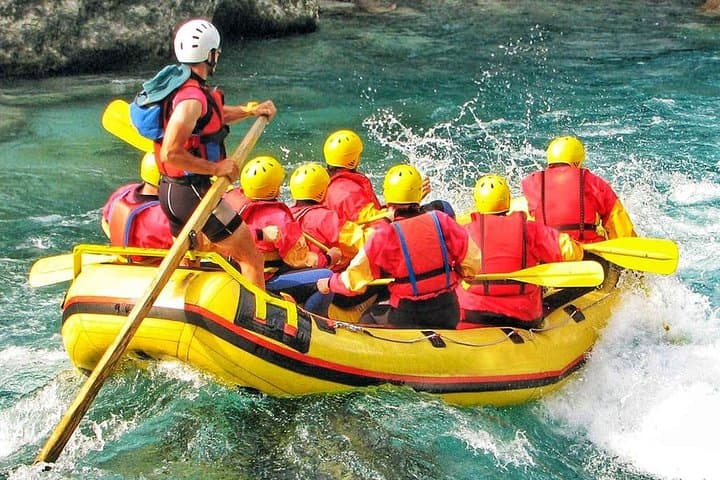
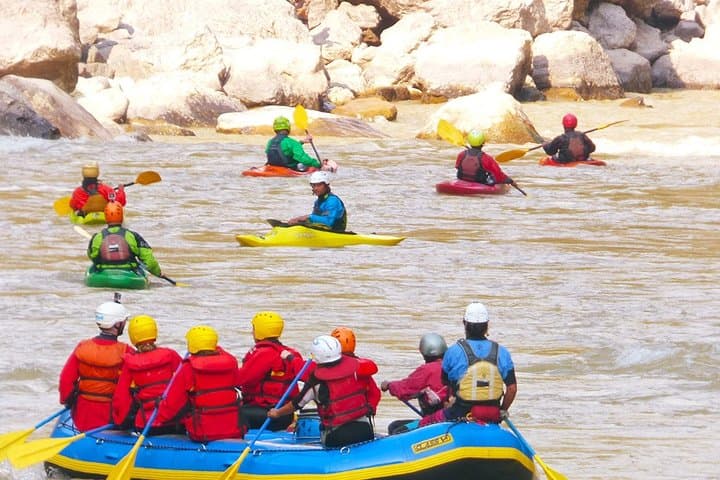
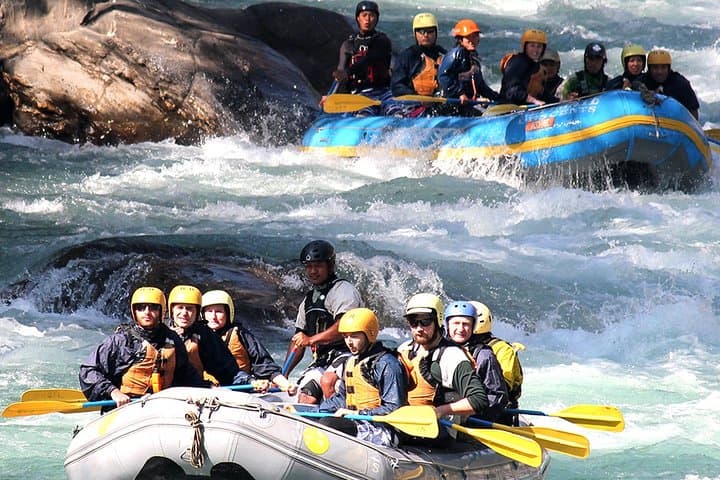
A morning mist lifts off the Trishuli as the raft slides into the current; the river immediately takes charge, nudging paddles and attention toward the next rapid. Trees lean close along the banks and limestone gorges appear and recede, giving way to wide pools where the crew catches its breath and the guide points out a narrow chute ahead.
A morning mist lifts off the Trishuli as the raft slides into the current; the river immediately takes charge, nudging paddles and attention toward the next rapid. Trees lean close along the banks and limestone gorges appear and recede, giving way to wide pools where the crew catches its breath and the guide points out a narrow chute ahead.
Trishuli has long been threaded through local trade routes and myth—its name evokes the trident (trishula) associated with Shiva in Nepali folklore—and the river's character reflects the young geology of the Himalaya: steep-sided valleys carved by fast water and seasonal snowmelt. Villages of terraced fields and roadside tea stalls pass in sequence, offering a cultural cross-section of central Nepal on a single day trip.
Expect sustained Class III+ water with technical sections that reward coordinated paddling, plus quieter stretches for floating and wildlife spotting. Typical itineraries run 22 km for a shorter day or a full 46 km option, with roughly four hours on the main whitewater portion within a 6–8 hour door-to-door experience when transport and lunch are included.
Practical guidance: wear secure footwear and quick-dry layers, carry a small dry bag for essentials, and listen to the safety brief—guides supply helmets, lifejackets and a safety kayak. Hydrate before departure; the intensity comes in waves and timing your energy for the bigger rapids improves comfort and control. For first-time rafters, the Trishuli is an ideal introduction to Himalayan whitewater that balances adrenaline with scenic context.