THE ADVENTURE COLLECTIVE® · Independent discovery and booking for outdoor travel

A two-day rafting journey on Nepal’s Trishuli River that balances playful class II–III rapids with wide river beaches and tented camping. Perfect for first-timers who want Himalayan scenery without mountaineering logistics.
A two-day rafting journey on Nepal’s Trishuli River that balances playful class II–III rapids with wide river beaches and tented camping. Perfect for first-timers who want Himalayan scenery without mountaineering logistics.
You leave Kathmandu before dawn, a lineup of jeeps and minivans threading west along the Prithvi Highway. The valley opens and the city’s smudge of concrete thins into terraced fields and blind bends. By mid-morning the Trishuli appears, a fast ribbon of Himalayan meltwater that seems to dare you forward—cold, loud, and impossibly clear. Guides lay out rafts on a wide sandbar while a village dog studies the paddlers. The first pull of the oar is a breath held and released: the river takes charge.
Verified experiences and guided adventures in the surrounding area.
Operated by Overland Trek Nepal · Kathmandu, Bagmati Province
You leave Kathmandu before dawn, a lineup of jeeps and minivans threading west along the Prithvi Highway. The valley opens and the city’s smudge of concrete thins into terraced fields and blind bends. By mid-morning the Trishuli appears, a fast ribbon of Himalayan meltwater that seems to dare you forward—cold, loud, and impossibly clear. Guides lay out rafts on a wide sandbar while a village dog studies the paddlers. The first pull of the oar is a breath held and released: the river takes charge.
Trishuli (or Trisuli) rises from the high watershed near Gosainkunda and the Langtang range, carving a route through the Lesser Himalaya into the foothills. Geologically it cuts across folded Siwalik formations and older metamorphics; that makes for abrupt cliffs, boulder gardens and the gravel beaches where crews camp. Historically the river corridor linked Kathmandu valley traders with lowland markets—today motor traffic thunders on parallel roads while the river keeps to its ancient line.
Culturally the route runs past small towns where roadside stalls sell fried fish and steaming momos; Malekhu, in particular, is famous for riverside fish grills. Guides are usually Nepali rafters with mountain-bred confidence; their local knowledge—where the current tightens or where a rock lurks—makes the difference between a memorable ride and a swim.
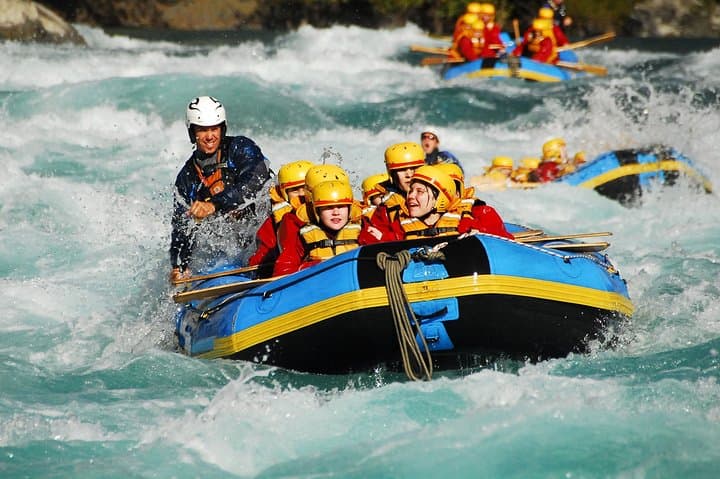
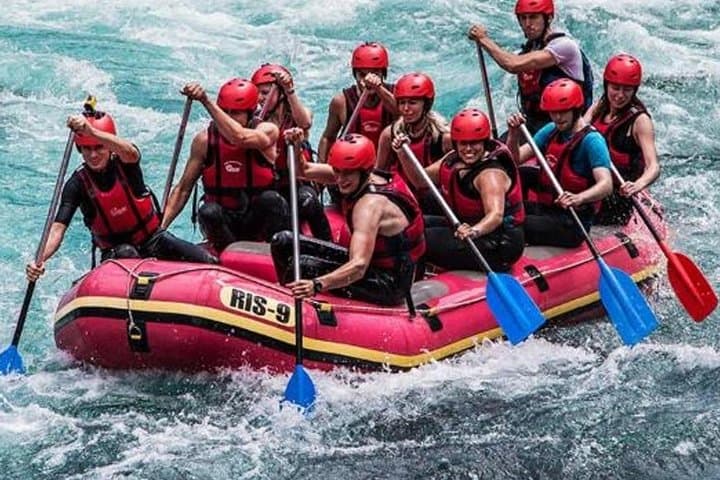
The two-day trip covers roughly 40–60 km of river, broken into play sections and longer runs. Expect grades II–III rapids on most stretches, with several named features—Snail’s Nose, Monkey Rapid, Ladies’ Delight—that offer punchy boils and wave trains. Monsoon rains (June–July) can push some drops toward III–IV; the river’s vertical drop across the trip is a few hundred meters, traded for adrenaline and tidy eddies.
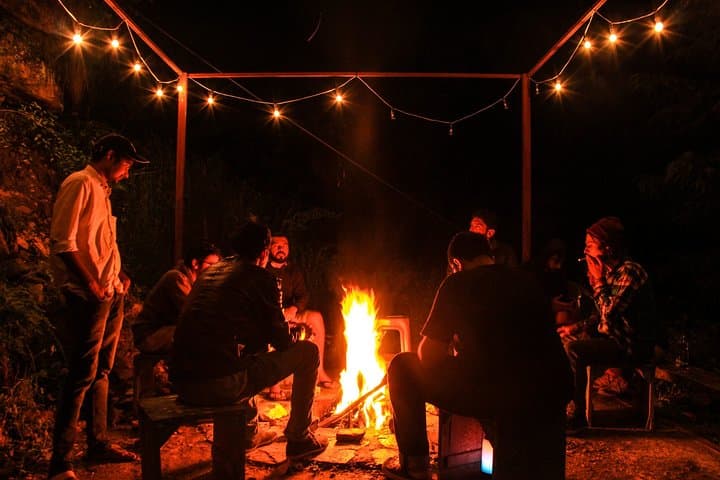
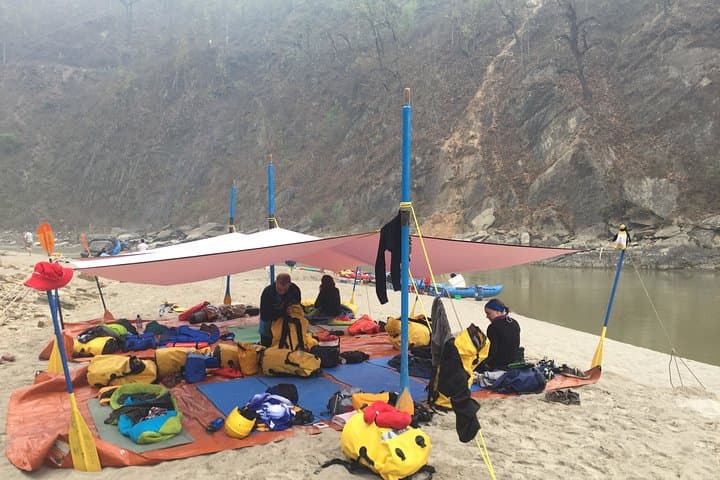
Practicalities are straightforward: meet in Thamel; transport to the put-in is included; guides, lifejackets, helmets, self-bailing rafts and river permits are provided. Nights are spent in tented camps on sandy beaches with simple meals cooked over a fire. Fitness-wise, a moderate level is enough—paddling is intermittent and guides handle tricky lines—but you should be comfortable in moving water.
Bring quick-dry layers, a secure water bottle, and a waterproof phone case. Hydrate on the road, listen to the safety briefing, and leave unnecessary valuables in Kathmandu. The trip is an accessible Himalayan whitewater experience: approachable for first-timers yet with enough gulp-worthy moments to satisfy seasoned rafters looking for scenery and solid rapids.
moderate.
2 days (approx. 48 hours total).
Moderate—suitable for anyone who can do short bursts of paddling and handle uneven terrain at camps
No—this trip is designed for beginners, with trained guides handling navigation and safety.
Most rapids are class II–III; levels can rise to III–IV during monsoon season.
Yes—tented beach camps and three meals a day are provided as part of the package.
The two days cover roughly 40–60 km total, split into morning and afternoon runs with shore breaks.
Yes—ground transport to the put-in and return to Kathmandu are included in the itinerary.
Not recommended for pregnant travelers, people with serious back or heart conditions, or those unable to follow safety instructions.
The Trishuli valley long served as a trade corridor out of Kathmandu; modern rafting is a recent recreational use of a river once navigated for commerce.
Rafting groups generally follow leave-no-trace protocols; avoid burning trash at camps and use provided sanitation to minimize river pollution.
Overland Trek Nepal operates guided outdoor trips and adventures with an emphasis on safety, stewardship, and memorable experiences.
You leave Kathmandu before dawn, a lineup of jeeps and minivans threading west along the Prithvi Highway. The valley opens and the city’s smudge of concrete thins into terraced fields and blind bends. By mid-morning the Trishuli appears, a fast ribbon of Himalayan meltwater that seems to dare you forward—cold, loud, and impossibly clear. Guides lay out rafts on a wide sandbar while a village dog studies the paddlers. The first pull of the oar is a breath held and released: the river takes charge.
You leave Kathmandu before dawn, a lineup of jeeps and minivans threading west along the Prithvi Highway. The valley opens and the city’s smudge of concrete thins into terraced fields and blind bends. By mid-morning the Trishuli appears, a fast ribbon of Himalayan meltwater that seems to dare you forward—cold, loud, and impossibly clear. Guides lay out rafts on a wide sandbar while a village dog studies the paddlers. The first pull of the oar is a breath held and released: the river takes charge.
Trishuli (or Trisuli) rises from the high watershed near Gosainkunda and the Langtang range, carving a route through the Lesser Himalaya into the foothills. Geologically it cuts across folded Siwalik formations and older metamorphics; that makes for abrupt cliffs, boulder gardens and the gravel beaches where crews camp. Historically the river corridor linked Kathmandu valley traders with lowland markets—today motor traffic thunders on parallel roads while the river keeps to its ancient line.
Culturally the route runs past small towns where roadside stalls sell fried fish and steaming momos; Malekhu, in particular, is famous for riverside fish grills. Guides are usually Nepali rafters with mountain-bred confidence; their local knowledge—where the current tightens or where a rock lurks—makes the difference between a memorable ride and a swim.
The two-day trip covers roughly 40–60 km of river, broken into play sections and longer runs. Expect grades II–III rapids on most stretches, with several named features—Snail’s Nose, Monkey Rapid, Ladies’ Delight—that offer punchy boils and wave trains. Monsoon rains (June–July) can push some drops toward III–IV; the river’s vertical drop across the trip is a few hundred meters, traded for adrenaline and tidy eddies.
Practicalities are straightforward: meet in Thamel; transport to the put-in is included; guides, lifejackets, helmets, self-bailing rafts and river permits are provided. Nights are spent in tented camps on sandy beaches with simple meals cooked over a fire. Fitness-wise, a moderate level is enough—paddling is intermittent and guides handle tricky lines—but you should be comfortable in moving water.
Bring quick-dry layers, a secure water bottle, and a waterproof phone case. Hydrate on the road, listen to the safety briefing, and leave unnecessary valuables in Kathmandu. The trip is an accessible Himalayan whitewater experience: approachable for first-timers yet with enough gulp-worthy moments to satisfy seasoned rafters looking for scenery and solid rapids.