THE ADVENTURE COLLECTIVE® · Independent discovery and booking for outdoor travel

A six-hour guided descent into Torrent de Pareis delivers raw limestone walls, short sections of scrambling and a dramatic exit at Sa Calobra. This guide covers what to expect on route, local geology and practical tips to prepare for the canyon.
A six-hour guided descent into Torrent de Pareis delivers raw limestone walls, short sections of scrambling and a dramatic exit at Sa Calobra. This guide covers what to expect on route, local geology and practical tips to prepare for the canyon.
You step off the bus near Escorca with the limestone cliffs already looming like folded pages of an old atlas. The trail drops quickly into shadow: a gorge carved by a torrent that refuses to sit still, its channel a ragged corridor of boulders, caves and sudden pools. Ahead, the path narrows; behind, the Tramuntana range presses its shoulders to the sky. This is Torrent de Pareis — a raw, narrow incision where mountain meets Mediterranean.
Verified experiences and guided adventures in the surrounding area.
Operated by Mon d'Aventura · Escorca, Balearic Islands
You step off the bus near Escorca with the limestone cliffs already looming like folded pages of an old atlas. The trail drops quickly into shadow: a gorge carved by a torrent that refuses to sit still, its channel a ragged corridor of boulders, caves and sudden pools. Ahead, the path narrows; behind, the Tramuntana range presses its shoulders to the sky. This is Torrent de Pareis — a raw, narrow incision where mountain meets Mediterranean.
The canyon isn’t just dramatic scenery. It’s a geological record. The gorge slices through Miocene limestone, revealing layered strata and ancient marine fossils where surges of water have gouged deep over millennia. Locals long used these ravines as seasonal routes; cartographers and naturalists later recognized the canyon’s biological oddities and declared it a Natural Monument. Human history here is modest but present: shepherd tracks, wartime refuges, and the tiny hamlets that learned to read the weather off the rock faces.
On a guided trek, you’ll move through named features that sound like a field guide — S’Entreforc, the cave of Es Soldat Pelut, the Pool of Es Capellà. The stream dares you forward: at points it purrs, at others it commands a cautious scramble. Rocky steps alternate with sandy runs and narrow slots where exposure feels honest and immediate. Birdlife patrols the walls; a peregrine may appear as a pale slash against blue.
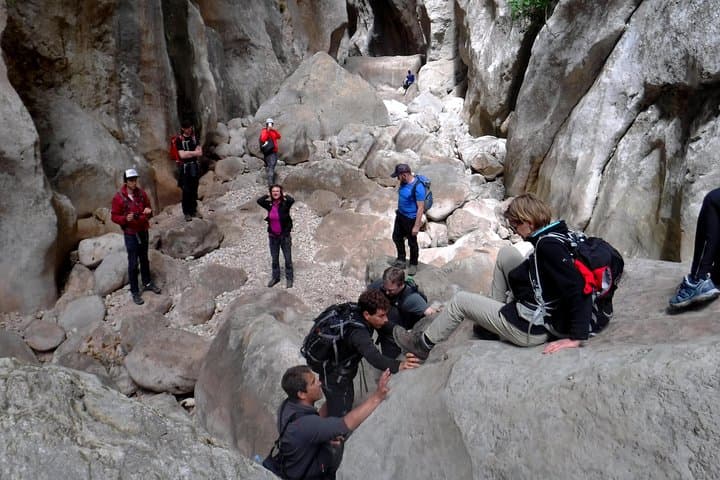
Practicalities shape the experience. The full outing runs about six hours and covers uneven terrain that requires good boots and sure footing. Guides map safe lines, point out climbing moves where needed, and time the descent to reach the canyon mouth near Sa Calobra for a cooling dip. Expect a mix of loose scree, wet rock and short sections of hand-over-foot scrambling — not technical climbing, but not a promenade either.
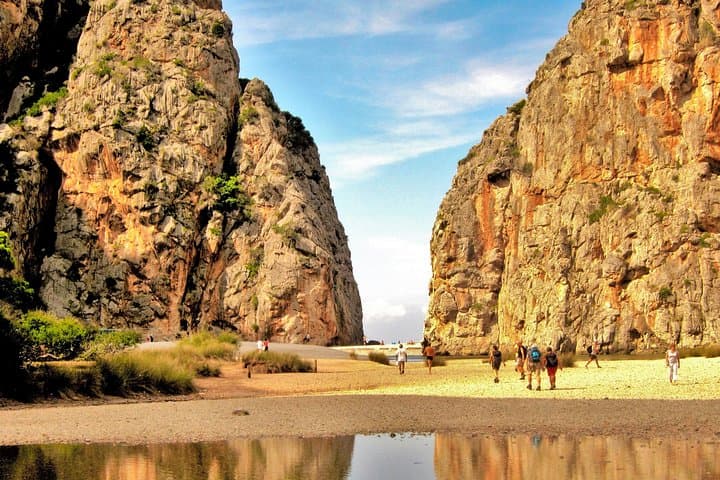
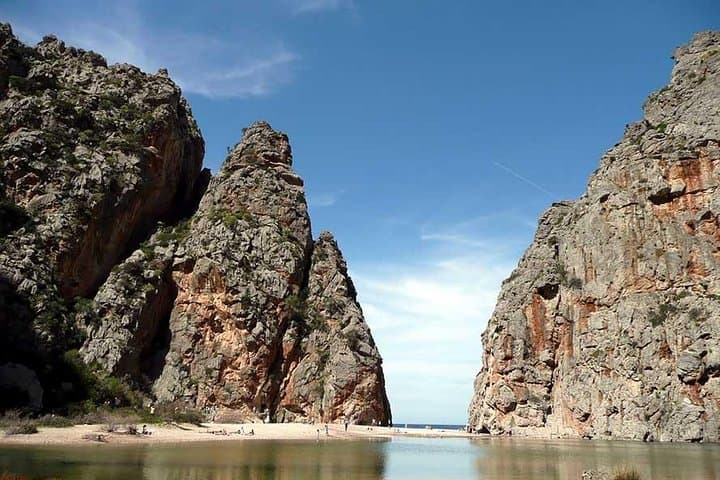
To make the day comfortable: carry at least 2 liters of water, a windproof layer for sea breezes at Sa Calobra, and sun protection for exposed ridgelines. Start early to avoid the peak sun and to soak in the calmer light that sharpens the gorge’s textures. If you have a head for heights and a taste for tactile, physical hiking, Torrent de Pareis repays attention with vistas few other Mallorca trails offer — a dramatic finale where mountain water meets an impossibly blue Mediterranean.
Leave no trace, listen to your guide, and allow time after the hike to sit by Sa Calobra and watch the canyon exhale into the sea. It’s an immersive, honest piece of Mallorca: geological theater with a practical edge.
challenging.
6 hours.
Good aerobic fitness with comfort on uneven ground and short scrambling sections; not suitable for beginners with no hiking experience.
You should have good fitness for sustained hiking and be comfortable with uneven terrain and short scrambling moves; this is not a casual walk.
Children 10 and older may participate but must be accompanied by an adult and able to manage long, uneven sections.
Yes — the Sa Calobra area has swimming spots, but be mindful of boat traffic and changeable currents; swim near shore and follow your guide’s advice.
No technical rope or harness is required, but good boots and basic scrambling ability are necessary.
The tour may be canceled in heavy rain or dangerous conditions; flash-flood risk in canyons makes weather decisions strict.
Pickup can be arranged from nearby villages, particularly around Pollença; otherwise meet at Restaurant Escorca as instructed.
The gorge has long been a natural corridor between mountain and sea; modern protection recognizes its geological formations and unique flora.
Stick to established lines, pack out all trash and use local guides to minimize erosion and disturbance to sensitive rock and plant communities.
Mon d'Aventura operates guided outdoor trips and adventures with an emphasis on safety, stewardship, and memorable experiences.
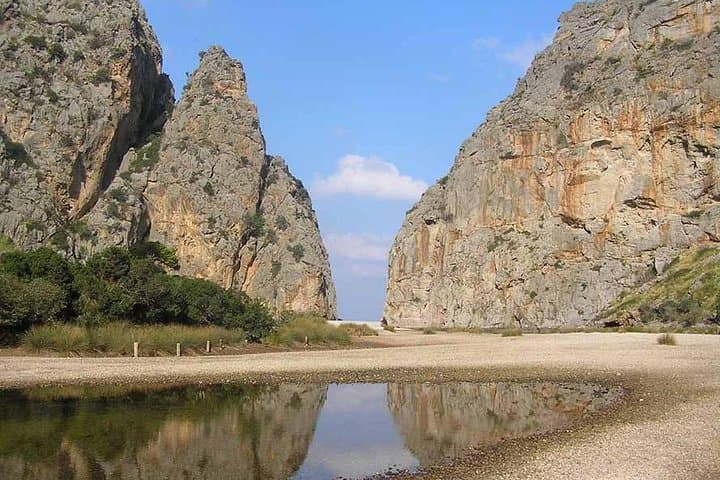
You step off the bus near Escorca with the limestone cliffs already looming like folded pages of an old atlas. The trail drops quickly into shadow: a gorge carved by a torrent that refuses to sit still, its channel a ragged corridor of boulders, caves and sudden pools. Ahead, the path narrows; behind, the Tramuntana range presses its shoulders to the sky. This is Torrent de Pareis — a raw, narrow incision where mountain meets Mediterranean.
You step off the bus near Escorca with the limestone cliffs already looming like folded pages of an old atlas. The trail drops quickly into shadow: a gorge carved by a torrent that refuses to sit still, its channel a ragged corridor of boulders, caves and sudden pools. Ahead, the path narrows; behind, the Tramuntana range presses its shoulders to the sky. This is Torrent de Pareis — a raw, narrow incision where mountain meets Mediterranean.
The canyon isn’t just dramatic scenery. It’s a geological record. The gorge slices through Miocene limestone, revealing layered strata and ancient marine fossils where surges of water have gouged deep over millennia. Locals long used these ravines as seasonal routes; cartographers and naturalists later recognized the canyon’s biological oddities and declared it a Natural Monument. Human history here is modest but present: shepherd tracks, wartime refuges, and the tiny hamlets that learned to read the weather off the rock faces.
On a guided trek, you’ll move through named features that sound like a field guide — S’Entreforc, the cave of Es Soldat Pelut, the Pool of Es Capellà. The stream dares you forward: at points it purrs, at others it commands a cautious scramble. Rocky steps alternate with sandy runs and narrow slots where exposure feels honest and immediate. Birdlife patrols the walls; a peregrine may appear as a pale slash against blue.
Practicalities shape the experience. The full outing runs about six hours and covers uneven terrain that requires good boots and sure footing. Guides map safe lines, point out climbing moves where needed, and time the descent to reach the canyon mouth near Sa Calobra for a cooling dip. Expect a mix of loose scree, wet rock and short sections of hand-over-foot scrambling — not technical climbing, but not a promenade either.
To make the day comfortable: carry at least 2 liters of water, a windproof layer for sea breezes at Sa Calobra, and sun protection for exposed ridgelines. Start early to avoid the peak sun and to soak in the calmer light that sharpens the gorge’s textures. If you have a head for heights and a taste for tactile, physical hiking, Torrent de Pareis repays attention with vistas few other Mallorca trails offer — a dramatic finale where mountain water meets an impossibly blue Mediterranean.
Leave no trace, listen to your guide, and allow time after the hike to sit by Sa Calobra and watch the canyon exhale into the sea. It’s an immersive, honest piece of Mallorca: geological theater with a practical edge.