THE ADVENTURE COLLECTIVE® · Independent discovery and booking for outdoor travel

A full-day, small-group trek from Ushuaia to Ojo del Albino Glacier that moves from lenga forest to wind-swept moraine and, when conditions allow, across blue ice. Expect steep climbs, sweeping valley views and a focused, guide-led glacier approach.
A full-day, small-group trek from Ushuaia to Ojo del Albino Glacier that moves from lenga forest to wind-swept moraine and, when conditions allow, across blue ice. Expect steep climbs, sweeping valley views and a focused, guide-led glacier approach.
You stand at the trailhead with Ushuaia shrinking behind you and a cold wind that smells of rock and sea pulling at your jacket. The path drops into lenga forest, then climbs out into the high valley where a ribbon of turquoise—Esmeralda Lagoon—catches the light. Above it, the Ojo del Albino glacier pins itself to a steep cirque: a bright, brooding eye of ice. The guide counts heads, adjusts crampons if the day allows, and you step into a landscape that still remembers the last great Patagonian ice advance.
Verified experiences and guided adventures in the surrounding area.
Operated by Arpon Trekking · Ushuaia, Tierra del Fuego
You stand at the trailhead with Ushuaia shrinking behind you and a cold wind that smells of rock and sea pulling at your jacket. The path drops into lenga forest, then climbs out into the high valley where a ribbon of turquoise—Esmeralda Lagoon—catches the light. Above it, the Ojo del Albino glacier pins itself to a steep cirque: a bright, brooding eye of ice. The guide counts heads, adjusts crampons if the day allows, and you step into a landscape that still remembers the last great Patagonian ice advance.
This route threads classic Fuegian geography: slow-draining glacial basins, wind-sculpted moraine, and short, brutal pitches of scree. The mountains here are the easternmost foothills of the Andes; their bedrock—metamorphic schists and ancient marine sediments—rises jaggedly from peat and bog below. Indigenous Yámana and Selk’nam peoples traversed these shores for millennia before European settlers arrived in the 19th century; today Ushuaia’s port-town sprawl is the practical launch point for an otherwise remote alpine day.
The crossing is honest: roughly 10 km round-trip with the steepest gain concentrated in the final ascent (guides list reaching around 1,200 m elevation on route profiles). The first two hours ease you in—forest paths and boardwalks give way to open tundra—before the trail narrows and exposure increases. At the Balcones viewpoint the lagoon unrolls below, a good place to rest and gauge the weather. When conditions permit, guides fit crampons and you may step onto the glacier for a short, guided walk across ancient blue ice.
Practical planning matters more than romance here. The trip runs 6–7 hours door-to-door; expect a full morning and afternoon. Dress in layers for fierce microclimates: sun, sleet and wind can happen in the same hour. Bring sturdy, treaded boots (ankle support helps), waterproof outer layers, and at least 2 liters of water. The operator provides snacks, tea or coffee, trekking poles and crampons when needed, but personal gear quality makes the day easier.
Timing tips: start early to catch calmer winds and clearer views; late afternoons tend to cloud in. Respect guide instructions on glacier travel—ice travel is conditional and requires concentration. For photographers, the lagoon-to-glacier sightline is best with side light; for wildlife, keep an eye for austral waterfowl in the bogs and foxes on the ridge.
This is a serious day-hike: remote enough to feel wild, sculpted enough to demand attention, and short enough to fit into a single, unforgettable Patagonian day.
challenging.
6–7 hours.
Participants should have a high level of cardiovascular fitness and experience with sustained uphill hiking and uneven terrain.
The full experience is about 6–7 hours round-trip covering roughly 10 km with most steepness in the final ascent; route profiles indicate up to approximately 1,200 m point elevation along the route.
Glacier access is conditional—guides will assess safety and weather; when permitted, crampons are fitted and you will do a short, guided walk on the ice.
The operator supplies trekking poles and crampons when conditions require them; bring your own boots for a proper fit.
The tour includes snacks and hot drinks; bring at least 2 liters of water and any personal high-energy snacks you prefer.
No—travelers should have a high level of fitness and comfort with steep, exposed terrain; the guide will decline participation for those with significant health restrictions.
Pickup from Ushuaia hotels is provided; pickup time is confirmed the day before and you should be ready about 30 minutes before the scheduled departure.
The area sits on the eastern fringe of Patagonian ice fields that sculpted the valley during the last glacial maximum; local indigenous Yámana peoples historically used lowland coastal resources nearby.
Foot traffic is managed to protect fragile peat and bog systems; stick to established trails, pack out waste and follow guide instructions to minimize impact.
Arpon Trekking operates guided outdoor trips and adventures with an emphasis on safety, stewardship, and memorable experiences.
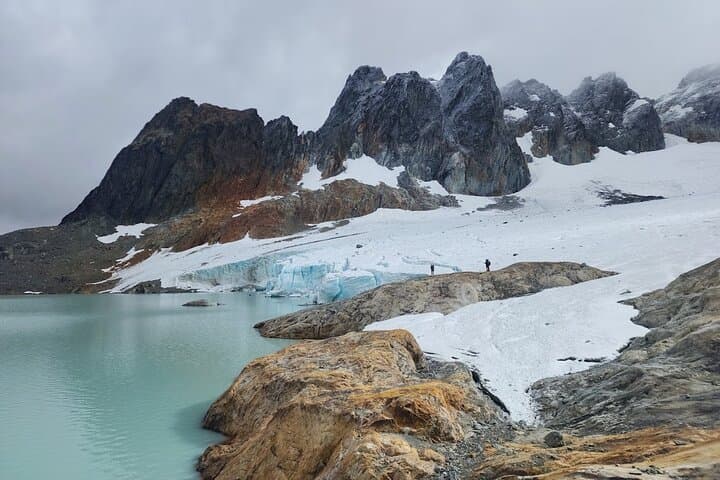
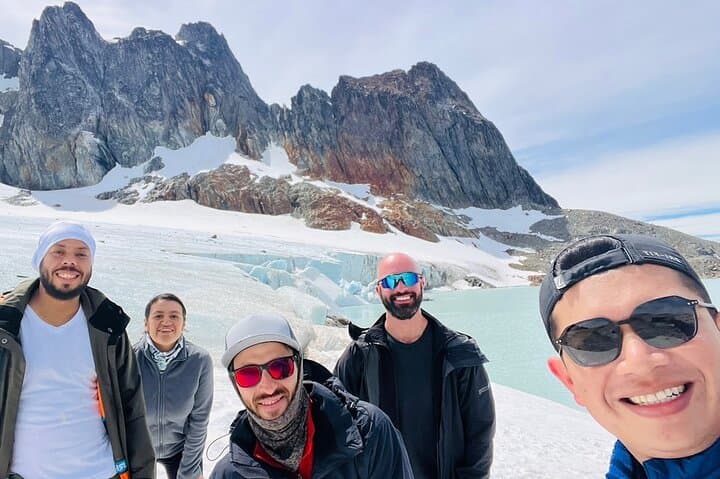
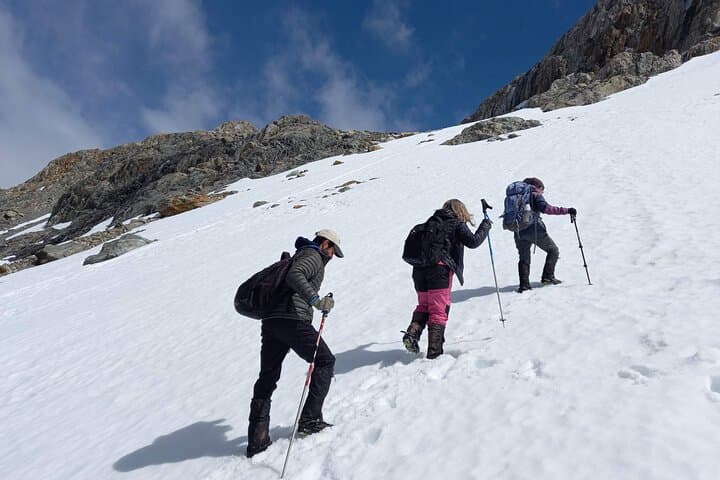
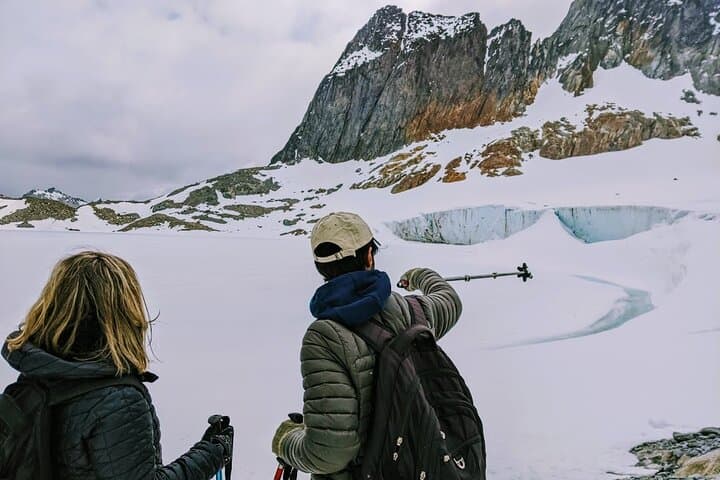
You stand at the trailhead with Ushuaia shrinking behind you and a cold wind that smells of rock and sea pulling at your jacket. The path drops into lenga forest, then climbs out into the high valley where a ribbon of turquoise—Esmeralda Lagoon—catches the light. Above it, the Ojo del Albino glacier pins itself to a steep cirque: a bright, brooding eye of ice. The guide counts heads, adjusts crampons if the day allows, and you step into a landscape that still remembers the last great Patagonian ice advance.
You stand at the trailhead with Ushuaia shrinking behind you and a cold wind that smells of rock and sea pulling at your jacket. The path drops into lenga forest, then climbs out into the high valley where a ribbon of turquoise—Esmeralda Lagoon—catches the light. Above it, the Ojo del Albino glacier pins itself to a steep cirque: a bright, brooding eye of ice. The guide counts heads, adjusts crampons if the day allows, and you step into a landscape that still remembers the last great Patagonian ice advance.
This route threads classic Fuegian geography: slow-draining glacial basins, wind-sculpted moraine, and short, brutal pitches of scree. The mountains here are the easternmost foothills of the Andes; their bedrock—metamorphic schists and ancient marine sediments—rises jaggedly from peat and bog below. Indigenous Yámana and Selk’nam peoples traversed these shores for millennia before European settlers arrived in the 19th century; today Ushuaia’s port-town sprawl is the practical launch point for an otherwise remote alpine day.
The crossing is honest: roughly 10 km round-trip with the steepest gain concentrated in the final ascent (guides list reaching around 1,200 m elevation on route profiles). The first two hours ease you in—forest paths and boardwalks give way to open tundra—before the trail narrows and exposure increases. At the Balcones viewpoint the lagoon unrolls below, a good place to rest and gauge the weather. When conditions permit, guides fit crampons and you may step onto the glacier for a short, guided walk across ancient blue ice.
Practical planning matters more than romance here. The trip runs 6–7 hours door-to-door; expect a full morning and afternoon. Dress in layers for fierce microclimates: sun, sleet and wind can happen in the same hour. Bring sturdy, treaded boots (ankle support helps), waterproof outer layers, and at least 2 liters of water. The operator provides snacks, tea or coffee, trekking poles and crampons when needed, but personal gear quality makes the day easier.
Timing tips: start early to catch calmer winds and clearer views; late afternoons tend to cloud in. Respect guide instructions on glacier travel—ice travel is conditional and requires concentration. For photographers, the lagoon-to-glacier sightline is best with side light; for wildlife, keep an eye for austral waterfowl in the bogs and foxes on the ridge.
This is a serious day-hike: remote enough to feel wild, sculpted enough to demand attention, and short enough to fit into a single, unforgettable Patagonian day.