THE ADVENTURE COLLECTIVE® · Independent discovery and booking for outdoor travel

A full-day, 21 km trek from Ushuaia to the Ojo del Albino Glacier that moves from Fuegian forest to glacier amphitheater. Expect technical ice sections, a mountain refuge lunch, and ten hours of variable mountain terrain.
A full-day, 21 km trek from Ushuaia to the Ojo del Albino Glacier that moves from Fuegian forest to glacier amphitheater. Expect technical ice sections, a mountain refuge lunch, and ten hours of variable mountain terrain.
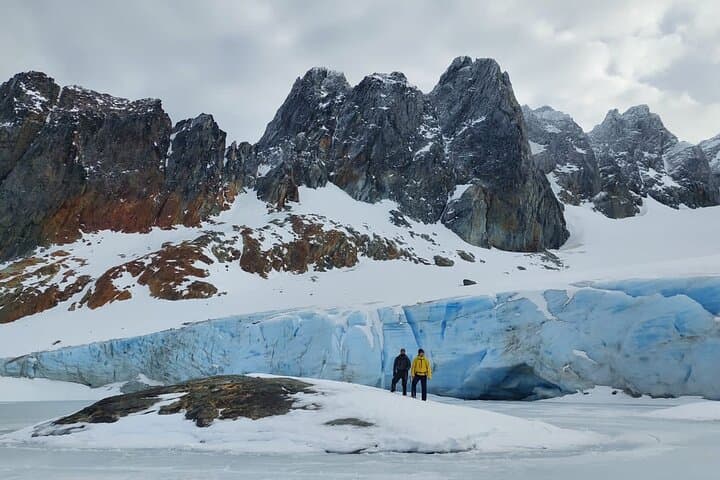
The morning bus peels away from Ushuaia under a pewter sky, and the city’s harbor recedes into a smear of boats and steel. You breathe cold, sharp air as the forest takes over — lenga trunks leaning like old oars, moss soft underfoot — and the trail begins to climb. For ten hours you move through three textures of Tierra del Fuego: dense Fuegian forest, wide glacier valleys, and the bright, echoing amphitheater of Ojo del Albino itself.
Verified experiences and guided adventures in the surrounding area.
Operated by Titan Cuatro Elementos · Ushuaia, Tierra del Fuego
The morning bus peels away from Ushuaia under a pewter sky, and the city’s harbor recedes into a smear of boats and steel. You breathe cold, sharp air as the forest takes over — lenga trunks leaning like old oars, moss soft underfoot — and the trail begins to climb. For ten hours you move through three textures of Tierra del Fuego: dense Fuegian forest, wide glacier valleys, and the bright, echoing amphitheater of Ojo del Albino itself.
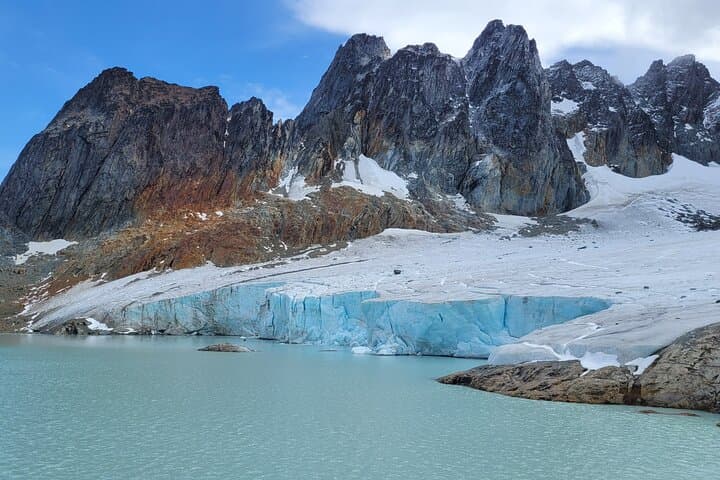
This is not a postcard walk. Guides calibrate the group’s pace so conversation and effort find the same rhythm; at steeper pitches crampons click and poles dig in. At the Emerald Lagoon the color of the water punches through the greys, a clear note against wind-whipped grasses. The company runs a small mountain refuge at the lagoon’s edge where lunch — hot soup and a fresh artisanal sandwich — feels earned and humane.
Geologically, this region is young and restless: the Southern Andes here are a maze of glacially carved valleys and moraine ridges. Ojo del Albino sits in an amphitheater hollowed by ice and sculpted by repeated freeze–thaw cycles. Culturally, you’re hiking on land long used by the Yamana and later by European settlers and explorers; contemporary guides blend natural-history lessons with safety and route-finding.
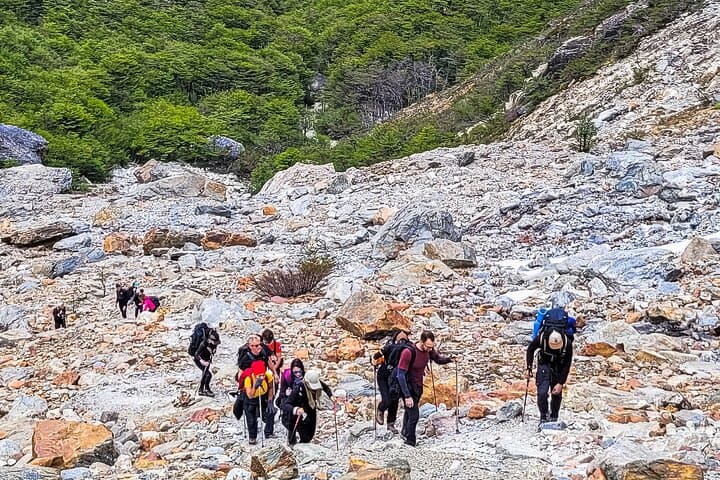
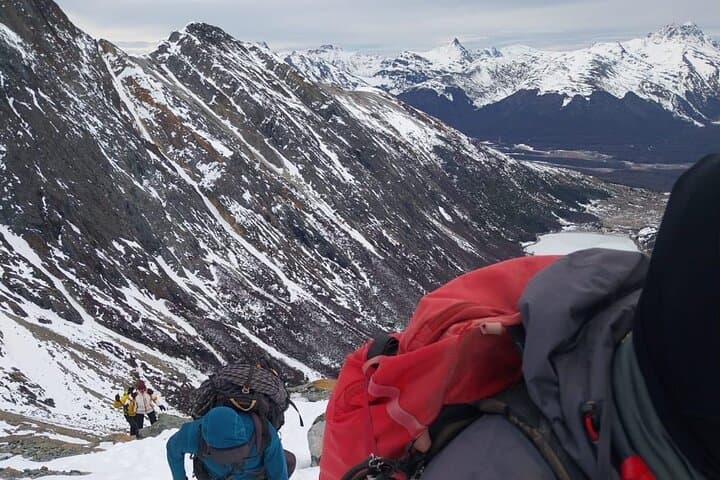
Expect about 21 km of travel and a full-day commitment (roughly 10 hours). The most demanding section is the technical ascent onto the glacier where crampons, helmets and basic glacier skills are required — these are supplied by the operator. The return follows the same route; the descent is a place to appreciate the valley’s shape and scan for flighty forest birds.
Practical takeaways: start early and layer for volatile weather — conditions swing fast at this latitude. Hydrate frequently and carry snacks even though an alfajor and fruit are provided. Footwear should be sturdy and well-broken-in; expect muddy approaches, rocky bootpaths and hard ice on the glacier. Communicate medical concerns in advance — guides require at least moderate fitness and screen for cardiovascular issues.
For photographers the light is best in low sun: early and late. Watch for wind-scoured surfaces on the glacier that catch reflection, and frame the refuge against the ice amphitheater for scale. Whether you’re chasing the physical test of cramponing on a Patagonian glacier or the quiet reward of a hot soup in a remote refuge, this trek is both an endurance day and a study in landscape change — raw, instructive and memorable.
challenging.
10 hours.
Should be in good aerobic condition with experience on long day hikes; comfortable with sustained ascents and uneven terrain.
The tour is about 21 km total and lasts around 10 hours; it includes a steep technical ascent onto the glacier and is rated challenging.
Yes—guides provide crampons, helmets, trekking poles and a basic safety briefing for glacier travel.
No formal glacier experience is required, but you should be comfortable on long hikes and be able to follow guide instruction for crampon use and steep terrain.
Lunch is a mountain-style meal: homemade pumpkin soup, an artisanal sandwich (chicken, meat or veggie), and toast; snacks like an alfajor, nuts and an apple are also provided.
Yes—private transportation from your accommodation in Ushuaia is included, and the guide will pick you up at the agreed hotel time.
Declare any cardiovascular issues, other pathologies, allergies or mobility concerns at booking so guides can assess suitability and plan accommodations.
The area sits within the Southern Andes region historically used by Yamana peoples; later exploration and sheep farming shaped access routes and huts in the 19th–20th centuries.
The trail passes sensitive alpine and peatland ecosystems—stick to established paths, pack out waste, and follow guides’ instructions to minimize erosion and disturbance.
Titan Cuatro Elementos operates guided outdoor trips and adventures with an emphasis on safety, stewardship, and memorable experiences.
The morning bus peels away from Ushuaia under a pewter sky, and the city’s harbor recedes into a smear of boats and steel. You breathe cold, sharp air as the forest takes over — lenga trunks leaning like old oars, moss soft underfoot — and the trail begins to climb. For ten hours you move through three textures of Tierra del Fuego: dense Fuegian forest, wide glacier valleys, and the bright, echoing amphitheater of Ojo del Albino itself.
The morning bus peels away from Ushuaia under a pewter sky, and the city’s harbor recedes into a smear of boats and steel. You breathe cold, sharp air as the forest takes over — lenga trunks leaning like old oars, moss soft underfoot — and the trail begins to climb. For ten hours you move through three textures of Tierra del Fuego: dense Fuegian forest, wide glacier valleys, and the bright, echoing amphitheater of Ojo del Albino itself.
This is not a postcard walk. Guides calibrate the group’s pace so conversation and effort find the same rhythm; at steeper pitches crampons click and poles dig in. At the Emerald Lagoon the color of the water punches through the greys, a clear note against wind-whipped grasses. The company runs a small mountain refuge at the lagoon’s edge where lunch — hot soup and a fresh artisanal sandwich — feels earned and humane.
Geologically, this region is young and restless: the Southern Andes here are a maze of glacially carved valleys and moraine ridges. Ojo del Albino sits in an amphitheater hollowed by ice and sculpted by repeated freeze–thaw cycles. Culturally, you’re hiking on land long used by the Yamana and later by European settlers and explorers; contemporary guides blend natural-history lessons with safety and route-finding.
Expect about 21 km of travel and a full-day commitment (roughly 10 hours). The most demanding section is the technical ascent onto the glacier where crampons, helmets and basic glacier skills are required — these are supplied by the operator. The return follows the same route; the descent is a place to appreciate the valley’s shape and scan for flighty forest birds.
Practical takeaways: start early and layer for volatile weather — conditions swing fast at this latitude. Hydrate frequently and carry snacks even though an alfajor and fruit are provided. Footwear should be sturdy and well-broken-in; expect muddy approaches, rocky bootpaths and hard ice on the glacier. Communicate medical concerns in advance — guides require at least moderate fitness and screen for cardiovascular issues.
For photographers the light is best in low sun: early and late. Watch for wind-scoured surfaces on the glacier that catch reflection, and frame the refuge against the ice amphitheater for scale. Whether you’re chasing the physical test of cramponing on a Patagonian glacier or the quiet reward of a hot soup in a remote refuge, this trek is both an endurance day and a study in landscape change — raw, instructive and memorable.