THE ADVENTURE COLLECTIVE® · Independent discovery and booking for outdoor travel

A half-day trek from Ushuaia that moves through peat bogs, beaver-altered forest, and a mountain stream to reach a vivid green lake tucked between peaks. Practical enough for a seasoned day-hiker, richly informative for nature lovers.
A half-day trek from Ushuaia that moves through peat bogs, beaver-altered forest, and a mountain stream to reach a vivid green lake tucked between peaks. Practical enough for a seasoned day-hiker, richly informative for nature lovers.
The trail opens like a map unfolded across southern Patagonia: peat bogs that suck at your boots, the crunch of lenga leaves underfoot, and the thin, metallic light of Tierra del Fuego sliding down from serrated ridgelines.
Verified experiences and guided adventures in the surrounding area.
Operated by Tierra del Fuego Aventura · Ushuaia, Tierra del Fuego
The trail opens like a map unfolded across southern Patagonia: peat bogs that suck at your boots, the crunch of lenga leaves underfoot, and the thin, metallic light of Tierra del Fuego sliding down from serrated ridgelines.
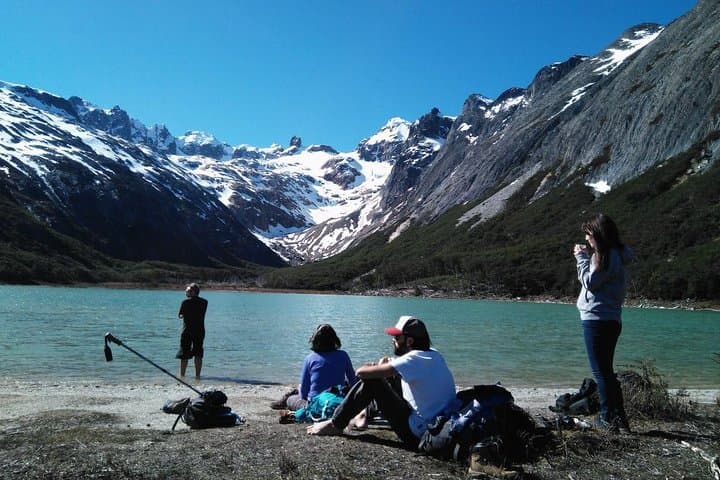
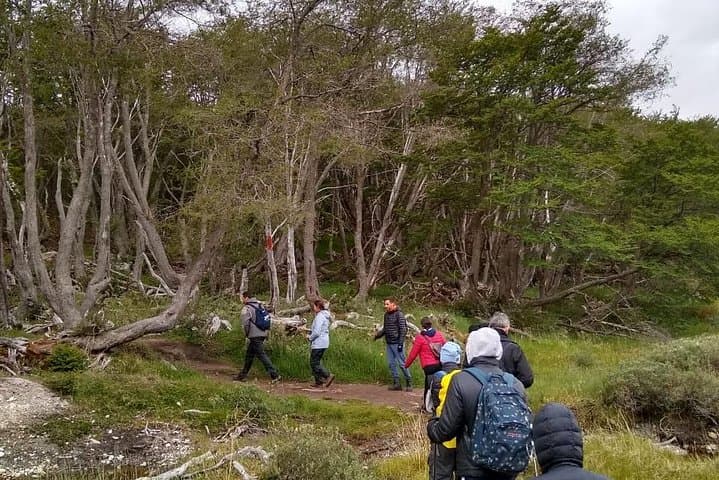
This 4.5-kilometer approach to Laguna Esmeralda threads through distinct environments—broad sphagnum valleys, linear beaver dams that reroute streams, and dense Fuegian forest—finally spilling you onto a small, brilliant lake held between mountains. The water’s green comes from suspended glacial flour and mountain runoff; it reacts to wind and light, sometimes jade, sometimes gunmetal. Guides point out tracks, nesting birds and the bark-stripped trunks where introduced beavers have reshaped the landscape, giving the trail a working-history as much as a scenic one.
Geologically, the route sits on folded Andes foothills carved by Pleistocene glaciers; the valley’s peat accumulations record a slow hydrological history that contrasts with the quick-moving weather above. Culturally, Ushuaia sits at the edge of Argentine Patagonia—a port town built on maritime and frontier histories—so this trek reads as both a nature walk and a field lesson in human-environment interaction: beavers introduced for fur hunting, now engineering wetlands, and ranching-era routes that turned into modern trails.
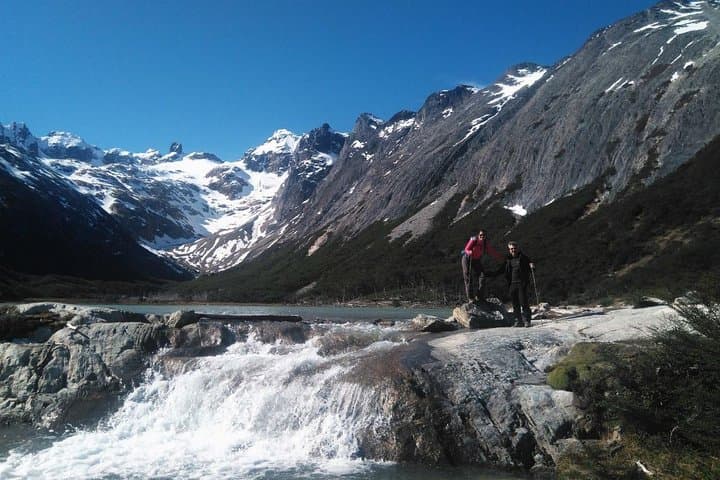
Expect varied footing: boardwalks and boggy sections give way to rocky stream crossings, then a short climb beside a clear mountain stream to the lagoon. The elevation change is modest—about 200 meters total—and the round trip distance including approach makes this a half-day outing from Ushuaia. Guides typically include a sandwich-and-warm-drink lunch box and a walking pole; they also explain local flora and fauna as you move.
Practical notes: start mid-morning to maximize daylight and avoid the stiffest winds; wear waterproof boots and layered clothing—weather can shift from sun to sleet in an hour. Bring water, a small first-aid kit, and a camera with a polarizer for the lake’s reflections. Respect marked trails; the peat takes centuries to form and is easily damaged.
For travelers, this is an accessible but engaging hike—enough effort to feel earned, with consistent rewards of color, quiet, and natural curiosity. Whether you’re cataloging bird species or simply chasing a green lake, Laguna Esmeralda offers a compact dose of Tierra del Fuego’s untamed personality with the practical convenience of a guided, half-day excursion from Ushuaia.
moderate.
5–6 hours.
Suitable for hikers with moderate fitness—comfortable walking for a few hours and able to manage uneven terrain and short climbs.
The trail to Laguna Esmeralda is about 4.5 km each way with roughly 200 meters of cumulative elevation change; plan on 5–6 hours including transfers and time at the lagoon.
This excursion is sold as a guided tour—guides handle navigation, local interpretation, and safety, and the operator provides pickup from Ushuaia hotels.
Waterproof hiking boots with good ankle support are recommended due to boggy sections and uneven terrain.
Yes—children aged 6 and up may join but must be accompanied by an adult; the pace is moderate but terrain can be challenging for very young hikers.
The trail is accessible year-round but winter conditions can include snow, ice, and colder temperatures—dress for winter conditions and confirm timing with the operator.
Yes—guides often point out beaver dams and signs of their impact, plus local birds and small mammals common to Fuegian forest and wetlands.
The valley landscape reflects human and ecological histories—fur-farming-era introductions of beavers changed hydrology, and ranching and exploration routes shaped the trail network used today.
This area’s peatlands store carbon and are sensitive to trampling; staying on trails and following guide instructions helps protect fragile soils and water quality.
Tierra del Fuego Aventura operates guided outdoor trips and adventures with an emphasis on safety, stewardship, and memorable experiences.
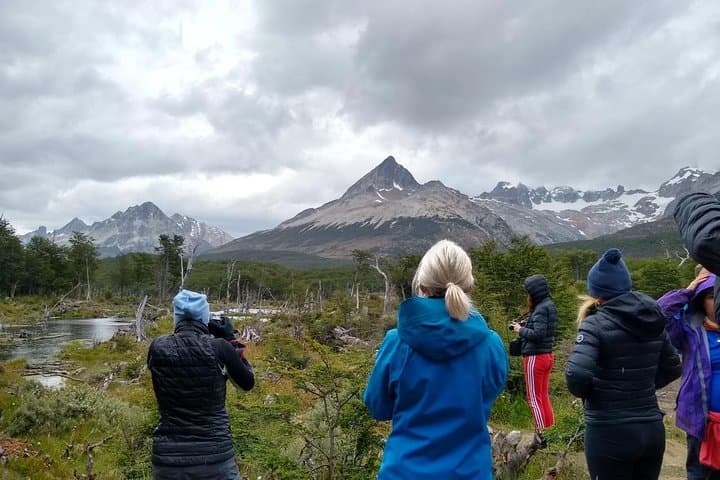
The trail opens like a map unfolded across southern Patagonia: peat bogs that suck at your boots, the crunch of lenga leaves underfoot, and the thin, metallic light of Tierra del Fuego sliding down from serrated ridgelines.
The trail opens like a map unfolded across southern Patagonia: peat bogs that suck at your boots, the crunch of lenga leaves underfoot, and the thin, metallic light of Tierra del Fuego sliding down from serrated ridgelines.
This 4.5-kilometer approach to Laguna Esmeralda threads through distinct environments—broad sphagnum valleys, linear beaver dams that reroute streams, and dense Fuegian forest—finally spilling you onto a small, brilliant lake held between mountains. The water’s green comes from suspended glacial flour and mountain runoff; it reacts to wind and light, sometimes jade, sometimes gunmetal. Guides point out tracks, nesting birds and the bark-stripped trunks where introduced beavers have reshaped the landscape, giving the trail a working-history as much as a scenic one.
Geologically, the route sits on folded Andes foothills carved by Pleistocene glaciers; the valley’s peat accumulations record a slow hydrological history that contrasts with the quick-moving weather above. Culturally, Ushuaia sits at the edge of Argentine Patagonia—a port town built on maritime and frontier histories—so this trek reads as both a nature walk and a field lesson in human-environment interaction: beavers introduced for fur hunting, now engineering wetlands, and ranching-era routes that turned into modern trails.
Expect varied footing: boardwalks and boggy sections give way to rocky stream crossings, then a short climb beside a clear mountain stream to the lagoon. The elevation change is modest—about 200 meters total—and the round trip distance including approach makes this a half-day outing from Ushuaia. Guides typically include a sandwich-and-warm-drink lunch box and a walking pole; they also explain local flora and fauna as you move.
Practical notes: start mid-morning to maximize daylight and avoid the stiffest winds; wear waterproof boots and layered clothing—weather can shift from sun to sleet in an hour. Bring water, a small first-aid kit, and a camera with a polarizer for the lake’s reflections. Respect marked trails; the peat takes centuries to form and is easily damaged.
For travelers, this is an accessible but engaging hike—enough effort to feel earned, with consistent rewards of color, quiet, and natural curiosity. Whether you’re cataloging bird species or simply chasing a green lake, Laguna Esmeralda offers a compact dose of Tierra del Fuego’s untamed personality with the practical convenience of a guided, half-day excursion from Ushuaia.