THE ADVENTURE COLLECTIVE® · Independent discovery and booking for outdoor travel

Traverse the 2002 crater rims of Mount Etna from Piano Provenzana with an alpine-volcanological guide. Expect lava channels, beech forests, and expansive views in a focused three-hour trek.
Traverse the 2002 crater rims of Mount Etna from Piano Provenzana with an alpine-volcanological guide. Expect lava channels, beech forests, and expansive views in a focused three-hour trek.
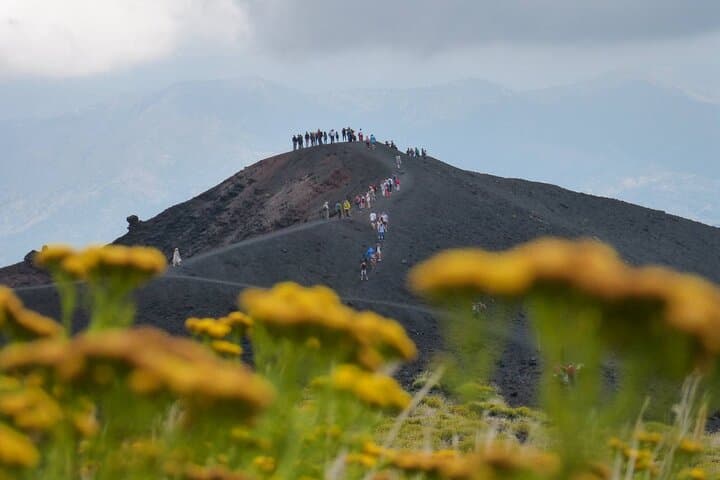
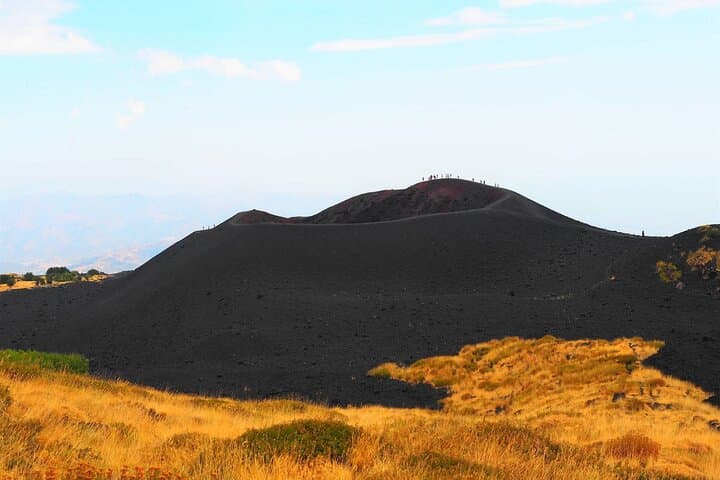
You step out of the meeting point into a wind that smells faintly of sulfur and pine; the trail climbs slowly from Piano Provenzana, threading beech forest and past blackened slabs of recent lava. The path follows the edge of a 2002 flow, where the ground shifts from soft duff underfoot to jagged, glassy rock, and the crater rims open to raw, lunar vistas.
Verified experiences and guided adventures in the surrounding area.
Operated by Empeeria · Piano Provenzana (Linguaglossa), Sicily
You step out of the meeting point into a wind that smells faintly of sulfur and pine; the trail climbs slowly from Piano Provenzana, threading beech forest and past blackened slabs of recent lava. The path follows the edge of a 2002 flow, where the ground shifts from soft duff underfoot to jagged, glassy rock, and the crater rims open to raw, lunar vistas.
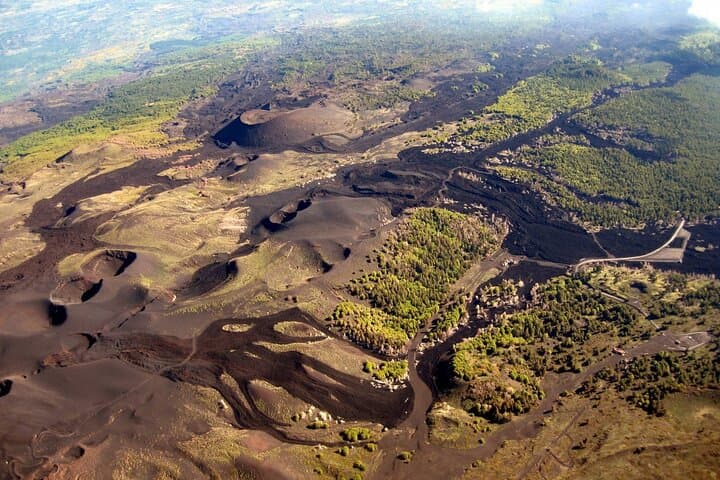
Etna is a living landscape—layers of basalt poured in successive eruptions, now carved by water and weather into channels and canyons. The northern craters you visit formed in 2002 and reshaped centuries-old Pineta Ragabo, leaving a canyon that traces the force of past magma flows. Local communities long adapted to Etna’s cycles: vineyards and towns at lower elevations, shepherding and woodcraft higher up, all shaped by the volcano’s fertility and hazard.
On this guided three‑hour trek you’ll move between shaded beech stands and open lava fields while a volcanological guide explains eruption mechanics and the human stories tied to the slopes. Walks skirt crater edges and cross cooled lava channels—ground that demands attention but rewards with sweeping views of the Ionian Sea on clear days.
Practical guidance: wear stiff-soled hiking boots for uneven lava, layer for rapid temperature swings, and carry at least 1–1.5 L of water. Start in the morning for calmer winds and clearer views; follow your guide’s route—off-trail travel can damage fragile pioneer plants and destabilize loose rock. This trek balances raw geology with accessible hiking, ideal for travelers who want a close, informed encounter with one of Europe’s most active volcanoes.
moderate.
3 hours.
Suitable for people in basic hiking fitness—able to walk 3 hours on uneven ground with short climbs.
The route is described as easy to moderate—walking on uneven lava requires attention but no technical climbing; basic fitness is sufficient.
Guides monitor conditions and routes are chosen for safety; tours may be changed or canceled if activity or weather poses a hazard.
Meeting is at Piano Provenzana; confirm the exact meeting point and transport details with the operator—shuttle service is not guaranteed.
Infants must sit on an adult’s lap according to the operator; check age recommendations and comfort with uneven terrain before booking.
The northern lateral craters formed during Etna’s 2002 eruption, which reconfigured slopes and damaged parts of the longstanding Pineta Ragabo.
Stick to marked trails to protect fragile pioneer vegetation and avoid disturbing recolonizing soils; volcanic landscapes recover slowly and are vulnerable to trampling.
Empeeria operates guided outdoor trips and adventures with an emphasis on safety, stewardship, and memorable experiences.
You step out of the meeting point into a wind that smells faintly of sulfur and pine; the trail climbs slowly from Piano Provenzana, threading beech forest and past blackened slabs of recent lava. The path follows the edge of a 2002 flow, where the ground shifts from soft duff underfoot to jagged, glassy rock, and the crater rims open to raw, lunar vistas.
You step out of the meeting point into a wind that smells faintly of sulfur and pine; the trail climbs slowly from Piano Provenzana, threading beech forest and past blackened slabs of recent lava. The path follows the edge of a 2002 flow, where the ground shifts from soft duff underfoot to jagged, glassy rock, and the crater rims open to raw, lunar vistas.
Etna is a living landscape—layers of basalt poured in successive eruptions, now carved by water and weather into channels and canyons. The northern craters you visit formed in 2002 and reshaped centuries-old Pineta Ragabo, leaving a canyon that traces the force of past magma flows. Local communities long adapted to Etna’s cycles: vineyards and towns at lower elevations, shepherding and woodcraft higher up, all shaped by the volcano’s fertility and hazard.
On this guided three‑hour trek you’ll move between shaded beech stands and open lava fields while a volcanological guide explains eruption mechanics and the human stories tied to the slopes. Walks skirt crater edges and cross cooled lava channels—ground that demands attention but rewards with sweeping views of the Ionian Sea on clear days.
Practical guidance: wear stiff-soled hiking boots for uneven lava, layer for rapid temperature swings, and carry at least 1–1.5 L of water. Start in the morning for calmer winds and clearer views; follow your guide’s route—off-trail travel can damage fragile pioneer plants and destabilize loose rock. This trek balances raw geology with accessible hiking, ideal for travelers who want a close, informed encounter with one of Europe’s most active volcanoes.