THE ADVENTURE COLLECTIVE® · Independent discovery and booking for outdoor travel

Trek eleven days into Mongolia’s Altai Tavan Bogd to walk among glaciers, ancient petroglyphs and nomadic camps. This high‑altitude trek mixes sustained walking on scree and meadow with cultural encounters and optional non‑technical summit outings.
Trek eleven days into Mongolia’s Altai Tavan Bogd to walk among glaciers, ancient petroglyphs and nomadic camps. This high‑altitude trek mixes sustained walking on scree and meadow with cultural encounters and optional non‑technical summit outings.
A thin wind moves across a broad alpine meadow as you tighten your pack and watch jagged white summits uncurl above a line of yurts. The Altai Tavan Bogd massif—five principal peaks straddling the Russian border—dominates the horizon, glaciers pushing slow rivers through V-shaped valleys while herds of yaks graze the lower slopes.
Verified experiences and guided adventures in the surrounding area.
Operated by Tuul Travel Mongolia · Ölgii, Bayan-Ölgii
A thin wind moves across a broad alpine meadow as you tighten your pack and watch jagged white summits uncurl above a line of yurts. The Altai Tavan Bogd massif—five principal peaks straddling the Russian border—dominates the horizon, glaciers pushing slow rivers through V-shaped valleys while herds of yaks graze the lower slopes.
This is a land of stone and story: Bronze Age petroglyphs at Baga Oigor map ancient hunts, while Kazakh and Tuvan pastoralists maintain patterns of life that predate modern borders. Geologically the massif is a spine of uplifted metamorphic rock crowned by perennial ice; glacial moraines and scree fields mark the routes you’ll follow, with dramatic elevation gain to snowline for summit-minded trekkers.
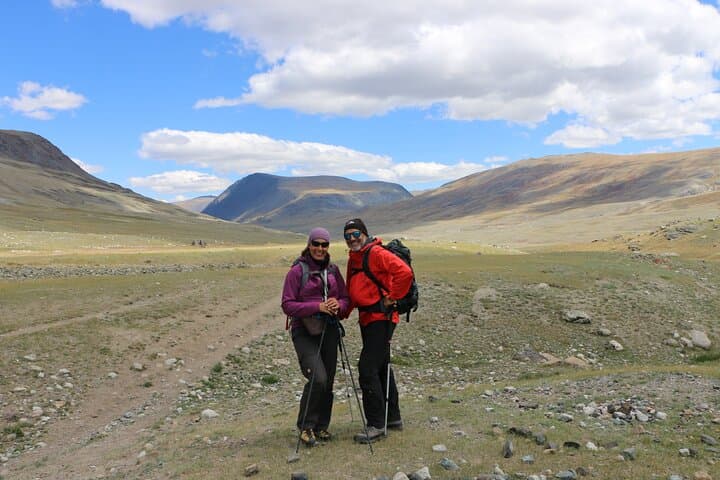
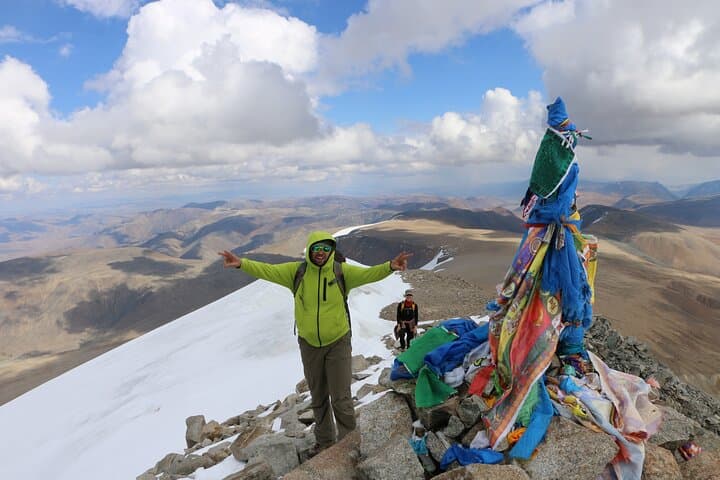
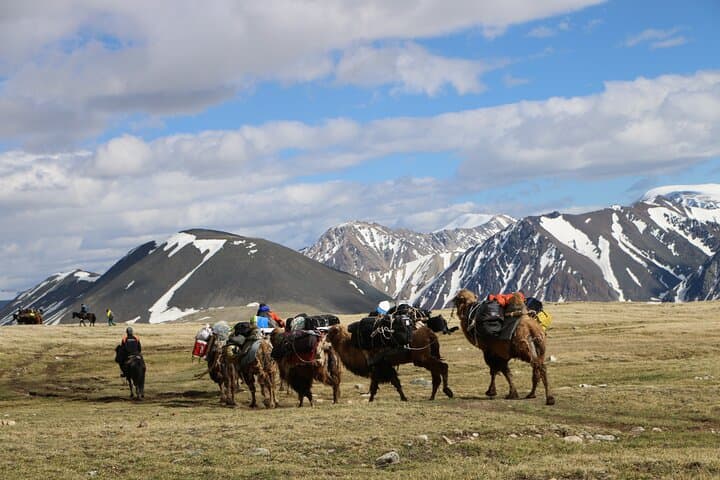
Daily travel ranges from 4–9 hours between camps; base camp sits just above 3,000 m and the non-technical Malchin Peak reaches 4,051 m. Routes are mainly high alpine meadows, scree slopes and intermittent marshy sections beside Tsagaan Gol; expect intermittent stream crossings and well-trodden but uneven trails. The trip uses pack camels and local crews—tents and group cooking gear are provided—so you carry a daypack only. Weather shifts fast: sun, wind and cold can arrive in minutes, and clear mornings often precede afternoon storms.
Practical prep matters: allow time to acclimatize in Ölgii or Ulaanbaatar, bring layered insulation and reliable boots, and plan for strong sun and high UV. Respect grazing areas and herder families; follow ranger guidance to minimize impact and keep wildlife undisturbed.
challenging.
11 days.
Expect long days of steady uphill and downhill walking at altitude; good cardiovascular fitness and experience with multi‑day trekking recommended.
Summer (late June–September) offers the most stable weather, open trails and accessible pasturelands; early season can be wet and late season brings early snow.
No—Malchin Peak is a non‑technical ascent on scree and marked routes, but it requires good fitness, steady footing and acclimatization for a 7–9 hour round trip.
Typical packages include domestic flights, overland transport, tents, group cooking equipment, meals listed, pack animals for luggage and local support crew; personal gear and travel medical insurance are usually not included.
Park entry and park ranger fees are commonly handled by the operator as part of the itinerary; confirm specifics with your provider and carry ID and permit documentation when instructed.
The Altai has been a crossroads for nomadic cultures for millennia; rock art and burial mounds here record Stone and Bronze Age life, while modern Kazakh and Tuvan herding traditions persist.
High‑altitude meadows and glacier systems are fragile; travel with local operators who work with rangers, use pack animals to limit trail widening, and follow Leave No Trace practices.
Tuul Travel Mongolia operates guided outdoor trips and adventures with an emphasis on safety, stewardship, and memorable experiences.
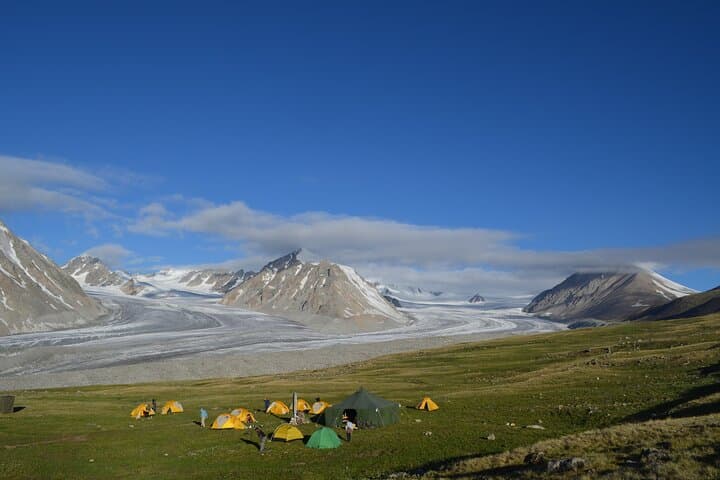
A thin wind moves across a broad alpine meadow as you tighten your pack and watch jagged white summits uncurl above a line of yurts. The Altai Tavan Bogd massif—five principal peaks straddling the Russian border—dominates the horizon, glaciers pushing slow rivers through V-shaped valleys while herds of yaks graze the lower slopes.
A thin wind moves across a broad alpine meadow as you tighten your pack and watch jagged white summits uncurl above a line of yurts. The Altai Tavan Bogd massif—five principal peaks straddling the Russian border—dominates the horizon, glaciers pushing slow rivers through V-shaped valleys while herds of yaks graze the lower slopes.
This is a land of stone and story: Bronze Age petroglyphs at Baga Oigor map ancient hunts, while Kazakh and Tuvan pastoralists maintain patterns of life that predate modern borders. Geologically the massif is a spine of uplifted metamorphic rock crowned by perennial ice; glacial moraines and scree fields mark the routes you’ll follow, with dramatic elevation gain to snowline for summit-minded trekkers.
Daily travel ranges from 4–9 hours between camps; base camp sits just above 3,000 m and the non-technical Malchin Peak reaches 4,051 m. Routes are mainly high alpine meadows, scree slopes and intermittent marshy sections beside Tsagaan Gol; expect intermittent stream crossings and well-trodden but uneven trails. The trip uses pack camels and local crews—tents and group cooking gear are provided—so you carry a daypack only. Weather shifts fast: sun, wind and cold can arrive in minutes, and clear mornings often precede afternoon storms.
Practical prep matters: allow time to acclimatize in Ölgii or Ulaanbaatar, bring layered insulation and reliable boots, and plan for strong sun and high UV. Respect grazing areas and herder families; follow ranger guidance to minimize impact and keep wildlife undisturbed.