THE ADVENTURE COLLECTIVE® · Independent discovery and booking for outdoor travel

Spend two unhurried hours traversing Dades Gorge and Roses Valley on well-cared-for mules or donkeys. This easy cultural trek mixes dramatic geology, Berber village life, and hands-on animal encounters with mint tea stops.
Spend two unhurried hours traversing Dades Gorge and Roses Valley on well-cared-for mules or donkeys. This easy cultural trek mixes dramatic geology, Berber village life, and hands-on animal encounters with mint tea stops.
An early light catches the red-brown ribs of Dades Gorge as mules shuffle into the narrow trail, packs clipped and ears alert. The two-hour trek moves at a gentle, steady pace—enough time to feel the valley breathe and watch terraced fields slip past like pages in a weathered book.
Verified experiences and guided adventures in the surrounding area.
Operated by Morocco Exposure · Boumalne Dades, Drâa-Tafilalet
An early light catches the red-brown ribs of Dades Gorge as mules shuffle into the narrow trail, packs clipped and ears alert. The two-hour trek moves at a gentle, steady pace—enough time to feel the valley breathe and watch terraced fields slip past like pages in a weathered book.
Geology here is blunt and theatrical: folded sedimentary walls carved by flash floods and millennia of wind. Roses Valley (Kalaat M’Gouna) sits lower, where seasonal irrigation fuels orchards of roses used in local distilleries. The route threads through Berber villages where stone houses and flat roofs reflect a living culture of shepherding and small-scale farming.
This is a cultural-ecological stroll as much as a ride. Mules and donkeys are traditional transport, and operators who emphasize animal welfare often work with local farmers who know the animals’ temperaments. Expect polite greetings, mint tea stops, and the slow cadence of rural life punctuated by the distant bleat of goats.
Practicalities are straightforward: the terrain is a mix of packed dirt lanes and short rocky sections; elevation changes are modest but can feel steeper when mounted. Bring sun protection, carry at least 1–1.5 liters of water, and wear closed-toe shoes for stable mounting and dismounting. The best light for photos is morning or late afternoon; midday heats quickly in summer.
This trek suits travelers looking for an accessible immersion in Morocco’s Atlas foothills—low-impact on fitness but high on local character and landscape contrast.
easy.
2 hours.
Suitable for most fitness levels; minimal walking required if mounted, but stable balance helps.
No—this is designed for riders of all levels; guides assist with mounting and control for a comfortable, gentle pace.
Policies vary, but many operators accept children; check age requirements during booking and ensure child-size saddles or shared arrangements.
Choose operators who emphasize well-cared-for, rested animals and local handlers; ask about rest periods and load limits before booking.
Yes—tea is standard, and guides can often arrange alternatives; notify the operator in advance for special requests.
The Dades corridor has long been a transhumance and trade route for Berber communities; stone villages retain crafts and agricultural terraces.
Support local guides and operators who practice low-impact tourism and prioritize humane treatment of pack animals and waste management.
Morocco Exposure operates guided outdoor trips and adventures with an emphasis on safety, stewardship, and memorable experiences.
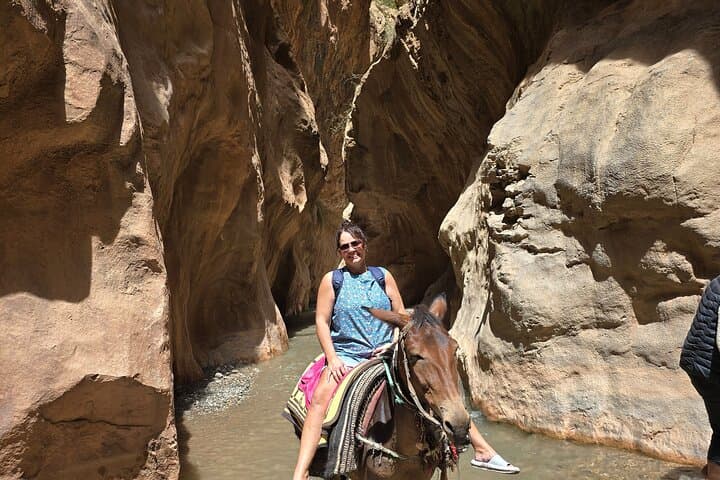


An early light catches the red-brown ribs of Dades Gorge as mules shuffle into the narrow trail, packs clipped and ears alert. The two-hour trek moves at a gentle, steady pace—enough time to feel the valley breathe and watch terraced fields slip past like pages in a weathered book.
An early light catches the red-brown ribs of Dades Gorge as mules shuffle into the narrow trail, packs clipped and ears alert. The two-hour trek moves at a gentle, steady pace—enough time to feel the valley breathe and watch terraced fields slip past like pages in a weathered book.
Geology here is blunt and theatrical: folded sedimentary walls carved by flash floods and millennia of wind. Roses Valley (Kalaat M’Gouna) sits lower, where seasonal irrigation fuels orchards of roses used in local distilleries. The route threads through Berber villages where stone houses and flat roofs reflect a living culture of shepherding and small-scale farming.
This is a cultural-ecological stroll as much as a ride. Mules and donkeys are traditional transport, and operators who emphasize animal welfare often work with local farmers who know the animals’ temperaments. Expect polite greetings, mint tea stops, and the slow cadence of rural life punctuated by the distant bleat of goats.
Practicalities are straightforward: the terrain is a mix of packed dirt lanes and short rocky sections; elevation changes are modest but can feel steeper when mounted. Bring sun protection, carry at least 1–1.5 liters of water, and wear closed-toe shoes for stable mounting and dismounting. The best light for photos is morning or late afternoon; midday heats quickly in summer.
This trek suits travelers looking for an accessible immersion in Morocco’s Atlas foothills—low-impact on fitness but high on local character and landscape contrast.